


"Hu"
2022-08-20 23:32:13
Hu Bingshou, whose original name was Hu Shiming, was renowned in the martial arts world for his martial art "Bingshou", and thus became a common nickname. There is no record of his life. He was from Fangxian County, Hubei Province. According to the current popular Miao Quan inheritors in Xiangxi, Hu Shiming participated in the White Lotus Sect Uprising when he was young. After the failure, he fled to Wudang Mountain to study Taoism. After years of diligent study and contemplation, he mastered all the martial arts and secret skills of the Wudang Taoist School and then traveled around in an attempt to make a comeback. During his travels, he secretly developed the White Lotus Sect while also seeking a successor of martial arts skills. During his travels, he was particularly renowned in the martial arts world for his "wielding hands". In the tenth year of the reign of Emperor Guangxu of the Qing Dynasty (1884 AD), Hu Shiming, who was over a hundred years old, traveled to Lingxi Zikou in western Hunan Province and met Long Yanjiu, a Miao martial artist from Jiulong Cave in Guzhang who was teaching martial arts there. At that time, Long Yanjiu was young and strong, with an extraordinary presence and remarkable achievements in martial arts. Hu Yu took him as his last disciple. So the dragon was investigated. Before Long Chushi, he wanted to eat and drink. At the occasion when Long taught martial arts, he criticized Long for his shortcomings. Seeing that Long ignored him, he decided that Long could be taken as his disciple. One day, when all was quiet, Hu Jianlong sat alone in the living room. He casually grabbed a plowshare and swung it onto a pillar in the hall. The tip of the plowshare pierced through the wood by more than an inch. Hu Sui stood on tiptoe, jumped onto the pillar, sat steadily on the plowshare, and as if no one else was around, took out a pipe and began to smoke a pipe. Long Tingjiu was startled at first, but soon composed himself. He secretly gathered his strength and kicked the pillar three times with great force. After three feet, the house shook and tiles fell to the ground, but Hu Shiming still sat firmly on the plowshare, not moving at all. When Longzhi met the extraordinary person, he repeatedly claimed that he was blind. Hu Ji waved his sleeves and left. The dragon pursued it relentlessly. When he reached the Baiyan Tianqiao Mountain in Guzhang, Hu Fang officially took Long as his disciple at a nunnery on the mountain and incorporated him into the White Lotus Sect. After three years of teaching, Hu Jianlong achieved great success and then left for a distant place. Hu Shiming served as the abbot of Tianqiao Mountain for three years and also took in a Miao monk named Juehui. This Juehui is the fifth child in his family and is called the Fifth Monk by the locals. Hu Shiming's whereabouts are unknown after he left the Miao area in Xiangxi. He once left behind for Long Tingjiu and the Fifth Monk the "Eighteen Character Principles of Wudang Taoism" and the "Prescription for Treating Injuries Caused by Blood Points at Twelve Hours of the Day" and other martial arts and traumatology secrets. It is still preserved in the home of Long Rongxiang (the grandson of Long Tingjiu), a Miao martial artist from Jiuxue Village, Moshu Town, Gugang County, who is a member of the Martial Arts Association of Xiangxi Tujia and Miao Autonomous Prefecture. After Long Tingjiu mastered his skills, he opened a ceremony at home to teach students and enjoyed a high reputation. In the eighth year of the Republic of China (1919), Long Tingjiu led over 30,000 Miao people from 58 villages in Guzhang and dozens of villages in the neighboring three counties to resist taxes and organized an uprising. He was hailed as the "King of Miao" by the Miao people. In the tenth year of the Republic of China, Long Tingjiu was shot by Feng Shiling, the commander of the National Xiang Army, and was then killed on the Jiulong River Beach. However, the Wudang Quan passed down by Hu Shiming has since spread in the Miao areas of western Hunan. (Excerpted from "Wudang", Issue 6, 1990, Zhang Caijun's "Xiangxi Miao Quan and Wudang Martial Arts")
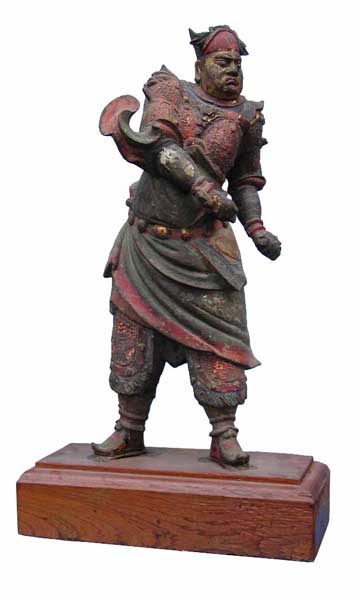
One of the stars of the Big Dipper
2026-04-15 11:51:31
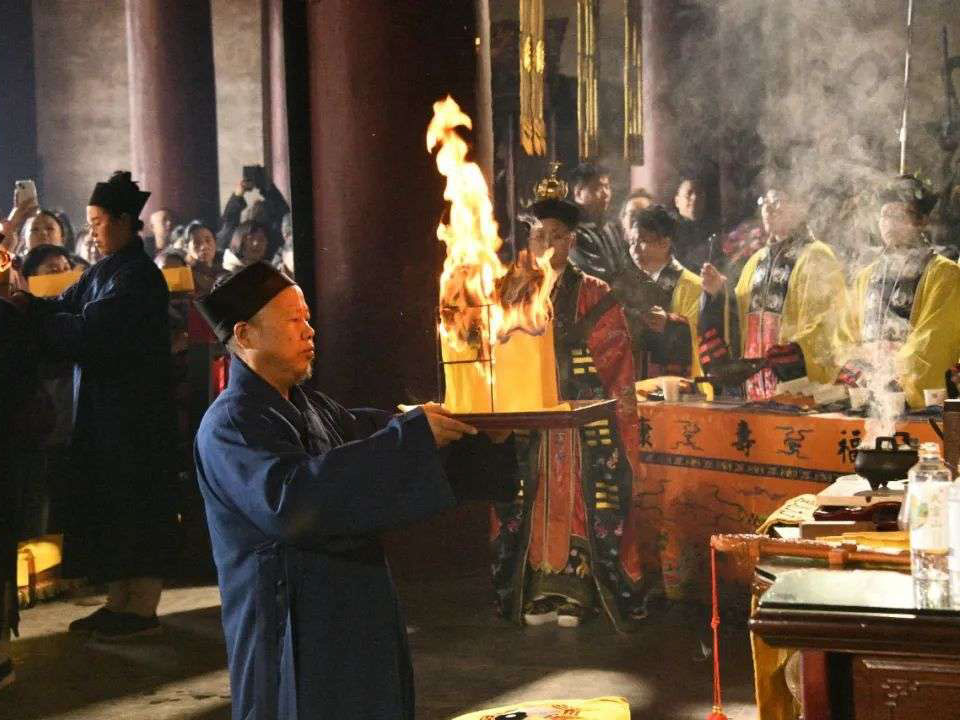
(1) The meaning of the ritual of fasting and Taoist ceremonies
2022-08-20 23:32:13
The original meaning of "zhai" was to be neat, harmonious an...
Yin GUI
2022-08-20 23:32:13
Chapter 37
2022-08-20 23:32:13
Chapter 47
2022-08-20 23:32:13
"Thunderbolt head"
2022-08-20 23:32:13
Zhao Yuanliang
2022-08-20 23:32:13