


Chapter 47
2022-08-20 23:32:13
Stay at home and know the world. Not peering into 牖①, seeing the way of heaven ②. The farther one goes, the less one knows. Therefore, the sage knows without doing, understands without seeing, and accomplishes without doing. One can infer the principles of the world without leaving one's home. Without looking out of the window, one can understand the natural laws of the movement of the sun, moon and stars. The farther he rushes out, the less truth he knows. Therefore, a sage with the "Way" can infer the principles of things without traveling, understand the "Way of Heaven" without seeing, and achieve something without acting rashly. [Note] 1. Peek at 牖 : peek, to look through a small hole; Youdaoplaceholder0, pronounced you, window. 2. Heavenly Way: The natural laws governing the movements of the sun, moon and stars. 3. To become clear without being seen: One book is titled "To Become Famous Without Being Seen". This sentence means to reveal the truth without seeing it. 4. Non-action: Do nothing and do not act rashly. This chapter mainly discusses epistemology in philosophy. The basic point here is that purely relying on sensory experience in cognition is unreliable. Because doing so cannot delve into the essence of things, cannot understand their entirety, and will also disturb one's mind. Therefore, to understand things, one can only rely on inner self-reflection and make efforts in self-cultivation, so as to grasp the "Way of Heaven" and know the laws of change and development of all things in the world. In this regard, when the academic circle discusses Laozi's epistemology of philosophy, some viewpoints hold that Laozi was a thorough idealist transcendental theorist, while others claim that Laozi did not underestimate the perceptual knowledge acquired through practice but merely exaggerated the role of rational cognition. The debates on these viewpoints will be elaborated in detail in the analysis of this chapter. Mr. Chen Guying said, "Laozi believed that all things in the world operate in accordance with certain laws. By grasping these laws (or principles), one can gain insight into the true nature of things." He believes that the depth of the soul is transparent, like a mirror. This inherent wisdom is covered with a layer of lust like dust (lust activities tend to be more frequent when triggered by the outside world). Laozi believed that we should, through the effort of self-cultivation, engage in inner reflection and contemplation, purify our desires, and remove the obstructions of our minds. With the wisdom of inherent clarity and the state of mind of emptiness and tranquility, we should observe external things and understand the laws governing their operation. (Page 249 of "Commentary and Evaluation of Laozi") We agree with Mr. Chen Guying's opinion. Previous works that criticized Laozi's epistemology as a thoroughly idealistic transcendental theory all cited "knowing the world without leaving home" as evidence. Such an understanding is actually a misunderstanding. Laozi was a learned and knowledgeable person with rich practical experience in life. In several previous chapters, we can see many contents related to social life and nature, all of which indicate that Laozi attached great importance to life practice. But more importantly, Laozi was a man of great wisdom and a genius philosopher. What he means is that not everything can only be understood through one's own practice; that's impossible. Therefore, it is important to attach importance to rational understanding and indirect knowledge. The extreme emphasis techniques such as "not going out" and "not peeping 牖" have been widely used from ancient times to the present. However, our view is that when studying Laozi and the Tao Te Ching, one should deeply understand the true viewpoints contained therein. One should not interpret the text based on its literal meaning, nor should one understand it one-sidedly. At the same time, we must also adhere to the ideological approach of historical materialism. Because correctly explaining the dialectical relationship between perceptual cognition and rational cognition was not a major philosophical topic that the thinkers of the Spring and Autumn Period could solve.
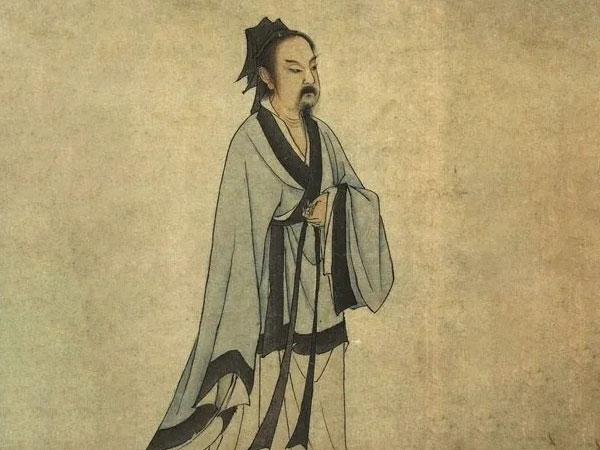
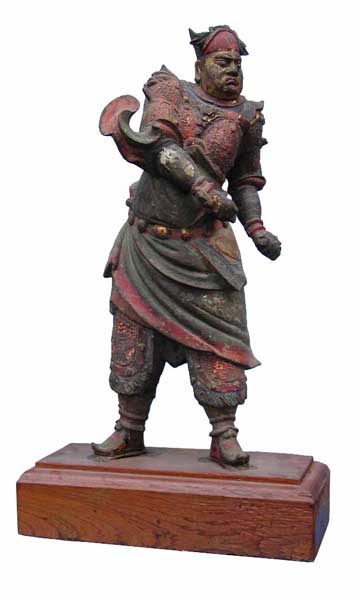
One of the stars of the Big Dipper
2026-04-15 11:51:31
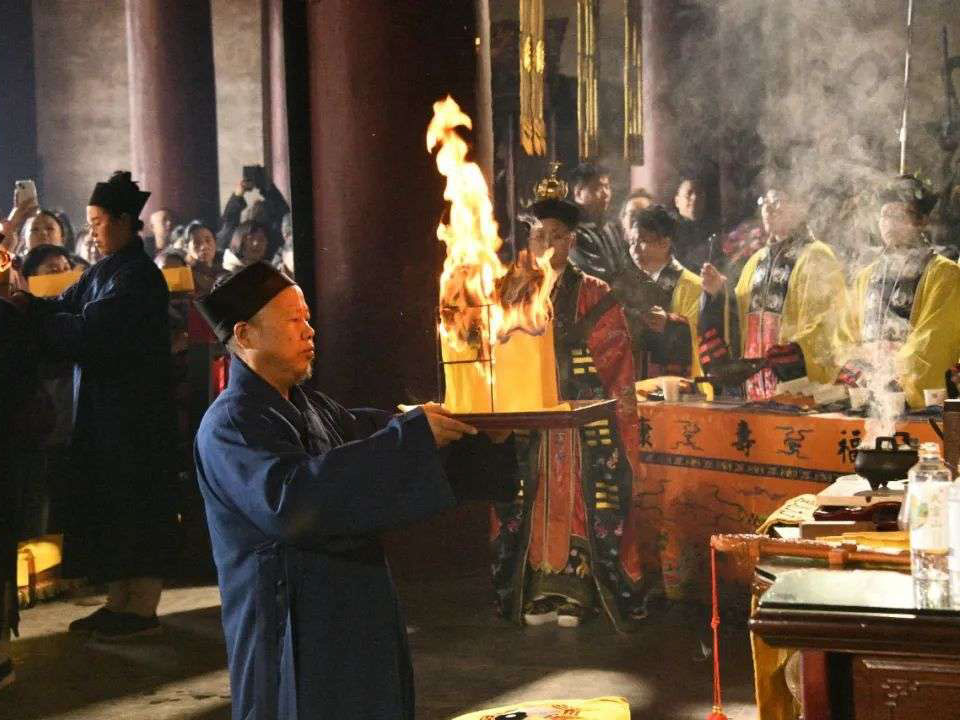
(1) The meaning of the ritual of fasting and Taoist ceremonies
2022-08-20 23:32:13
The original meaning of "zhai" was to be neat, harmonious an...
Yin GUI
2022-08-20 23:32:13
Chapter 27
2022-08-20 23:32:13
Chapter 72
2022-08-20 23:32:13
The couplet of the ancestral hall of the Wudang Mountain Temple
2022-08-20 23:32:13
The Record of Ascending to the Summit of Wudang
2022-08-20 23:32:13