


Yin GUI
2022-08-20 23:32:13
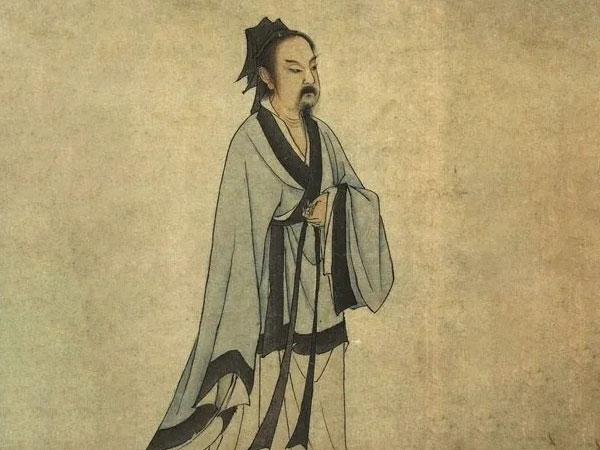
Yin GUI was a Taoist priest of the Louguan School. His courtesy name was Gongdu. He was from Taiyuan, Shanxi Province. The so-called "Lou Guan" is said to be the former residence of Yin Xi, which was also the place where Yin Xi originally practiced Taoism. Its former site is located in Zhouzhi County, Shaanxi Province today. It is said that Yin Xi built a tower with grass to observe the stars and the atmosphere, thus it was named. According to the "Biographies of Immortals", Yin GUI was well-versed in the Five Classics in his early years, especially in the divination of the stars, Qi, rivers, Luo, and numerology. It was only in his later years that he began to study Taoism. This means that in his early years, Yin GUI mainly engaged in the study of astrology, and it was not until his later years that he began to practice inner alchemy. Yin GUI's research on astrology was extremely profound. It is recorded that when he was over a hundred years old, all his predictions about the safety and danger of the world came true. Yin GUI was not only proficient in astrology but also in the art of elixirs. He often wore more than ten lacquered wooden tubes around his waist, each filled with various elixirs, which he distributed to the people. It is said that wearing it can prevent wars and plagues. According to the "Taihe Mountain Annals" of Wudang Mountain, Yin GUI was a disciple of Yin Xi. In his later years, he learned Taoism from Yin Xi and later entered the Du Yang Palace of Taihe Mountain (also known as Wudang Mountain), where he was revered by his disciples as the Taihe Immortal. It is also recorded that in his later years, Yin GUI learned Taoism from Yin Xi and often lived in deep mountains and ancient forests, taking Polygonatum odoratum as a way to prolong life. According to historical records, Yin GUI did not start to study Taoism until his later years, which must be related to Yin Xi's acquisition of Laozi's "Tao Te Ching". Since Yin Xi was merely a star divination expert before Laozi passed on his teachings, what his disciples learned from him must have been nothing more than star energy, river and Luo, and divination. Yin Xi received the teachings of Laozi. Only through his own practical cultivation and understanding could he pass them on again. Therefore, Yin GUI could only have the opportunity to study Taoism in his later years. From this, it can be seen that at that time, the term "Dao" specifically referred to internal cultivation. Later, by borrowing the metaphor of external alchemy, it was called internal alchemy. According to the "Huaiqing Prefecture Annals", Li Shijun passed on the "Divine Elixir Classic" to Guo Yan, Guo Yan passed it on to Yin GUI, Yin GUI passed it on to Shan Shiyuan, and Shan Shiyuan passed it on to Ji Zixun. It can be seen that in his later years, Yin GUI learned Taoism by drawing on the strengths of many schools. According to Taoism, in the second year of Yongxing during the reign of Emperor Hui of Jin (305 AD), Laozi ordered the immortal Yin GUI to descend to Louguan and teach Liang Zhan the "Water and Stone Alchemy Technique", the "Shangjing of the Sun, Moon and Yellow Flowers", and the "Ben Qi Neizhuan". Therefore, after the rise of the Louguan School in the Northern and Southern Dynasties, Yin GUI was revered as the founder of the Louguan School. Originally, the "guan" in "Lou Guan" referred to the person observing. Later, with the rise of Taoism, "Guan" was used as a general term for some Taoist temples.
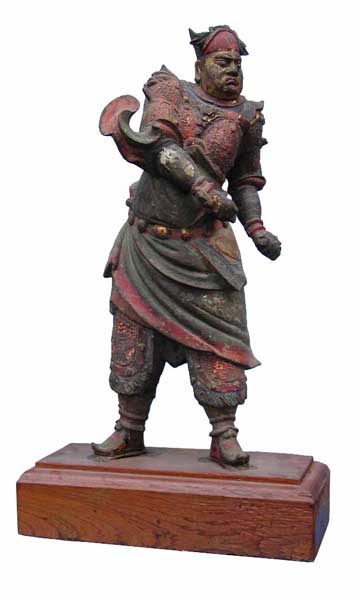
One of the stars of the Big Dipper
2026-04-15 11:51:31
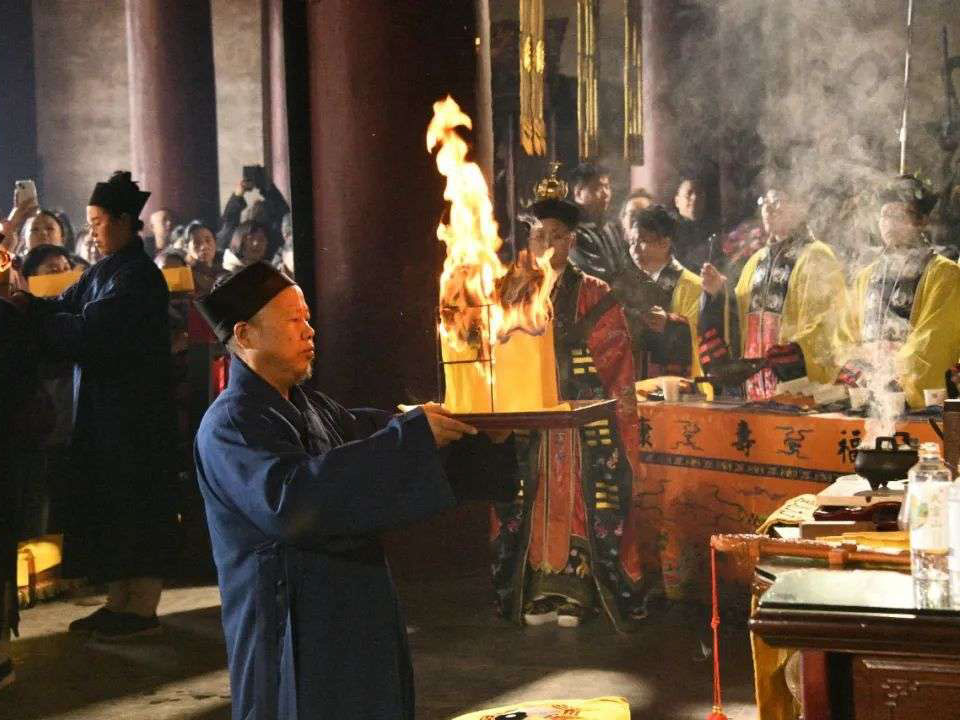
(1) The meaning of the ritual of fasting and Taoist ceremonies
2022-08-20 23:32:13
The original meaning of "zhai" was to be neat, harmonious an...
Yin GUI
2022-08-20 23:32:13
Chapter 27
2022-08-20 23:32:13
Chapter 72
2022-08-20 23:32:13
The couplet of the ancestral hall of the Wudang Mountain Temple
2022-08-20 23:32:13
The chapter on Pain Relief
2022-08-20 23:32:13