


Pei Qing
2022-08-20 23:32:13
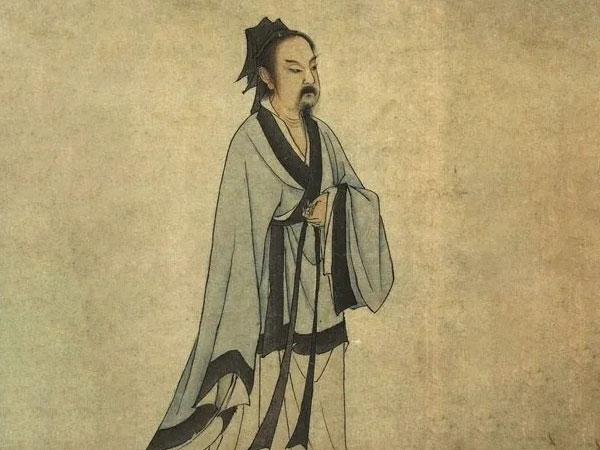
Pei Qing, a native of Gusu (now Suzhou City, Jiangsu Province), was an extraordinary figure in Wudang during the Qing Dynasty. According to the "Continuation of the Junzhou Annals, Volume 16: Miscellaneous Chronicles" of the Qing Dynasty, citing the "Ear Talks", during the previous Qing Dynasty, a certain celestial master of the 27th generation of Longhu Mountain visited the hall of Emperor Yuan of Wudang to offer incense. The precept priest said, "I have three days to offer morning incense." However, every day when the Celestial Master offered morning incense, he always saw that some incense had already been offered before him. The celestial master thought that the Taoist priest did not listen to his precepts and intended to punish him. At this moment, a filthy person suddenly emerged from under the incense table and said, "I offered the incense. What sin have I committed with the Taoist priest!" " The Celestial master saw that his demeanor was extraordinary and immediately worshipped him. A corrupt person is ordered to be a Taoist priest. So he left without a second thought. And he said, "I am Pei Qing of Gusu. I should meet you in Gusu." The Celestial master was even more astonished to see that he walked without a foot on the ground. Chasing closely but unable to reach. Later, the Celestial Master visited Gusu. The locals all said, "This is a leper who often stays in the pens of pigs and dogs, and the stench is unbearable." I went to beg in another place earlier and have been there for a long time. When the local county magistrate heard that a celestial master was visiting, he led the Celestial master to Pei Qing's home. Inside the room, a woman and a man said, "Pei Qing has been out for a long time and hasn't returned." When asked who the man was, the woman said, "This is the companion of my concubine." The county magistrate was furious because the man was a prostitute. The man said, "He has long abandoned his wife. Now he is pulling a rope on the Gusu River!" The Celestial Master then sought out the banks of the Gusu River and saw the filthy person lying on the muddy ground by the river. The Celestial master knelt down and pleaded. The filthy man pretended to be afraid and simply hid his entire body in the mud. The Celestial master then knelt down and got up. After a long while, the filthy person suddenly jumped up from the mud and laughed loudly, saying, "How did you know I was here!" So he scratched the stench from his body and gave it to the Celestial Master, who took it and ate it. At this point, Pei Qingfang met him. The two talked all night long. The Celestial master shed tears and vowed to travel with Pei Qing, carrying a gourd and a hat. Pei Qing said, "The time has not yet come. In another three years, when I reach the top of Lu Peak, it will be fine." Having said that, he left. Three years later, Pei Qingguo returned from another place, built a stone cave with stones, entered it himself and stuffed the cave door. When the fire broke out from within, Pei Qing was seen riding a crane and soaring away in the flames. At this time, the Celestial Master rushed to the Lu Peak. When he met Pei Qing, they left hand in hand and their whereabouts were unknown. According to the "Brief History of Taoism on Wudang Mountain", Zhang Qingye went to Zhang Qinghu on Qingcheng Mountain together with Zhang Qingye. After Chen Qingjue, he presided over the Heavenly Master Cave. Zhang Qingye also presided over the Wenchang Palace and the Wuhou Shrine in Chengdu. They, along with five other eminent Wudang Taoists including Pan Jinchi and Jiang Chao, successively went to Sichuan for activities, which promoted the development of Wudang Taoism in the southwest of China and had a profound influence on modern Taoism in Sichuan. Lei Hong 'an's "A Preliminary Exploration of the Origin and Development of Taoism in Yunnan" records: "During the Qing Dynasty, the trend of building temples slightly subsided, but Taoists in Yunnan still went to Mount Qingcheng, Wudang, Luofu and Longhu to study Taoism." For instance, the Musi Si of Lijiang once sent people to Wudang Mountain to study Taoism and invited back the "Imperial Sutra" and the deities to be enshrined in the rock foot courtyard of Yulong Snow Mountain. In the 22nd year of the reign of Emperor Kangxi (1683 AD), Shen Miaozhang, a guest from Wudang, went to Wei Baoshan to build infrastructure. The "Brief Overview of Taoism in Shaanxi Province" records: "Since the Ming and Qing dynasties, Longmen Cave has been repeatedly ravaged by wars and has been abandoned and rebuilt many times." In the early years of the reign of Emperor Kangxi of the Qing Dynasty, Taoists such as Tian Shoucun, Huang Benshan, Miao Qingyang, Zeng Shouyun and Yao Qingli from Taizi Slope in Wudang restored the monastery. The deities were restored and the scenery was unique. Not only that, mountains such as Taihe Mountain in Yan 'an, Baiyun Mountain in Jia County, Yaowang Cave in Ankang, Tiantai Mountain in Hanzhong, and Leigu Terrace in Ziyang in Shaanxi Province were all passed down from the Quanzhen Longmen Sect of Wudang Mountain during the late Ming and early Qing dynasties, exerting a significant influence. According to Master Min Ziting's article "The High Way of Mount Hua", On the West peak of Mount Hua, Bai Yiguan was appointed as the abbot from Taizi Slope of Wudang Mountain during the Qianlong period of the Qing Dynasty. On the North Peak, Liu Jiaobin and Jia Helu were appointed as the abbot from Zhoufu Nunnery of Wudang Mountain. On the south Peak, Hu Zhenhai was appointed as the abbot from Taizi Slope of Wudang Mountain in the late Ming Dynasty. The tradition has been passed down to Nie Changshan, Fan Shouzhi, Zhang Taicheng, Zhao Qingyu, Zhao Yijiu, Guo Yangxi, and now Li Faquan, Han Fasheng and others. According to investigations, many temples and monasteries in places such as the Tulou Temple in Qinghai, the Jintai Temple in Tianshui and Lanzhou of Gansu, the Beiwudang Temple in Luliang, Shanxi, the Zhenwu Temple in Pingdingshan, Henan, as well as Qiyun Mountain in Anhui and the Duhou Palace in Zhangzhou, Fujian, were all founded and spread by Wudang Taoists in the early Qing Dynasty. According to the records of the Qingsheng Palace on Songbailing in Changhua County, Taiwan, during the reign of Emperor Kangxi of the Qing Dynasty, a Taoist surnamed Hong from Wudang preached in Zhangzhou, Fujian Province, and then crossed to Taiwan to build the Zhenwu Temple for worship. Later, it was expanded into a palace to worship the Supreme Deity of the Dark Heaven. It is also recorded that at the end of the Ming Dynasty, Zheng Chenggong practiced martial arts and boxing. When he arrived in Taiwan, he had already enshrined the image of the Xuan Emperor on his ship. Later, he built a temple in Taiwan to worship the image of the Xuan Emperor. It is also recorded that in the early Qing Dynasty, the Taoism of Wudang flourished for a time due to the participation of the "people who restored the Ming Dynasty" and their control over the affairs of the palace. The doctrines also evolved accordingly, advocating the propositions of "educating people through education", "adorning the land", and "equality for all beings". And Taoist priests were dispatched throughout the country to preach in order to promote the national spirit of Taoism. According to the inscriptions on the steles, at the end of the Ming Dynasty and the beginning of the Qing Dynasty, twenty-five Taoist priests including Cao Heming from various temples on Wudang Mountain founded the sect at Liu Xianyan and Yuhuang Pavilion in Guilin, Guangxi, and recited the "Imperial Sutra" for three years.
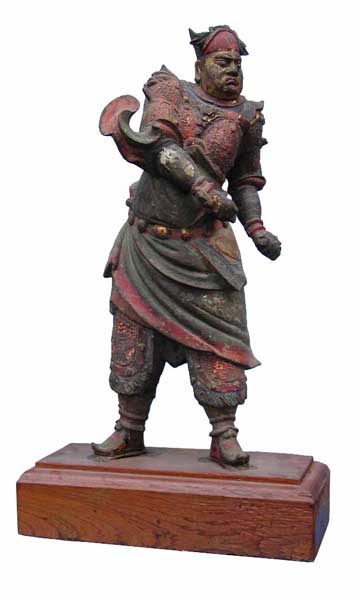
One of the stars of the Big Dipper
2026-04-15 11:51:31
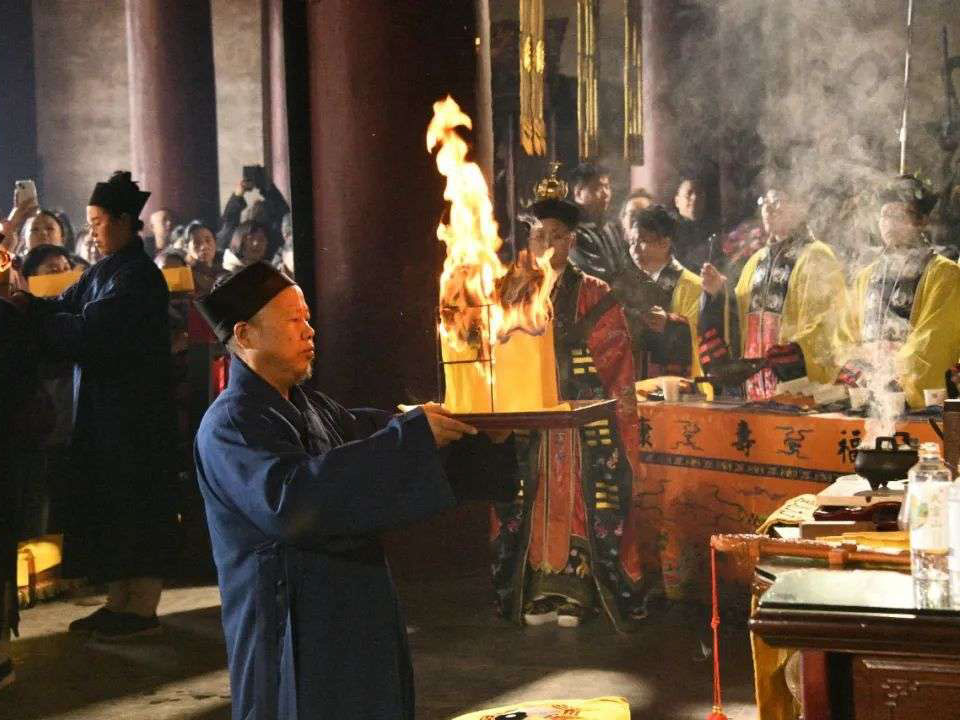
(1) The meaning of the ritual of fasting and Taoist ceremonies
2022-08-20 23:32:13
The original meaning of "zhai" was to be neat, harmonious an...
Yin GUI
2022-08-20 23:32:13
Chapter 27
2022-08-20 23:32:13
Chapter 72
2022-08-20 23:32:13
The couplet of the ancestral hall of the Wudang Mountain Temple
2022-08-20 23:32:13
Chapter 40
2022-08-20 23:32:13