


During the Ming Dynasty, Wudang Mountain had a "Beijing Office" in Beijing.
2026-05-17 01:23:53
By Yao Feng
[Introduction]
Wudang Mountain, as a sacred place of Taoism for the imperial family in the Ming Dynasty, enjoys the honors of "Taiyue" and "Xuanyue", and its status surpasses that of the Five Great Mountains. To strengthen the connection between Wudang Mountain and the capital and ensure the smooth operation of royal sacrifices, material offerings, and officials' pilgrimages, during the Zhengtong period of the Ming Dynasty, the imperial court established a dedicated institution in the capital for communication with Wudang Mountain: Chongzhen Temple.
This temple was not an ordinary Taoist activity site, but a Wudang Mountain office in Beijing that also served functions such as official liaison, material transfer, and personnel reception. It was an indispensable and important part of the management system of Wudang Mountain in the Ming Dynasty. Based on the records in the "Great Mountain Taihe Mountain Annals" of the Ming Dynasty's Jiajing period, combined with on-site visit records, local cultural relics census data and relevant literature support, we have conducted a systematic investigation into the establishment background, geographical location, functional attributes, historical changes and existing relics of Chongzhen Taoist Temple, clarified the confusion between it and the Taoist temples of the same or similar names, and restored its important position in the management system of Wudang Mountain in the Ming Dynasty.
I. The Background of the Establishment and Historical Positioning of Chongzhen Taoist Temple
The Ming Dynasty was the heyday of Taoism on Wudang Mountain and also the stage with the highest degree of royal status. After ascending the throne, Emperor Chengzu Zhu Di of the Ming Dynasty, in order to demonstrate the tension of imperial power and promote the "divine right of the monarch", under the pretext of "the Great Emperor Zhenwu's divine protection", carried out large-scale construction of the palaces and temples on Wudang Mountain in the tenth year of Yongle (1412). It took thirteen years to complete the construction of 33 groups of ancient architectural complexes including seven palaces and two temples, turning Wudang Mountain into a royal sacrificial site exclusively for the royal family. After that, emperors of the Ming Dynasty held Wudang Mountain in the highest regard, frequently sending officials to offer sacrifices there. At the same time, they required Wudang Mountain to regularly present tributary supplies to the imperial court, thus forming a complete system of imperial sacrifices and tributary offerings.
As the royal status of Wudang Mountain rose, its communication with the capital became increasingly frequent, and there was an urgent need for a specialized institution to undertake functions such as transfer and reception. On the one hand, the "annual tribute of immortal items" from Wudang Mountain need to be escorted to the capital by dedicated personnel. These materials are mostly precious medicinal herbs, incense and candles, Taoist ritual implements and local specialties of the mountain, which require fixed storage places and transfer points in the capital. On the other hand, the attendants and Taoists of the various temples on Wudang Mountain need to regularly visit the capital to pay homage to the emperor and report on affairs. During their stay in the capital, these people need to have standardized accommodation and reception places, and at the same time, they are responsible for conveying the government orders of the imperial court and communicating the connection between Wudang Mountain and the imperial court. Against this backdrop, Chongzhen Temple came into being and became the official liaison institution of Wudang Mountain in the Ming Dynasty to be stationed in Beijing.
Regarding the establishment time and background of Chongzhen Temple, the "Great Mountain Taihe Mountain Annals" written by Shen Dan, Jia Ruyu and others and compiled by Wang Zuo in the 35th year of the Jiajing reign of the Ming Dynasty (1556) clearly records: "Chongzhen Temple is located east of the Zhengyang Gate in Beijing and was established in the 14th year of the Zhengtong reign." The Chongzhen Temple was bestowed upon the mountain, where the annual offerings of immortals and the instructions for the pilgrimage are all contained. "View on the Preservation of original Steles and Inscriptions." " This record serves as the core documentary basis for verifying the Chongzhen Monastery and holds extremely high authority. In the 14th year of Zhengtong (1449 AD), which was the middle of the Ming Dynasty, the royal sacrificial system of Wudang Mountain had become increasingly complete, and the activities of tributary and pilgrimage had become increasingly regular. The establishment of Chongzhen Temple was precisely to meet this demand. The phrase "Bestow the Title of Chongzhen Taoist Temple" indicates that this temple was not built spontaneously by the common people, but was approved by the imperial court to be established and a plaque was bestowed upon it. It has the attributes of an official institution, and its status and specifications far exceed those of ordinary folk Taoist temples.
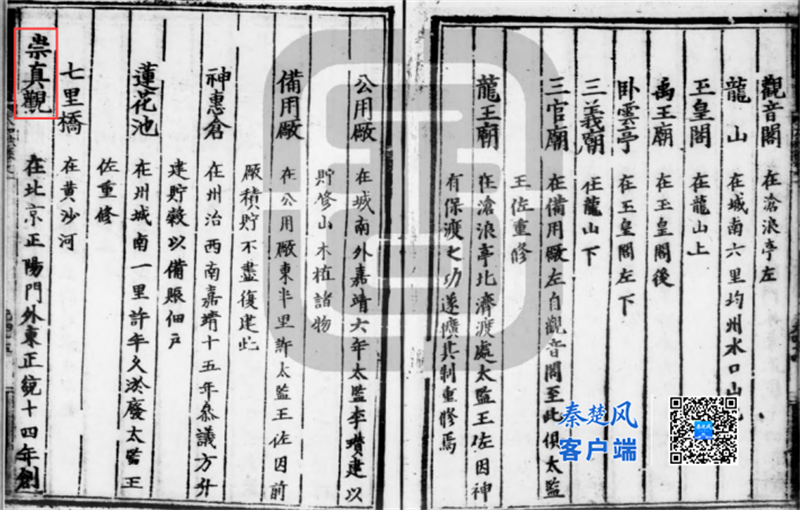

During the Jiajing period of the Ming Dynasty, the original draft of Chongzhen Temple was recorded in the "Great Mountain Taihe Mountain Annals" compiled by Wang Zuo
It should be made clear that the core function of Chongzhen Taoist Temple was not to spread Taoism, but to serve as the office of Wudang Mountain in Beijing during the Ming Dynasty, undertaking administrative auxiliary functions such as official liaison, material transfer, and personnel reception. This is also the essential difference between it and other Taoist temples in the capital during the Ming Dynasty. According to the records in the "Great Mountain Taihe Mountain Annals" during the Jiajing period of the Ming Dynasty, "the annual tribute of immortal goods and the guidance for pilgrimages are all located here" directly points out its two core functions, namely, material transfer and personnel reception. The "Stele and Chronicle Preservation Temple" indicates that the temple has a dedicated stele, recording its establishment reasons, functional scope and historical changes, further confirming its official nature.
Ii. Research on the Geographical Location of Chongzhen Temple and Analysis of its Existing Relics
Accurately defining the geographical location of Chongzhen Taoist Temple is the key to restoring its historical appearance and clarifying the confusion between it and related Taoist temples. According to the "Great Mountain Taihe Mountain Annals" of the Jiajing period of the Ming Dynasty, Chongzhen Temple is "located east of the Zhengyang Gate in Beijing", which is the core clue for determining its geographical location.

The straight-line distance between Zhengyang Gate and the ruins of Chongzhen Temple is less than one kilometer
The Zhengyang Gate of the Ming Dynasty, which is today's front gate of Beijing, is located at the southern end of Tiananmen Square. It was the main south gate of the inner city of Beijing during the Ming and Qing dynasties and is also known as the Zhengyang Gate. South of the Zhengyang Gate Tower, there is an arrow tower. The arrow tower has two upturned eaves and four layers of arrow Windows. The first floor platform is surrounded by white marble railings, and on the glazed tile roof, a flying dragon raises its head, looking very lifelike. The Zhengyang Gate Arrow Tower was first built in the fourth year of the Zhengtong reign of the Ming Dynasty (1439). The architectural form is a brick fortress style, with a city platform 12 meters high. The gate opening is a five-arch and five-arch arch style, located in the middle of the city platform. It is the only gate among the nine gates of the inner city with an arrow tower opening, exclusively for the passage of chariots and carriages.
The area around Dongjie Street outside Zhengyang Gate was a bustling district in the capital at that time, with numerous shops and convenient transportation. It was also a gathering place for official institutions and outsiders. Building Chongzhen Temple here not only facilitated the loading, unloading and transportation of supplies but also the travel and communication of pilgrims, which met the functional requirements of its office in Beijing.

According to the "Great Mountain Taihe Mountain Annals", Chongzhen Temple is "located east of the Zhengyang Gate in Beijing", which is the core clue for determining its geographical location
However, due to historical changes, the area around Dongjie Street outside Zhengyang Gate during the Ming Dynasty was ravaged by wars, demolition and urban renovation. Many ancient buildings have long been damaged or rebuilt, and the original remains of Chongzhen Temple have also suffered severe damage. In recent years, with the advancement of the urban cultural relics census in Beijing, a site named "Imperial-built Chongzhen Temple" has come into the view of researchers, providing important clues for verifying the specific location of Chongzhen Temple. In January 2013, the Cultural Commission of Dongcheng District, Beijing, listed the "Imperial-built Chongzhen Temple" as a registered cultural relic of Dongcheng District. The site is located at No. 209, Xixinglong Street, Dongcheng District, Beijing. Based on the on-site investigation records, this area is located within the range of the East Street outside the Zhengyang Gate in the Ming Dynasty, which is highly consistent with the geographical location of Chongzhen Temple recorded in the "Great Mountain Taihe Mountain Annals" during the Jiajing period of the Ming Dynasty.
There have always been many doubts about the differences in the names of "Chongzhen Temple" and "Chongzhen Temple". Some people hold the view that Taoist temples would not be named after the emperor's era name "Chongzhen", as Chongzhen was the era name of Emperor Sizong Zhu Youjian of the Ming Dynasty (1628-1644), and Chongzhen Temple was established in the 14th year of Zhengtong (1449), nearly 200 years earlier than the Chongzhen era, making it impossible to be named "Chongzhen".
Based on relevant historical materials and on-site investigation information, we believe that "Chongzhen Temple" should be a misinterpretation of "Chongzhen Temple", and its original name should be "Chongzhen Temple". There are three specific reasons for this:
First, there are slips of the tongue and clerical errors in the inheritance of names. The pronunciation of "Chongzhen" and "Chongzhen" is similar. In the long course of historical inheritance, whether it is in folk colloquial terms or in later literature records, there may be slips of the tongue or written errors, and "Chongzhen Temple" may be mistakenly called "Chongzhen Temple". Especially after the Qing Dynasty, the Chongzhen Temple gradually declined, and its historical records became increasingly scarce. Oral transmission among the people became the main way of memorization, making it easier for such misinterpretations of its name to occur and persist.
Second, on-site visits and evidence from folk tales. According to on-site investigations, among the elderly residents around the imperial-built Chongzhen Taoist Temple (No. 209, Xixinglong Street), there is a legend that the temple was originally named "Chongzhen Taoist Temple" and was the residence of Taoist priests from Wudang Mountain in Beijing during the Ming Dynasty. Later, due to accent issues, it was mistakenly called "Chongzhen Taoist Temple". Meanwhile, there are relevant records stating: "In the middle of the Ming Dynasty, a eunuch named Zhang Cheng was a devout Taoist. He transformed his private residence in Caocao Chang Hutong into a Taoist temple and named it 'Chongzhen Temple'. Inside, the Taoist ancestor Qiu Chuji, the Celestial Master Zhang Liusun, and his disciples were enshrined." Caocao Chang Hutong is adjacent to Xixinglong Street, both located in the area of Dongjie outside the Zhengyang Gate during the Ming Dynasty. This further confirms that this place was originally named "Chongzhen Temple", which is highly consistent with the geographical location and background of the Chongzhen Temple stationed in Beijing on Wudang Mountain as recorded in the "Great Mountain Taihe Mountain Annals" during the Jiajing period of the Ming Dynasty.
Third, an exclamable analysis with Chongzhen Wanshou Palace. In the capital of the Ming Dynasty, there was a Taoist temple named "Chongzhen Wanshou Palace", located to the north of today's Daqideng Hutong. This Taoist temple was first built during the Zhiyuan period of the Yuan Dynasty by Kublai Khan, the founder of the Yuan Dynasty, for Zhang Liusun, the grand master of Taoism. It was as famous as the Changchun Palace (now Baiyun Temple) and was one of the two most renowned temples in the Yuan capital. However, during the Ming Dynasty, the Chongzhen Wanshou Palace of the Yuan Dynasty was renovated into the "Tianshi 'an Grassland" for storing fodder for the imperial horses. Zhu Yixin of the Qing Dynasty wrote in the "Draft of the Annals of the Capital's Lanes and Alleys" : "The Imperial Horse Bureau had the Tianshi 'an Grassland, the old capital Grassland. The Tianshi 'an Grassland was located in the northeast corner outside the imperial city. During the Zhengtong period, it was renovated from the former residence of Zhang Tianshi, hence the name." In the sixth year of the Tianqi reign (1626), a fire broke out in the Tianshi 'an Grassland. Wei Zhongxian personally led the troops to put out the fire. It took three days to extinguish it. Since then, the area has gradually declined and now there is nothing left. It is impossible to verify its scale and layout at that time.

The "Imperially Built Chongzhen Temple" at No. 209, Xixinglong Street, Dongcheng District, Beijing
From the perspective of time and function, the Chongzhen Wanshou Palace was first built in the Yuan Dynasty and was converted into a hay yard during the Zhengtong period of the Ming Dynasty. The Chongzhen Taoist Temple was established in the 14th year of Zhengtong (1449), by which time the Chongzhen Wanshou Palace was no longer a Taoist temple and could not undertake the function of the Wudang Mountain office in Beijing. From a geographical perspective, Chongzhen Wanshou Palace is located in the "northeast corner outside the imperial city", while Chongzhen Temple is situated "east of the Zhengyang Gate". The geographical locations of the two places are quite different, which does not conform to the records in the "Great Mountain Taihe Mountain Annals" during the Jiajing period of the Ming Dynasty. Judging from the name, the core name of Chongzhen Wanshou Palace is "Chongzhen Wanshou", which shares some similarities with the "Chongzhen" in Chongzhen Temple. However, the former was a royal temple of the Yuan Dynasty, while the latter was an institution of Wudang Mountain stationed in Beijing during the Ming Dynasty. There is no direct connection between the two. Therefore, the possibility that Chongzhen Wanshou Palace is Chongzhen Taoist Temple is extremely low, and it is ruled out that it is the office of Wudang Mountain in Beijing.
After comprehensive research and verification, it can be determined that the "Imperially-built Chongzhen Temple" located at No. 209, Xixinglong Street, Dongcheng District, Beijing today is the former site of the Chongzhen Temple, the office of Wudang Mountain in Beijing during the Ming Dynasty.
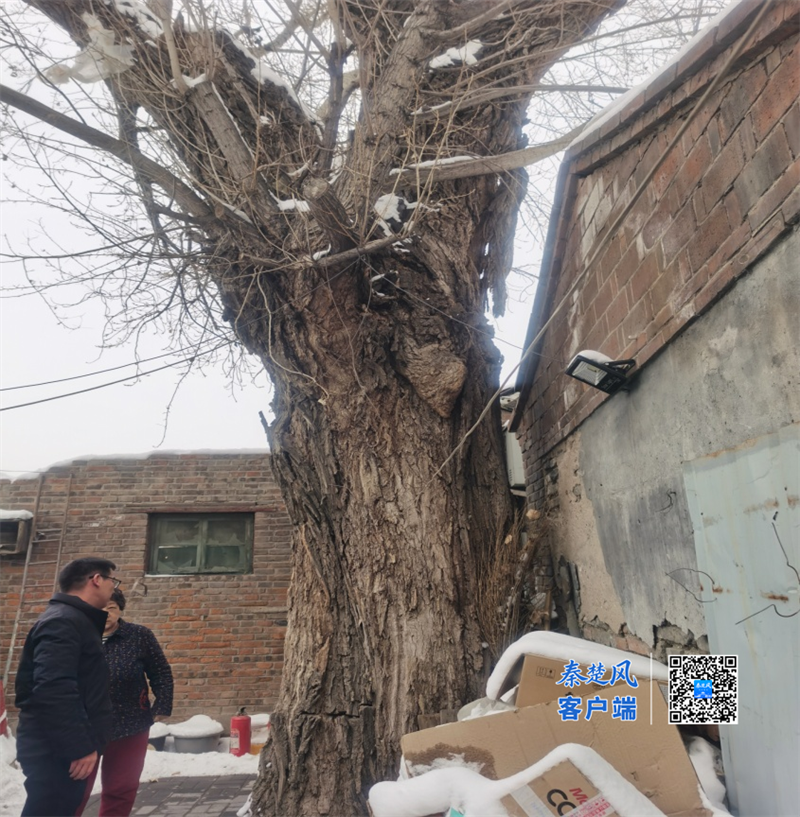
Investigation of the Chongzhen Temple Site in Beijing
The current condition of this old site is worrying. During an on-site visit, it was found that the building was severely damaged and the interior was in a dilapidated state. It has now been transformed into a large courtyard, and several households still live there, waiting for reconstruction. Although the ruins are severely damaged, based on its geographical location, folk tales and historical records, it can still be confirmed that it is the original site of Chongzhen Temple. This is currently the only verifiable physical site of Chongzhen Temple, which has significant cultural relic value and historical research value.
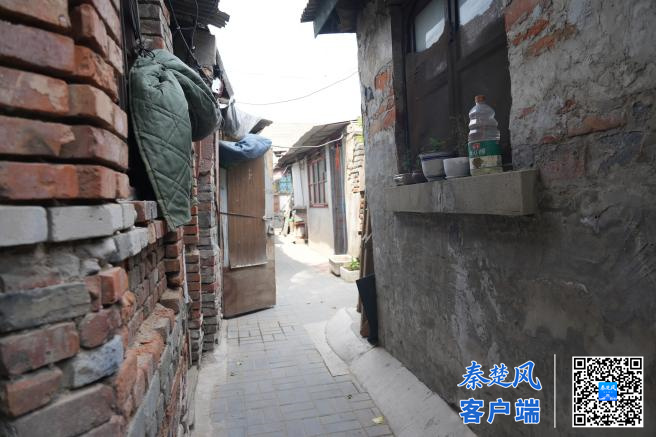

The interior of the Chongzhen Temple ruins was in a dilapidated state, but it has now been transformed into a large courtyard
Iii. The Core Functions and Historical Roles of Chongzhen Taoist Temple
As the Beijing office of Wudang Mountain in the Ming Dynasty, Chongzhen Temple had clear official and dedicated functions, mainly focusing on the connection between Wudang Mountain and the capital. Specifically, it could be divided into three core functions: material transfer, personnel reception, and official liaison.
The performance of these functions played a significant role in the imperial management of Wudang Mountain during the Ming Dynasty, the dissemination of Taoist culture, and the connection between the imperial court and the local area.
First of all, there is the function of material transfer. During the Ming Dynasty, Wudang Mountain, as a sacred place for the royal family, was required to regularly present "immortal items" to the imperial court. These "immortal items" mainly included unique medicinal materials of Wudang Mountain such as Gastrodia elata, Coptis chinensis, and polygonum multiflorum, local specialties like 樃 plum and ganoderma lucidum, as well as incense and candles, Taoist ritual objects, and elixirs refined by the taoists of Wudang Mountain. Most of these supplies are precious and not easy to preserve, and need to be escorted over long distances from Wudang Mountain to Beijing. Chongzhen Temple, as the official designated institution of Wudang Mountain stationed in Beijing, is responsible for receiving, storing and transferring these supplies. After the tributary supplies arrived in the capital, they were first transported to the Chongzhen Temple for storage, where they were kept by designated personnel within the temple. Then, in accordance with the regulations of the imperial court, they were timely transferred to relevant departments such as the Ministry of Rites and Taichang Temple to ensure the safety and timely delivery of the tributary supplies. Meanwhile, the materials bestowed by the imperial court upon Wudang Mountain, such as silver, silk, and ritual implements, could also be transferred through Chongzhen Temple and brought back to Wudang Mountain by the pilgrims or dedicated escort personnel, thus forming a complete material circulation system of "offering - transfer - receiving" and "bestowing - transfer - delivery".
Secondly, there is the function of personnel reception. According to the records in the "Great Mountain Taihe Mountain Annals" during the Jiajing period of the Ming Dynasty, Chongzhen Temple was the place where "the pilgrims and the attendants were all located" on Wudang Mountain. The "attendants" here were the highest managers of all the palaces and temples on Wudang Mountain in the Ming Dynasty, appointed by the imperial court with a rank of the sixth grade, and were responsible for the management and sacrificial affairs of each palace and temple. During the Ming Dynasty, the leaders of various temples and monasteries on Wudang Mountain were required to regularly visit the capital to pay homage to the emperor, report on the management of the temples and monasteries, and seek instructions on related affairs. During their stay in the capital, these people all resided in Chongzhen Temple, where they were received and arranged by the temple. In addition, Taoists from Wudang Mountain who went to the capital to preach and perform religious ceremonies, as well as personnel escorting tributary supplies, mostly stayed at Chongzhen Taoist Temple during their stay in the capital. Chongzhen Taoist Temple became a fixed stopover for the personnel of Wudang Mountain in the capital. Meanwhile, Chongzhen Temple may also receive officials from the imperial court who visit Wudang Mountain for inspection and worship, providing them with temporary accommodation and communication venues, further strengthening the personnel exchanges between Wudang Mountain and the imperial court.
Furthermore, there is the official liaison function. Chongzhen Temple, as the Beijing office of Wudang Mountain, serves as an important bridge for communication and liaison between Wudang Mountain and the imperial court. On the one hand, during their stay in Beijing, the supervisors of various temples and monasteries on Wudang Mountain can get in touch with relevant imperial departments such as the Ministry of Rites, Taichang Temple, and the Taoist Records Office through Chongzhen Temple, report on the sacrificial activities on Wudang Mountain, the renovation of temples and monasteries, and the management of Taoists, and seek relevant imperial orders and instructions. On the other hand, the imperial edicts, sacrificial arrangements, and reward instructions of the imperial court can also be conveyed to Wudang Mountain through the Chongzhen Temple, ensuring that the will of the imperial court can be promptly conveyed and implemented on Wudang Mountain. In addition, Chongzhen Temple may have also been responsible for organizing and archiving records related to tributary and pilgrimage to Wudang Mountain. The "steles and inscriptions" it has preserved may contain these contents, providing important physical materials for later generations to study the imperial management system of Wudang Mountain in the Ming Dynasty.
The establishment of Chongzhen Taoist Temple played an irreplaceable role in the development of Wudang Mountain during the Ming Dynasty and the improvement of the management system of Taoist temples on Wudang Mountain. Firstly, it standardized the tributary and pilgrimage activities on Wudang Mountain, ensuring the smooth flow of materials and personnel, avoiding the chaotic situation caused by the lack of fixed transfer and reception venues, and strengthening the management of Wudang Mountain by the imperial court. Secondly, it built a communication bridge between Wudang Mountain and the capital, promoting the exchange and integration of Taoist culture on Wudang Mountain and that in the capital, and driving the overall development of Taoism in the Ming Dynasty. Finally, Chongzhen Taoist Temple, as the symbol of Wudang Mountain's presence in Beijing, further highlights the status of Wudang Mountain as the royal temple, strengthens the close connection between "Taiyue Wudang" and the central court, and becomes an important part of the imperial Taoist system in the Ming Dynasty.
Iv. Analysis of the Historical Changes and Reasons for the Decline of Chongzhen Taoist Temple
Since its establishment in the 14th year of Zhengtong (1449), Chongzhen Temple has experienced prosperity in the middle and late Ming Dynasty. However, it gradually declined after the Qing Dynasty and eventually became a large courtyard with severely damaged ruins.
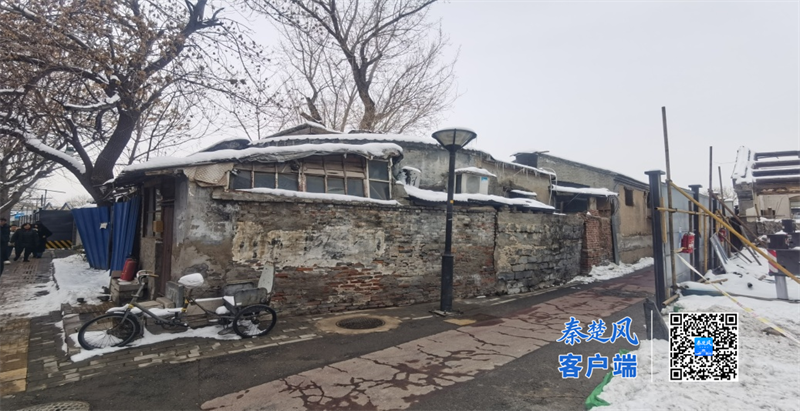
A distant view of Chongzhen Temple (Shooting direction: from south to north)
Its historical changes can roughly be divided into three stages: from the Zhengtong period of the Ming Dynasty to the Chongzhen period (1449-1644), it was the prosperous period of the Chongzhen Temple. From the Qing Dynasty to the Republic of China period (1644-1949), it was the period of decline for Chongzhen Taoist Temple. Since the founding of the People's Republic of China until now, it has been a period of damage and protection for the relics of Chongzhen Temple.
The Ming Dynasty was the prosperous period of Chongzhen Temple. During this time, the royal status of Wudang Mountain reached its peak, and tributary and pilgrimage activities were frequent. As its office in the capital, Chongzhen Temple always played an important role and received attention and support from the imperial court. Its architectural layout and management system were relatively complete, becoming an important link between Wudang Mountain and the capital.
After the Qing Dynasty, Chongzhen Temple gradually declined, and there were three main reasons for this: First, the royal status of Wudang Mountain dropped. After the Qing army entered the Pass, the Manchu rulers revered Tibetan Buddhism and paid far less attention to Taoism than in the Ming Dynasty. The imperial sacrificial system on Wudang Mountain gradually disintegrated, and the activities of paying tribute and making pilgrimages also came to a halt. As the Beijing office of Wudang Mountain, Chongzhen Taoist Temple lost its core functions, and the support from the imperial court also came to an end, leading to its gradual abandonment. The second is the destruction caused by war and urban changes. Since the Qing Dynasty, Beijing has experienced numerous wars and urban renovations. The area around Dongjie Street outside Zhengyangmen, as a bustling district, has been damaged and rebuilt many times. The buildings of Chongzhen Temple were not spared either. Some of the buildings were damaged or renovated, and their original layout was gradually disrupted. The third is private occupation and man-made damage. With the abandonment of Chongzhen Taoist Temple, folk people gradually occupied its buildings and transformed them into residences, shops, etc., further damaging its original appearance. By the Republic of China period, Chongzhen Taoist Temple had basically become a large courtyard, and its Taoist buildings and inscriptions were severely damaged. Many historical relics were buried.
After the founding of the People's Republic of China, the former site of Chongzhen Temple continued to be used as residential buildings. Due to the lack of effective protection, the damage to the buildings further intensified. Our on-site investigation revealed that the former Chongzhen Temple (the former site of Chongzhen Temple) is located at No. 209, Xixinglong Street. Now, its walls are mottled, the roof is damaged, and the interior is in a dilapidated state. There are still residents living here. Currently, this old site has been listed as a registered cultural relic in the Dongcheng District of Beijing and is awaiting reconstruction. Fortunately, with the enhancement of awareness of cultural relic protection, relevant departments have begun to pay attention to the protection and reconstruction of Chongzhen Temple. Its historical and cultural relic value has gradually been recognized, which provides an opportunity to restore the historical appearance of Chongzhen Temple and inherit the imperial Taoist culture of Wudang Mountain in the Ming Dynasty.

Chongzhen Taoist Temple on Wudang Mountain is located at No. 209, Xixinglong Street, Dongcheng District, Beijing today
In addition, the steles and inscriptions of Chongzhen Temple, as important physical materials documenting its historical changes, were recorded in the "Great Mountain Taihe Mountain Annals" during the Jiajing period of the Ming Dynasty as "the original steles and inscriptions of the temple", but no traces of related steles and inscriptions have been found so far. It is speculated that it might have been damaged, buried or lost among the common people during the wars and renovations after the Qing Dynasty. If these steles and inscriptions can be found, it will provide more direct and detailed materials for the research of Chongzhen Temple, further restoring its establishment reasons, functional scope and historical changes, which is of great significance for the study of the institutions stationed in Beijing on Wudang Mountain in the Ming Dynasty.
V. Conclusion
Through the review of relevant literature, on-site visits for verification and the analysis of historical relics, the following conclusions can be drawn -
The office of Wudang Mountain in Beijing during the Ming Dynasty: Chongzhen Temple, established in the 14th year of Zhengtong (1449), was granted by the imperial court. It is located at No. 209, Xixinglong Street, Dongcheng District, Beijing today (which is currently listed as a registered cultural relic in Dongcheng District as the "Imperial-built Chongzhen Temple"). The name "Chongzhen Temple" should be a slip of the tongue and a clerical error of "Chongzhen Temple", and has no direct connection with the Chongzhen Wanshou Palace of the Yuan Dynasty.
Chongzhen Taoist Temple is not an ordinary Taoist temple. Instead, it is an official institution of Wudang Mountain stationed in Beijing, which also has functions such as material transfer, personnel reception and official liaison. It is an indispensable and important part of the imperial management system of Wudang Mountain in the Ming Dynasty. The background of its establishment was the improvement of the imperial sacrificial system of Wudang Mountain in the Ming Dynasty and the normalization of tributary and pilgrimage activities. Its core function was to ensure the flow of materials and personnel between Wudang Mountain and the capital, and to communicate the connection between Wudang Mountain and the central court. It played an important role in the development of Wudang Mountain in the Ming Dynasty and the improvement of the imperial Taoist system.
Since its establishment in the Ming Dynasty, Chongzhen Temple has experienced both prosperity and decline. Today, it has been severely damaged, with only its old site awaiting reconstruction. The main reasons for its decline were the decrease in the royal status of Wudang Mountain after the Qing Dynasty, the destruction caused by wars and urban changes, as well as the occupation and man-made damage by the common people. As the only physical relic of the office of Wudang Mountain in Beijing during the Ming Dynasty, Chongzhen Temple carries rich historical information, witnesses the close connection between Wudang Mountain in the Ming Dynasty and the central court, and has extremely high historical research value and cultural relic protection value.
At present, the former site of Chongzhen Temple has been listed as a registered cultural relic in the census of Dongcheng District. It is hoped that the relevant departments can accelerate its reconstruction and protection work, explore its historical and cultural connotations, and sort out the relevant historical materials, so that this relic carrying the royal culture of Wudang Mountain in the Ming Dynasty and the history of its residence in Beijing can be passed down. It provides important physical evidence for later generations to study the Taoist culture of the Ming Dynasty, the imperial sacrificial system and the connection between the central and local governments. At the same time, it is also hoped that through the research in this article, the historical appearance of Chongzhen Temple can be clarified, the confusion between relevant names and geographical locations can be corrected, and further in-depth research on the institutions stationed in Beijing on Wudang Mountain during the Ming Dynasty can be promoted.
At present, the site is in a state awaiting reconstruction after the relocation of its residents. This is undoubtedly an important historical window. We call on the cultural relics department to officially correct its name to "Chongzhen Temple" in future reconstruction and research work to restore its historical origin. Furthermore, in archaeological exploration and restoration, efforts should be made to search for physical evidence such as "steles and inscriptions" mentioned in the "Great Mountain Taihe Mountain Annals" of the Ming Dynasty's Jiajing period that might be buried underground. The final reconstruction and display should also go beyond the restoration of a single building and be dedicated to interpreting its unique and profound historical role as the "Office of Wudang Mountain in Beijing", allowing this dilapidated courtyard hidden in the marketplace to once again tell the story of the continuous Taoist governance that spans over 1,100 kilometers between the imperial capital of the Ming Dynasty and the famous Taoist mountain.

The complete map of the capital city included in 宸垣 brief knowledge.
Shilue is a geographical research work compiled by Wu Changyuan, a scholar of the Qing Dynasty, in the 53rd year of the qianlong reign (1788).
Editor: Dong Man

Love never stops at reaching. "Wudang, I'll be back again!"
2026-06-26 15:11:19
Love never stops at reaching. Diego, an Italian youth, hiked...
Announcement on the Adjustment of Performance Time for "Wudang Yimeng
2026-04-09 22:56:30
Dear visitors: In order to further optimize the experience o...
Special offer air tickets for Shiyan Wudangshan Airport starting from 200 yuan in March have been released
2026-04-10 00:01:36
The warm March breeze is here. Saying goodbye to the high pr...
Female visitors can enter the park at half price! Wudang Mountain Scenic Area is offering discounted tickets
2026-04-09 22:02:47
Qin Chu Feng News (Correspondent Tan Mengjie) To celebrate I...

101 Reasons to Stay in Hubei: Wudang Jack: Please Call Me "Old Nei"
2026-04-09 22:03:58
Jack, an American young man who has practiced martial arts o...
Shiyan Wudangshan Airport has newly opened routes to Harbin and Zhuhai. Low-priced air tickets are now available for grabs
2026-04-09 21:56:47
Here it comes! Finally here it comes! Starting from March 31...
On the Golden Summit of Wudang Mountain, which is 1,612 meters above sea level, this "long-lived family" is little known
2026-04-09 22:07:49
Qin Chu Wind News (Shiyan Media Reporters Lu Wei and Liu Kun...
Because of the beautiful scenery of Wudang, people come to stay for the city's best views. "Shiyan, the city of immortal mountains and clear waters" is making all-out efforts to attract tourists
2026-04-09 22:06:08
On the evening of March 11th, at the foot of Wudang Mountain...