


A Ming Dynasty stele depicts the past of the royal family's pilgrimage to Wudang
2026-05-17 01:26:58

Qin Chu Wind News (Shiyan Media Reporter Yao Feng) The spring mountains are as dark as ink, and ancient steles are hidden in seclusion. In March 2026, when the Wudang Mountain Natural Landscape Survey Task Force was conducting a regular resource survey deep in the dense forest of Wudang Mountain, they unexpectedly discovered an ancient stele thickly covered with moss and dust among the grass and trees. When everyone carefully cleaned the stele and slowly brushed away the dust accumulated over hundreds of years, neat and clear lines of inscriptions slowly emerged before their eyes. After careful identification and verification, it was found that this is an official chronicle stele engraved in the 15th year of the Hongzhi reign of the Ming Dynasty (1502), which detailed the process of the imperial eunuch Wang Rui, the imperial horse eunuch Chen 玹, and the imperial eunuch Wei Lun, following the intention of the Ming Filial Piety, going to Wudang Mountain to install the offerings and preside over the prayer for blessings.

This stone tablet, which has been slumbering quietly in the deep mountains for over 520 years, features extremely neat and precise inscriptions, elegant and clear, and is filled with numerous fine lines. It is a rare gem of stone inscriptions in the Wudang Mountain area in recent years. It is like a key to a treasure door, quietly unlocking a precious past that has been sealed away by time and overlooked by historical records. It not only makes the trajectory of the Ming Dynasty's imperial Wudang pilgrimage clearly visible, but also, in the form of physical remains, fully restores the extremely high-profile, strictly procedural and grand imperial Wudang pilgrimage process during the Hongzhi period of the Ming Dynasty, adding the most direct and vivid evidence to the historical status of Wudang Mountain as a "place of national blessing" in the Ming Dynasty.
Who is Ma Shiyang?
On the 25th day of the seventh lunar month in the fourteenth year of the Hongzhi reign (1501), an imperial edict was issued to Wang Rui, the imperial eunuch, Chen 玹, the imperial horse eunuch, and Wei Lun, the imperial eunuch, stating, "Today, you are ordered to lead yellow boats and fast horse boats, carry the statue of Zhenwu, and go to Mount Taihe to pay homage. You should also bring silk and silver coins to offer sacrifices there, hold ceremonies and hang banners." An edict has been issued to the officials of the three departments of Huguang Town, namely, the commander-in-chief, the distributor and the censor, to entrust them with the preparation of military labor and wait for the application of materials by the comprador. You must be careful and take good care of yourselves on your journey. When arriving there, I will join forces with the governor of this mountain and other officials, showing respect, caution and peace. Even if the business is done, return to Beijing. It is also heard that the areas along the rivers in Henan and Shandong provinces in the north and south, as well as in Hubei and Hunan, were all hit by floods, and the people were in great hardship. You must understand the emperor's intention to serve the people. During your journey and upon arrival, when it comes to collecting military labor and other matters, you should be frugal and not be disturbed in the slightest. Take them to the official quarters, the craftsmen and others, and strictly tighten the bells and bundles. Those who dare to smuggle personal goods will be required to claim the subsequent separate cases and other charges. Those who cause trouble or harm others will be punished as a whole without mercy. You should be extremely cautious. Therefore, the imperial edict."

In the imperial edict of Emperor Hongzhi in 1501 AD, only three eunuchs, namely Wang Rui, Chen 玹 and Wei lun, were mentioned. No words were made about the other members of the court's incense-burning delegation. At the end of the newly discovered stone tablet, the inscription information is clearly engraved: "On the 21st day of the second lunar month of the year Renxu in the 15th year of Hongzhi, the stone was erected. Ma Shiyang, the governor of Kuaiji of the Jinyiwei, wrote the seal script together, and King Xin of Kuocang wrote the Dan script." A short line of signature brings to light a little-known yet crucial historical figure - Ma Shiyang. We can't help but ask who Ma Shiyang was who wrote the inscriptions on the steles? Why wasn't his name included in the imperial edict?
When many people see the official position of "Jinyiwei Zhenfu", their first thought is to associate it with the image of a military officer in charge of criminal justice and investigation. Ma Shiyang's identity was different from that of a traditional military officer of the Jinyiwei. His given name was Xuan and he was known by his courtesy name. His ancestral home was Shaoxing, Zhejiang Province. Since childhood, he was exceptionally intelligent, well-versed in classics and history, and had outstanding literary talent. At the same time, he was skilled in painting and was proficient in seal script and clerical script. He was a court scholar highly valued by Emperor Xiaozong Zhu You Tang of the Ming Dynasty. During the Ming Dynasty, court painters and scholars skilled in calligraphy and painting were often awarded honorary positions in the Jinyiwei system, known as "Ji Lu Guan". These positions were mainly used to show the favor of the royal family and facilitate their inclusion in the management of the court's artisan records. They did not actually handle judicial, arrest, or criminal affairs.
Ma Shiyang served in the imperial court as the attendant of the Huagai Hall. He was well-versed in literary skills, calligraphy and painting. Having him in charge of the security for this royal blessing and write the inscriptions on the memorial tablets not only adhered to the norms of royal etiquette but also ensured the rigor and accuracy of the inscriptions.
It is precisely because of such a professional scholar's pen that the Wudang royal family's pilgrimage event, which took place five hundred years ago, has been able to transcend the long passage of time and remain in the most authentic and complete form to this day, becoming the first-hand precious material to make up for the brief records in the official history and restore the court's blessing system of the Ming Dynasty.
The Jinyiwei of the Ming dynasty was a royal personal military and secret service agency , whose duties included: guarding the imperial palace and the ceremonial guard, reconnaissance, arrest, and interrogating the imperial court. The Wudang mountain pilgrimage was a royal blessing activity , led by departments such as the Ministry of Rites, the Bureau of Records, and the Taichang Temple, and carried out by eunuchs on behalf of the emperor. The Jinyiwei had no legal function to participate in religious affairs. Compared with the institutional arrangement through which the imperial power of eunuchs exercised proxy rule, the Jinyiwei did not possess the specific attribute of representing the royal family. Therefore, it does not need to be specifically listed as in the imperial edicts, but often appears as as a bodyguard such as "xiao wei" or "li shi".
How long does it take to walk from Beijing to Wudang Mountain?
The stone tablet on Zhanqi Peak is not an isolated piece of evidence. In the subsequent review process, the investigation team compared and cross-verified the inscriptions on the stone tablets, the cliff carvings at Yuxu Rock, the famous relics at Taishang Rock, as well as local documents such as "Brief Annals of Dayue" and "Annals of Dayue Taihe Mountain". For the first time, with precise data, they calculated the total time it took for the pilgrimage group to set off from Beijing and reach the foot of Wudang Mountain.
According to the "Great Mountain Taihe Mountain Annals" compiled by Wang Zuoxiu, Shen Dan and others during the Jiajing period, on the 25th day of the seventh lunar month in the 14th year of the Hongzhi reign (1501), Emperor Xiaozong of the Ming Dynasty officially issued an edict, commanding the imperial eunuch Wang Rui, the imperial horse eunuch Chen 玹 and the imperial eunuch Wei lun to serve as imperial envoys to the court, in charge of the yellow boats and horse fast boats. Carrying elaborately crafted Zhenwu statues, imperial banners, Taoist classics, various offerings, as well as silk and silver, they set off from the capital and headed south all the way to Wudang Mountain to pay homage to the statues, hold blessings and build a ritual.
The fleet moved southward slowly along the waterway, braving wind and rain all the way. They had to ensure the safety of the deities and offerings while advancing steadily in accordance with the royal rituals. It was not until the 14th day of the first lunar month in the 15th year of the Hongzhi reign (1502) that they reached the shore of Junyang at the foot of Wudang Mountain.

In the newly discovered stele, we see the record that "on the fourteenth day of the first lunar month, the boat arrived at Junyang", which marks that this royal delegation officially entered the jurisdiction of Wudang Mountain at this time.
From departure to arrival, the entire journey took a total of 142 days, nearly five months. In the Ming Dynasty, where transportation was inconvenient, such a long journey not only demonstrated the royal family's extreme emphasis on praying for blessings at Wudang, but also made later generations truly feel the huge amount of money and time consumed by a court pilgrimage event personally arranged by the emperor, from preparation, departure to arrival at the destination.
The composition and division of labor of the royal pilgrimage group
Wang Rui, Chen 玹 and Wei Lun were all imperial envoys and eunuchs personally dispatched by Emperor Xiaozong of the Ming dynasty, representing the imperial power to carry out the important task of this blessing activity. Although all three were envoys of the imperial court, they belonged to different inner court institutions and had different responsibilities. During the entire pilgrimage, they formed a highly efficient coordination of "overall supervision, material support, and ritual money and provisions", which was vividly called the "Golden Trio" of Wudang blessings during the Hongzhi era by later generations.
Chen 玹 was a eunuch of the Imperial Horse Office, from the most powerful institution in the Ming court. The Imperial Horse Bureau was initially in charge of the royal horse affairs. Later, its functions gradually expanded, and it also led the imperial guards and participated in state affairs, becoming the most trusted attendant institution of the emperor. Therefore, Chen 玹 held a central position in this mission, mainly responsible for overseeing the overall situation, supervising and inspecting, representing the imperial power to control the incense offering etiquette, coordinating local officials, and coordinating overall affairs. He strictly prevented local authorities from taking the opportunity to disturb the people and officials from being negligent or derelict in their duties. He was the overall commander and supervisor of the entire incense offering event. The inscriptions such as "Jin Tai Chen 玹" and "Imperial Commissioner and eunuch Chen 玹 burns Incense" left at places like Yuxu Rock and Taishang Rock on Wudang Mountain are the direct imprints left by him at the scene of performing his duties.
Wang Rui was a eunuch of the Imperial Court, an institution specifically in charge of the production, display and storage of royal utensils, as well as the preparation of blessing materials. His core task was to supervise and escort the safe arrival of the Zhenwu Statue and other items at Wudang for proper enshrinment. At the same time, he was responsible for managing all the blessing supplies, including the inventory, transportation, allocation and distribution of silver, silk, incense, candles, offerings and other materials, providing solid and reliable material support for the entire royal blessing event, which was a key link in the execution of the mission.
Wei Lun, who was also a eunuch in the imperial court, focused on blessing ceremonies and the management of money and grain in his team. He assisted Wang Rui in escorting the deities and managing the supplies, was responsible for the specific planning, process organization and on-site execution of the sacrificial ceremony, and at the same time took on the tasks of financial accounting, account recording and post-event reporting, ensuring that every penny of money and grain was used in a standardized and transparent manner and every ceremony process consigned to the ritual system. He was the specific executor for the effective implementation of the royal incense offering activities.
Ma Shiyang, the prefect of the Jinyiwei, was responsible for the security of the pilgrimage group and the compilation of folk customs.
One chief supervisor, one in charge of materials, one organizing the ceremony, and one responsible for security and protection - the four people had clear responsibilities, smooth connections, and worked in perfect harmony. With a strict and orderly work loop, they successfully completed the major royal pilgrimage task assigned by the imperial court, fully demonstrating the institutionalization and standardization level of the Wudang pilgrimage activities in the Ming Dynasty's imperial court.
The itinerary of the Royal Pilgrimage group at Wudang Mountain
Taking the newly discovered stone tablet as the main thread and connecting multiple historical materials such as cliff inscriptions, mountain Chronicles and original imperial edicts, the entire process of the Ming Dynasty royal delegation's pilgrimage to Wudang Mountain spanning five hundred years has now been vividly, clearly and completely recreated.
In the intercalary seventh month of the fourteenth year of the hongzhi reign (1501), Emperor Xiaozong Zhu You Tang of the Ming Dynasty officially issued an edict, appointing Wang Rui, Chen 玹 and Wei lun as imperial envoys to escort the gilded statue of Zhenwu and other objects to Wudang Mountain for enshrinment, and at the same time held a sacrificial ceremony to pray for the well-being of the crown prince Zhu Houzhao of the East Palace. The imperial edict clearly stipulates that local officials must fully cooperate, prepare military supplies and purchase materials. All blessing and ritual activities must be carried out with sincerity and caution, and it is strictly prohibited to take the opportunity to cause trouble and disturb the people.
On the 25th day of the seventh lunar month in the leap year, three imperial envoys received an order and set out. They organized a fleet to load a full range of supplies including deities, banners, scriptures, offerings, silk, and silver. They set off from the Tongzhou Wharf in Beijing and marched southward along the waterways in a grand procession. They crossed the late autumn of the north and the severe winter of the south, and arrived at Junzhou on the banks of the Han River on the 14th day of the first lunar month in 1502. Chen 玹 planned the route and coordinated the itinerary in advance. Security personnel such as Ma Shiyang carefully watched over the statues and supplies, strictly adhering to the regulations and moving forward smoothly all the way. After a 142-day long journey, the delegation finally arrived at Wudang amid the sound of New Year's firecrackers.
The inscription vividly records the scene at that time: Before the fleet arrived in Junyang, there were continuous overcast skies and rain and snow in the morning. When they officially entered the territory of Wudang Mountain, suddenly the sky cleared up and the round light shone brightly. Thousands of people gathered along the way to watch, their laughter filling the air. It was regarded as an auspicious omen of the royal family's sincere prayer to move the deities. "The sky cleared up and the round light shone brightly in five colors, and from time to time, the onlookers moved in the tens of thousands."
After arriving in Junzhou, Wang Rui, Chen 玹 and wei lun quickly started their work according to their division of labor. After delivering supplies, paying homage to various halls and arranging a ritual at Jingle Palace, they made a brief stop and then followed the Han River upstream to Xuanyue Gate, Yuzhen Palace and Yuxu Palace.
The incense-burning delegation first climbed the Taihe Palace to pray for blessings. He arrived at the Zixiao Palace on February 21, 1502, the 15th year of the Hongzhi reign. The grandeur of the successive dynasties' devout worship has never been seen before in ancient times. After the event was completed, Ma Shiyang wrote the seal script and engraved the stele and set up the stone, detailing the process of installing the offerings and praying for blessings. This is the newly discovered precious stele.
In addition to the incense offering, Chen 玹 went to yuxu Rock to burn incense first on the fourth day of the third lunar month. Wei Lun arrived at yuxu rock on the fifteenth day of the third lunar month and began to prepare for the related matters of the ritual. On April 4th, Chen 玹 went to Taishang Rock to burn incense and inscribe an inscription, which was also the last time for this pilgrimage group to leave a record on Wudang mountain. Wang Rui presided over the completion of specific tasks such as the installation of the Zhenwu statue, the placement of offerings, and the inventory and distribution of supplies. All the work was carried out in an orderly and well-organized manner.
According to the official envoys' system of the Ming Dynasty, after the completion of a phased task, the envoys had to return to the capital to report their mission. Therefore, Chen 玹, wang Rui, Wei lun and ma Shiyang did not stay at Wudang Mountain for a long time. Instead, after completing their respective tasks, they returned to Beijing one after another to report on the progress of their prayers and to report their orders. Throughout the process, they strictly adhered to the court's regulations and fulfilled their duties as envoys. On December 25 of the same year, in the imperial edict issued by Emperor Xiaozong of the Ming Dynasty to eunuch Chen Kuan and others for their pilgrimage to Wudang, the words "Eunuch Wang Rui, Chen 玹, wei lun zhidao" appeared, indicating that the three had returned to Beijing by then and could provide experience exchange for the next round of Wudang pilgrimage activities of eunuch Chen kuan and others.
A stele preserves history, the historical glory of the "Royal Family Temple" on Wudang Mountain
The four imperial envoys traveled thousands of miles to return to the capital and Wudang. Behind this was the Ming emperor's high recognition and full efforts to maintain the status of Wudang Mountain as the "royal temple".

Emperor Xiaozong of the Ming Dynasty, Zhu You Tang, was an emperor with an excellent reputation in the Ming Dynasty. During his reign, he was diligent in state affairs, kind and caring towards the people, and reformed the imperial system, initiating the "Hongzhi Revival" characterized by political clarity and the stability of the people. Unlike some emperors in history who were obsessed with alchemy, Emperor Xiaozong of the Ming Dynasty revered the True martial god of Wudang, not in pursuit of immortality and immortal arts, but rather valued the spiritual symbol of true martial "protecting the country and safeguarding the people". By holding high-level royal blessing events, on the one hand, we pray for the country's long-term stability and peace, favorable weather, bountiful harvests, and the well-being of the people. On the other hand, it also demonstrated the legitimacy of imperial power to the world, consolidated social consensus, and strengthened the special status of Wudang Mountain as a place for the Ming Dynasty's royal family to pray for blessings.
During the eighteen years of Emperor Hongzhi's reign, a total of six large-scale Wudang incense offering activities were held. The imperial blessing ceremony on Wudang Mountain gradually evolved from temporary envoys to institutionalized and large-scale activities, becoming an important part of the national blessing system in the middle of the Ming Dynasty. The newly discovered Chronicles on Wudang Mountain, including the cliff carvings at Yuxu Rock and the inscriptions at Taishang Rock, not only fill the gap of brief and scattered records in the official history, but also restore important historical details such as the division of labor among the inner court institutions of the Ming Dynasty, the eunuch envoys system, and the royal prayer process. Moreover, they directly witness the historical process of the deep integration of imperial power and Taoist culture in the Ming Dynasty. It is an extremely precious and irreplaceable physical witness to Wudang Mountain as a World Cultural Heritage Site.
At present, the Wudang Mountain Natural Landscape Investigation Task Force has carried out a comprehensive field investigation, digital recording, high-definition scanning and archiving protection of the steles and cliff carvings related to Chen 玹. Fan Xuefeng, a member of the investigation team and the director of the Wudang Mountain Special Zone Archives, believes that while protecting the stone carving heritage, it is even more important to do a good job in value interpretation and dissemination. Through various forms such as exhibitions, research, and popular science, more people should be informed of the stories of Wang Rui, Chen 玹, and ma Shiyang, so as to bring these cold stones to life. It has become a vivid textbook for telling the story of the integration of ancient Chinese politics, culture, military affairs, life and so on, allowing the cultural charm of Wudang Mountain to be widely spread.
After five hundred years of wind and rain, the ancient stele has once again come to light. The Wudang River, stretching for eight hundred miles, is beautiful and has a long and rich cultural heritage. This ancient stele on Zhanqi Peak not only records the performance of the duties of Chen 玹, a eunuch of the Imperial Horse Bureau, and preserves the historical records of Ma Shiyang, a court scholar, but also captures the glorious chapter of the royal blessings on Wudang Mountain during the Hongzhi period of the Ming Dynasty, adding a weighty, true and vivid historical footnote to the Wudang culture of Shiyan.
With more historical relics discovered and more long-buried past events unsolved, Wudang Mountain, a cultural mountain that carries the thousand-year-old Taoist charm and the glory of the royal family, is bound to shine even more brilliantly in the new era and become an important window for telling Chinese stories and inheriting the Chinese cultural heritage.
Protecting these precious relics is to safeguard the collective memory of our nation, carry forward the roots and soul of Chinese culture, and let the charm of Wudang Mountain, a world cultural heritage site, shine even more brightly in the new era.
Editor: Li Yaguang

Love never stops at reaching. "Wudang, I'll be back again!"
2026-06-26 15:11:19
Love never stops at reaching. Diego, an Italian youth, hiked...
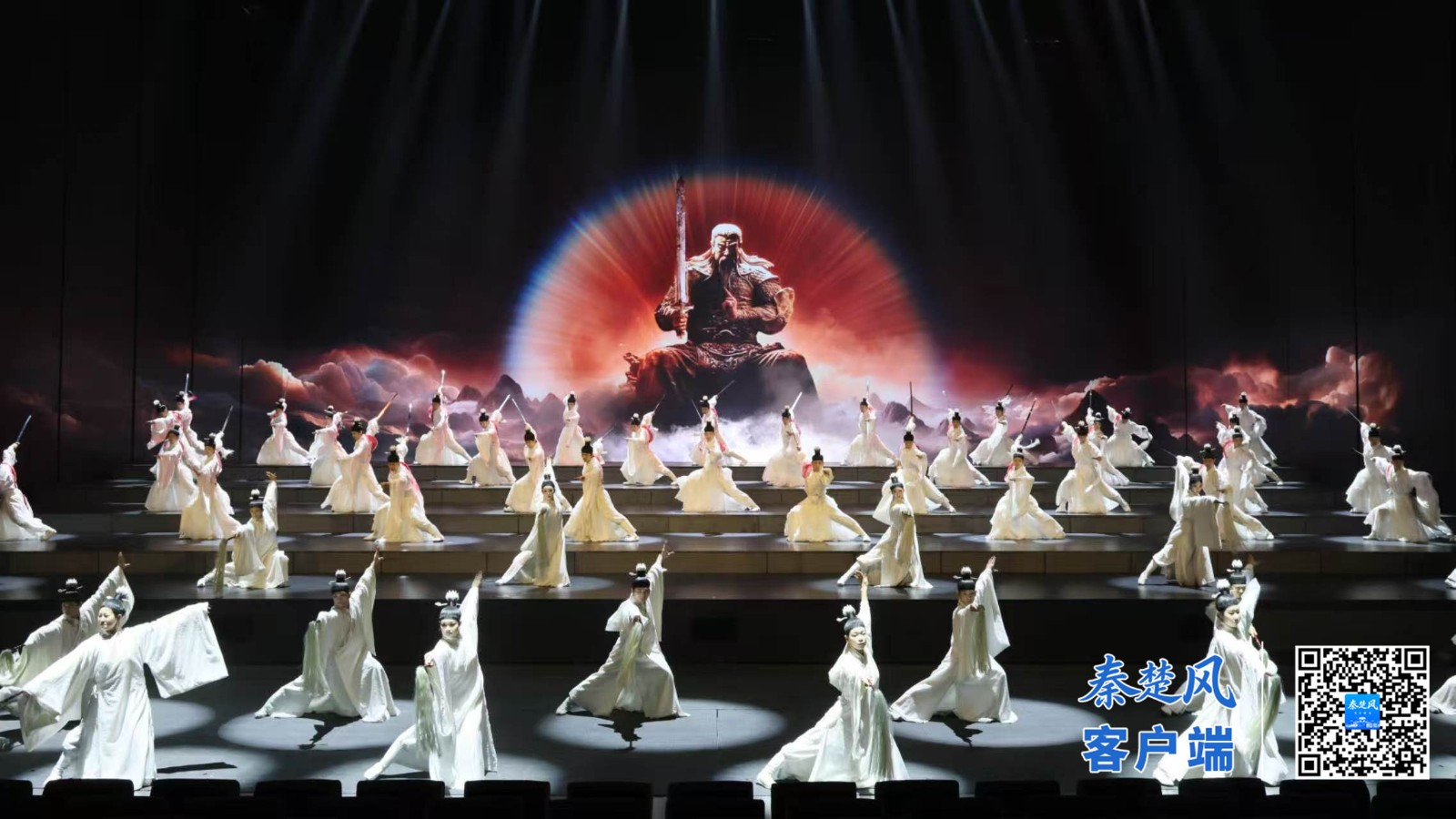
Announcement on the Adjustment of Performance Time for "Wudang Yimeng
2026-04-09 22:56:30
Dear visitors: In order to further optimize the experience o...
Special offer air tickets for Shiyan Wudangshan Airport starting from 200 yuan in March have been released
2026-04-10 00:01:36
The warm March breeze is here. Saying goodbye to the high pr...
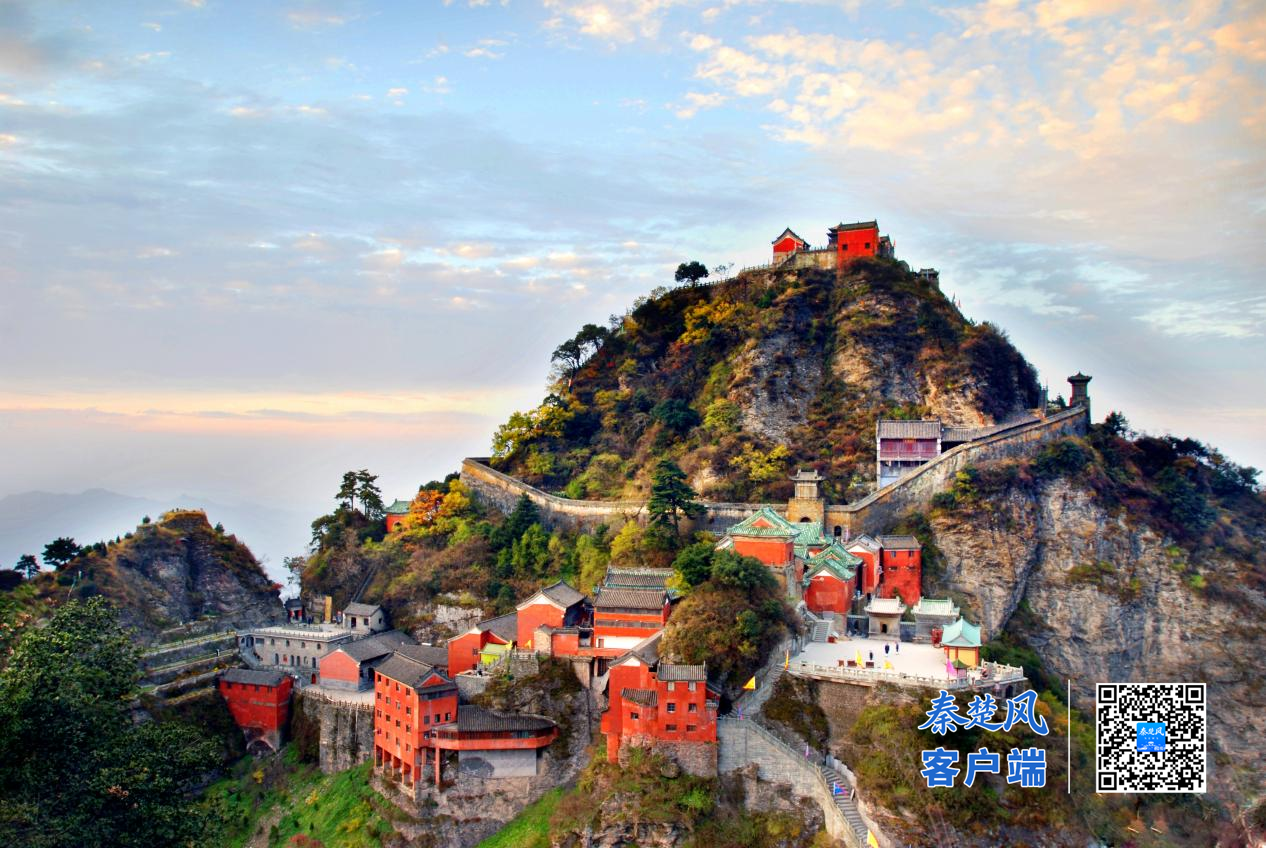
Female visitors can enter the park at half price! Wudang Mountain Scenic Area is offering discounted tickets
2026-04-09 22:02:47
Qin Chu Feng News (Correspondent Tan Mengjie) To celebrate I...

101 Reasons to Stay in Hubei: Wudang Jack: Please Call Me "Old Nei"
2026-04-09 22:03:58
Jack, an American young man who has practiced martial arts o...
Shiyan Wudangshan Airport has newly opened routes to Harbin and Zhuhai. Low-priced air tickets are now available for grabs
2026-04-09 21:56:47
Here it comes! Finally here it comes! Starting from March 31...
On the Golden Summit of Wudang Mountain, which is 1,612 meters above sea level, this "long-lived family" is little known
2026-04-09 22:07:49
Qin Chu Wind News (Shiyan Media Reporters Lu Wei and Liu Kun...

Because of the beautiful scenery of Wudang, people come to stay for the city's best views. "Shiyan, the city of immortal mountains and clear waters" is making all-out efforts to attract tourists
2026-04-09 22:06:08
On the evening of March 11th, at the foot of Wudang Mountain...