


The tomb of the Taoist Priest in Wulong Palace
2022-08-20 23:32:13
Beside the Langmei Terrace in Wulong Palace, there is the tomb of Li Suxi, a Taoist priest of Wudang with a very peculiar burial method. Li Suxi was a highly accomplished Taoist priest who made outstanding contributions to Wudang Mountain. At the age of 93 in the 19th year of Yongle, he passed away while sitting upright. Emperor Chengzu of the Ming Dynasty and his crown prince Zhu Gaochi praised him as "diligent and devoted to the Tao, loyal to the monarch and patriotic". Li Suxi's funeral was of extremely high standards. Hu, the left minister of Rites, erected a stele for her at Langmei Terrace. The two sides of the stele were engraved with two imperial edicts. Central and local officials at that time, as well as famous Taoists on Wudang Mountain, participated in the stele erection and sacrificial ceremony. Li Suxi's tomb chamber faces west and is entirely built with bluestone slabs. A seven-story stone tomb pagoda was built on the tomb chamber, marking the status of its owner, and it was decorated with flower-patterned railings all around. On both sides of the tomb chamber are carved couplets in mourning: "The dragon resides in the railing, thriving for a thousand years; the tiger lies in the palace, prosperous for ten thousand generations." From this, it can be seen that Li Suxi's tomb was demarcated by a renowned master and is regarded as a feng shui treasure site. Li Suxi was born in the Yuan Dynasty in Luoyang, Henan Province. Her courtesy name was Youyan and her pseudonym was Master Mingshi Taoguang. At the end of the Yuan Dynasty, he left his family to enter Wudang. In the early years of the Hongwu reign of the Ming Dynasty, he was enlightened and became a Taoist priest, serving as the chief Taoist priest of the Wulong Palace. In the third and fourth years of Yongle during the Ming Dynasty, Taoists were sent twice to present nuts and plums to the emperor, and both times they were generously rewarded. Li Suxi also went to the capital to express her gratitude. Emperor Yongle bestowed upon her a seat in the hall and they discussed the "way of governing the country and governing oneself" as well as the ancient sites and old regulations of the Wudang palaces and temples. At that time, Emperor Yongle had just initiated the "Construction of the Forbidden City in the North" project. This court visit was very likely one of the turning points for the decision to "build Wudang in the South". Six years later, Emperor Yongle built a grand imperial temple on Wudang Mountain. Just before the entire project was about to be completed, Li Suxi passed away without any illness. According to local elders, this tomb had been opened long ago and three stone pillars supporting the coffin had been seen. So this is a typical suspended burial chamber on Wudang Mountain. The burial customs and culture of Wudang Mountain are extremely rich. Historically, there have been sky burial, cliff burial, hanging burial, and burial in a burial kiln, among others. The hanging burial in Wudang Mountain is different from that in other regions. Instead of placing the coffin on the cliff, it is suspended in mid-air with ropes or stones and wood. In folk terms, this form of burial is called "an official not at the bottom", which means not holding the lowest position.
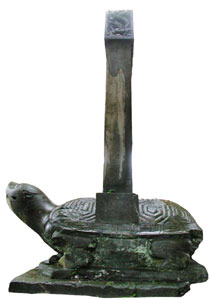
Wulong Palace Imperial Stele Pavilion No. 1
2022-08-20 23:32:13
Wulong Palace Imperial Stele Pavilion No. 1
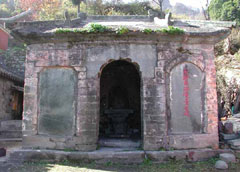
The Middle view of the Yuan Dynasty stone hall
2022-08-20 23:32:13
The Middle view of the Yuan Dynasty stone hall

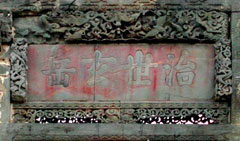
The Mystic Mountain for governing the world
2022-08-20 23:32:13
The Mystic Mountain for governing the world
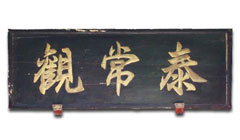
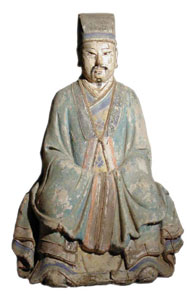
The main hall of the Five Dragons Palace has three statues
2022-08-20 23:32:13
The main hall of the Five Dragons Palace has three statues
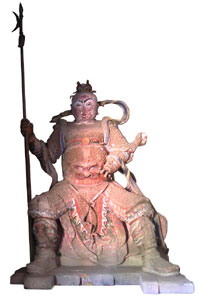
The white tiger in the Dragon and Tiger Hall of Zixiao Palace
2022-08-20 23:32:13
The white tiger in the Dragon and Tiger Hall of Zixiao Palac...
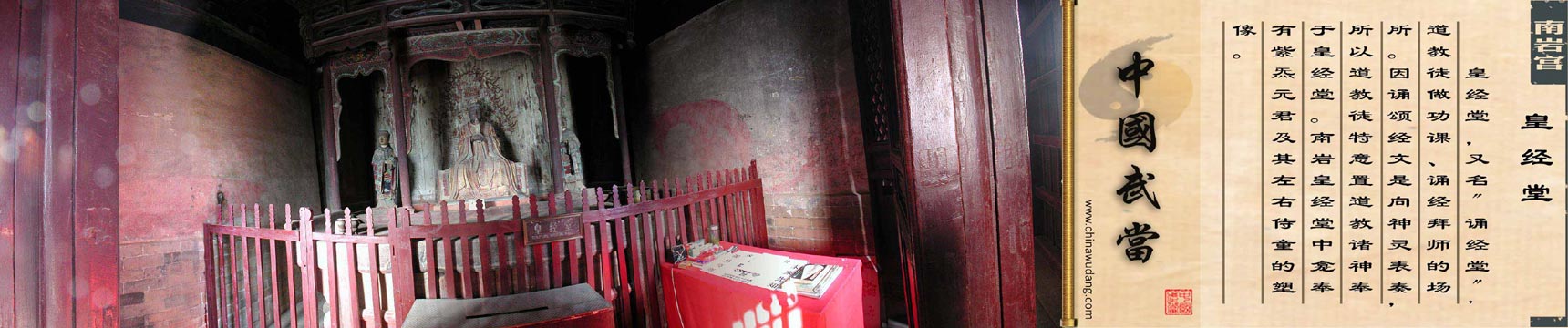
The Imperial Scripture Hall of Nan Yan Palace
2022-08-20 23:32:13
The Imperial Scripture Hall of Nan Yan Palace