


Talisman
2022-08-20 23:32:13
Laozi said: The Dao is supreme, profound and has no lower boundaries. It is level and accurate, straight and straight, round and regular, square and regular. It wraps around the heaven and earth without any inside or outside, and covers all holes without any . Therefore, those who understand the Dao do not get angry or happy, sit without worry, sleep without dreaming, see things with names, and respond to events when they come. Laozi said: "Those who wish to gain fame will surely create affairs. When affairs arise, they will abandon the public for the private, follow the double path and indulge themselves, do good when praised, and become virtuous when established. When governance does not follow the right path and affairs do not follow the right path, governance does not follow the right path and many are blamed; when affairs do not follow the right path, there will be no achievements. Acting rashly should be moderate. Success is not enough to stop blame, and failure is enough to destroy oneself." Laozi said: "Non-action is called the corpse, non-action plans the government, non-action takes on responsibilities, and non-action is the wise ruler." Hide in the formless, act without slackness, do not seek blessings first, do not anticipate disasters, start from the formless, act out of necessity, seek blessings before avoiding disasters, seek benefits before staying away from harm. Therefore, those who achieve peace through non-action will be in danger when they lose their peace, and those who govern through non-action will be in chaos when they lose their governance. Thus, "One does not wish to be as mediocre as jade or as disgraceful as stone." Those with good writing skills will have their skins peeled off, those with beautiful horns will have their bodies killed, sweet springs will dry up, straight trees will be cut down, glorious words will turn into faults, and jade will hurt the mountains. The troubles of the common people surely lie in their words. Laozi said: "One should act in accordance with The Times; those who do not know this will turn fortune into misfortune." The sky is the cover and the earth is the zhen. Those who make good use of the Dao will eventually be endless. The earth is the zhen and the sky is the cover. Those who make good use of the Dao will eventually be harmless. Chen said that the five elements must prevail, and everything covered by heaven is immeasurable. Therefore, "Knowing or not knowing is the highest, not knowing or not knowing is illness." Laozi said: "Mountains produce gold, stones produce jade, and they peel off each other. Wood breeds insects and feeds on itself. People deal with affairs and harm themselves." Those who are fond of things will never fail, those who strive for profits will never fail. Those who are good at traveling will drown, and those who are good at riding will fall. Each of them, following their own interests, brings disaster upon themselves. To gain something lies in timing rather than competition; to govern it lies in the way rather than the sage. When earth is at the bottom, it does not strive for height, and thus it is stable without danger. When water flows down, it does not strive for speed, and thus it flows away without delay. Therefore, the sage has no attachment and thus has no loss; he does not act and thus has no failure. Laozi said: One word cannot be exhausted; two words can be the supreme ruler of the world; three words can be the mighty vassal states; four words can be the dual rulers of the world. If one is sincere and trustworthy, one cannot be eradicated; if one is virtuous, one will be the supreme ruler of the world. If one promotes the virtue of the virtuous, the feudal lords will be powerful; if one loves the wicked and the young, one will be unparalleled in the world. Laozi said: There are three kinds of unnatural deaths for a person: those who do not control their diet, keep themselves simple and humble, be killed by illness, enjoy themselves to the fullest, keep their desires unending, be killed by punishment, be killed by the few against the many, be killed by the weak against the strong, and be killed by soldiers. Laozi said: "Those who give generously will receive good rewards; those who hold grudges deeply will suffer deep disasters. To give little but have high expectations, to breed grudges but have no patients, will never happen." By observing where he has passed, one can know where he has come. Laozi said: To follow the will of heaven, to govern the mind, to sort out likes and dislikes, to adapt to one's nature, and then to master the way. To follow the will of heaven means not to be confused by fortune and misfortune; to govern the mind means not to indulge in joy or anger; to sort out likes and dislikes means not to be greedy or useless; to adapt to one's nature means not to indulge in conflicts. When one is not confused about fortune and misfortune, one's movements and stillness are in harmony; when one is rational, one's joy and anger are not arbitrary; when one's rewards and punishments are not excessive; when one is not greedy and useless, one's desires do not harm one's nature; when one's desires are not excessive, one's health is maintained and one is content. By doing these four things, one does not seek external gains, does not rely on others, but seeks oneself and achieves success. Laozi said: "Do not seek what is wrong, do not hate others' criticism of yourself, cultivate the virtue of praise, and do not seek others' praise of yourself." One cannot prevent misfortune from coming by believing in one's own lack of wisdom, nor can one ensure that fortune will surely come by believing in one's own refusal to yield. When misfortune comes, it is not caused by oneself, so one is not worried when poor. When good fortune comes, it is not caused by oneself, so one is not arrogant when enlightened. Therefore, one lives in seclusion with a happy heart and governs by non-action. Laozi said: The Dao holds onto what it already has, does not seek what it does not have, pursues what it has not obtained, and thus the owner will perish; cultivates what it already has, and then what it desires will arrive. The foundation of governance lies in not being in chaos, but those who are in order are bound to be in danger; those who are in action are bound to avoid non-existence; and those who are eager for fame are bound to 剉. Therefore, no greater blessing is than being free from disaster, and no greater benefit is than being free from loss. Therefore, "Things may gain and then lose, and lose and then gain." The Tao cannot advise those who seek benefits but can calm the mind and avoid harm. Therefore, one may experience no misfortune but not good fortune, and no sin but not merit. The Dao says, "Mangmanmei", following the might of heaven, sharing the same energy with it without any worries or reserves. It does not welcome those who come or guide those who leave. Even though people are in the east, west, south or north, they stand alone in the center. Therefore, when dealing with the wrongdoings of all, one does not lose one's integrity, follows the flow of the world, does not leave one's territory, does not do good, does not avoid the ugly, follows the way of heaven, does not start from the beginning, does not focus on oneself, follows the principles of heaven, does not plan, does not abandon The Times, follows the will of heaven, does not seek, does not refuse blessings, follows the rules of heaven, there is no inner blessing and no outer misfortune, thus neither misfortune nor fortune arises, and no one is a thief. Therefore, when the most virtuous people share the same words, the same blessings in their deeds, and are of one mind from top to bottom without any deviation from the right path, they will abandon the wrong rules and open the way to the good, and the people will follow the right direction. Laozi said: "If one does good, one should advise; if one does not, one should observe. Persuasion leads to criticism, and observation leads to trouble. Therefore, one cannot further seek fame in the path of the Tao but can retreat to cultivate oneself." Therefore, the sage does not seek fame through deeds, nor does he seek praise through knowledge and views. He governs naturally and has nothing to follow. Those who act will fail, those who seek will not succeed. People will be exhausted and the way will not be unobstructed. Wisdom without action is as meritorious as lack of wisdom, ability without action is as virtuous as incapability, wisdom is like lack of wisdom, ability is like incapability, and when the principle is understood, people will perish. People and the Dao are not mutually enlightened. When people love fame, they do not use the Dao. When the Dao overcomes people, fame ceases. When the Dao ceases, people's names and seals are in peril. Laozi said, "It is better to divide the wealth among the believers than to divide it and collect it. Why is that?" Those who are intent are not as good as those who are not. It is better to close the door and seal everything off than to have an honest man keep his wealth. This is because a person with desires is not as honest as one without desires. When people point out the flaws of others, they feel resentful; when they see the ugliness of others, they feel delighted. If one can accept others without accepting oneself, one will be free from burden. Laozi said, "All people do not rely on precious coins but on humble words." A gentleman, though simple, desires not to be tired of it; humble, refraining from words; eloquent, friendship not to be forged; restrained, vows made; agreements made before the sun. Therefore, a gentleman does not feign benevolence and righteousness on the outside but cultivates the Dao and the arts within. To improve the affairs within the territory, to the best of the land, to persuade the people to defend to the death, to strengthen the city walls, to unite the upper and lower levels, and to safeguard the state with them, that is, to not attack the innocent for the sake of decoration, and not attack the difficult for the sake of profit. This is the way to ensure stability and the principle of profit. Laozi said, "The sage cannot satisfy his heart, the common people cannot satisfy their desires. The gentleman acts with righteousness, while the common people act with evil." To be in harmony with one's nature internally and with righteousness externally, to act in accordance with reason and not be bound by material things, is the essence of righteousness. Those who are driven by taste, indulged in sensual pleasures, and triggered by joy and anger, and ignore the consequences, are pathogenic factors. Evil and good harm each other, and desire and nature harm each other. They cannot coexist; one should abandon the other. Therefore, the sage gives up his desires and follows his nature. The eyes love beauty, the ears love sound, the nose loves fragrance, and the mouth loves taste. When put together, they are not separated from interests and desires. The eyes, ears, nose and mouth do not know what they want; they are all controlled by the heart and each finds its proper place. From this perspective, it is clear that desires cannot be overcome. Laozi said: "To cultivate one's character and nature, one should regulate sleep and sleep, eat and drink appropriately, keep joy and anger in harmony, and move and move freely. The inner self will be achieved, and pathogenic factors will have no way to enter." Those who adorn the exterior will harm the interior; those who support their emotions will harm their spirit; those who see their writing will hide their truth. Those who never forget to be virtuous will surely be trapped in their nature; those who forget their appearance within a hundred steps will surely be burdened with their form. Therefore, those with beautiful wings will harm their bones; those with lush branches and leaves will harm their roots. Youdaoplaceholder0 There is no one in the world who can achieve both beauty. Laozi said: "The sky has light but does not worry about the people's darkness; the earth has wealth but does not worry about the people's poverty. The most virtuous and virtuous person is like a lofty mountain, standing still and motionless. Those who practice it should be upright and content with all things. They do not bestow upon others, and those who use them do not accept their virtue either. Therefore, they can be at ease and last long." Heaven and earth have no harmony, so there is no contention, no virtue, and no resentment. Those who are prone to anger will surely be resentful, and those who are good at giving will surely be good at seizing. Only by following the natural course of heaven and earth can one overcome reason. Therefore, when praise is seen, it is immediately criticized; when good views are seen, evil follows. When profit comes, harm begins; when good fortune comes, misfortune precedes. If one does not seek profit, there will be no harm; if one does not seek good fortune, there will be no misfortune. One should always be intact, for this is where wealth and honor are. Laozi said: The sage has no extraordinary clothing or strange conduct. His clothing is not mixed, his conduct is not observed, he is broad but not ostentatious, he is poor but not intimidating, he is glorious but not ostentatious, he is hidden but not disgraceful, he is different but not strange. When used in the same way, there is no way to name them. This is called great. Laozi said: The Dao is self-disciplined and ready to wait. When the time comes, one cannot meet it but turns against it; when the time goes, one cannot stop but come to its aid. Therefore, the sage does not go further to seek, nor does he retreat to yield. He stays in place for three years at any time. When the time goes, he leaves; when the time goes, he leaves for three years. When the time is behind him, he neither goes nor stops, and he remains in his proper place. The way of heaven has no relatives; only virtue is in harmony. When happiness comes, it is not what one desires; thus, one does not condemn one's achievements. When disaster strikes, it is not caused by oneself; thus, one does not regret one's actions. One should keep one's mind at ease and not burden one's virtue. One should not be startled by a dog's barking. One should be confident in one's feelings. Sincerity is inseparable. Therefore, those who follow the right path are not confused, and those who understand their destiny are not worried. The remains of an emperor are stored in the wild, and their sacrifices are made in the open hall. The spirit is more precious than the form. Therefore, when the spirit restrains the form, the form follows; when the form is superior, the spirit is exhausted. Even if wisdom is used, it will surely go against all the gods. This is called great wisdom. Laozi said: In ancient times, those who preserved themselves took joy in virtue and forgot about lowliness, thus they were called not swayed by aspirations; they took joy in the way and forgot about poverty, thus not swayed by benefits. Therefore, they were humble and could be happy, and calm and composed. Counting the lifespan of 筭, worrying about the chaos of the world is like worrying about the drying up of a river, weeping to make it even better. Therefore, those who do not worry about the chaos of the world but take joy in their own governance can express their opinions. Laozi said: People have three kinds of grievances: those with high positions are envied by others; those with high official positions are hated by their superiors; and those with generous salaries are hated by others. The higher the rank, the lower the mind; the higher the official position, the smaller the heart; the higher the salary, the more generous the generosity. By cultivating these three qualities, one will not act with resentment. Therefore, high status is based on low status, and high position is based on low status. Laozi said: "The speaker is to understand himself and others; the listener is to understand others and places." Since one has heard of their deafness, the human way is unobstructed. Therefore, there are those who have heard of deafness, but they do not understand things. How could it be that only the physical body is secretly deaf? Have both the heart and it. It is because of the obstruction that one cannot understand the communication. This is the kind of darkness and deafness. When the Way is the foundation, all that is formed will be born; when it is the parents, it will be full of sorrows; when it is the ruler, it will be beneficial; when the wise learn from it, it will be enlightened. All people use the useless to harm the useful. Therefore, if one's knowledge is not extensive, it will be insufficient day by day. By asking questions on the day of competition, one's understanding and insight will be profound. Whether to ask or not is like comparing the dark and deaf to others. Laozi said: "Human emotions are subject to virtue rather than force. Whether virtue exists or not comes from it. Therefore, the sage, if he wants to be more noble than others, first values others; if he wants to respect others, first respects others; if he wants to overcome others, first overcome himself; if he wants to humble others, first humble himself. Thus, the Dao controls the hierarchy of nobility and lowliness." In ancient times, the sage king, with his words to his subordinates and those behind him, that is, the whole world, was willing to promote them without any 猒, and to carry them without any weight. This virtue was abundant and the qi was smooth. Therefore, it is known that to take from them, the latter being the first, is close to the way. Laozi said: "Those with little virtue but much favor are ridiculed; those with low talent but high position are in danger; those without great achievements but with generous salaries are insignificant. Therefore, things either increase and then decrease, or decrease and then increase." All people know about benefits, but not diseases. Only the sage knows that diseases can be benefits and benefits can be diseases. Therefore, no matter how solid a tree is, its roots will surely be damaged; no matter how hidden a house is, it will surely suffer later; and no matter how beneficial it is, it will bring harm instead. This is the way of heaven. Laozi said, "A petty person acts in a way that is merely superficial, while a gentleman acts in a way that is merely superficial." Those who do good do not seek fame, but fame follows them. Fame does not coincide with profit, but profit returns to them. What they seek is the same, but what they aim for is different. Therefore, when they seek benefits, they will suffer losses as well. Those who talk about impermanence but act in accordance with it are the villains. To be perceptive of one thing and proficient in one ability, one is a true person. A sage is one who possesses both skills and talents. Laozi said: "Life is false and death is home. Therefore, when the world is in order, one should defend oneself with righteousness; when the world is in chaos, one should defend righteousness with oneself. The day of death is the end of one's actions. Thus, a gentleman should be cautious in using it." Therefore, life is bestowed by heaven, while destiny is bestowed by The Times. If one has talent but does not encounter such a world, it is heaven. There is a way to seek it, but to obtain it lies in destiny. A gentleman who can do good deeds may not necessarily receive blessings, but who cannot bear to do evil deeds may not be spared disaster. Therefore, a gentleman who advances at the right time and gains righteousness from it is truly fortunate! To retreat from time to time and show courtesy is nothing but a misfortune! Therefore, those who, despite being in poverty and lowliness, still have no regrets have achieved what they deserve. Laozi said: A person has the favorable and unfavorable qi arising in the heart. When the heart is in order, the qi is smooth; when the heart is in chaos, the qi is rebellious. The stability of the heart lies in morality. When the Dao is followed, the heart is in order; when the Dao is lost, the heart is in chaos. When the heart is in order, one should yield; when the heart is in chaos, one should contend. Yielding brings virtue, while contention breeds evil. With virtue, the qi is smooth; when evil arises, the qi becomes rebellious. When the qi is smooth, one should harm oneself to serve others; when the qi is rebellious, one should harm others to serve oneself. These two qi can be controlled when the Dao is over. The way of heaven is like a resounding sound of retribution. When virtue accumulates, fortune will arise; when misfortune accumulates, resentment will arise. Official failure occurs when officials are rich and powerful; filial piety declines when one's wife is poor; troubles arise when one is worried and relieved; and illness, if severe, will heal soon. Therefore, "Be as cautious at the end as at the beginning, and there will be no failure." Laozi said: "How can one avoid upholding the wrong and the right? Do not oppose the right and the wrong. They are like the same filth but different mud." Laozi said, "The sage lives and dies together, and the fool lives and dies together, without any concern for gain or loss." The Dao hangs in the sky, things spread across the earth, and harmony lies within people. When people and their masters are not in harmony, the weather does not descend, the earth's energy does not rise, Yin and Yang are out of balance, wind and rain never cease, and the people suffer from hunger and illness. Laozi said: "To have an army of ten thousand people is not as good as hearing the right word; to have the pearl of the Marquis of Sui is not as good as understanding the cause of a matter; to have the jade of He Shi is not as good as finding the right place in a matter." Even if the world is vast, those who are good at military affairs will perish; even if a country is peaceful, it will be in danger if it is warlike. Therefore, "A small country with few people should not use the tools in its fields and lanes." Laozi said: "Those who can become overlords must be victorious; those who can defeat their enemies must be strong; those who can be strong must be able to use human power; those who can use human power must win the hearts of the people; those who win the hearts of the people must be self-satisfied; and those who are self-satisfied must be weak." Those who can overcome those who are inferior to themselves, as well as those who are like themselves and 挌, the gentle victory comes from those who are like themselves. Such things cannot be overcome, so those who cannot overcome others become great overcomers.
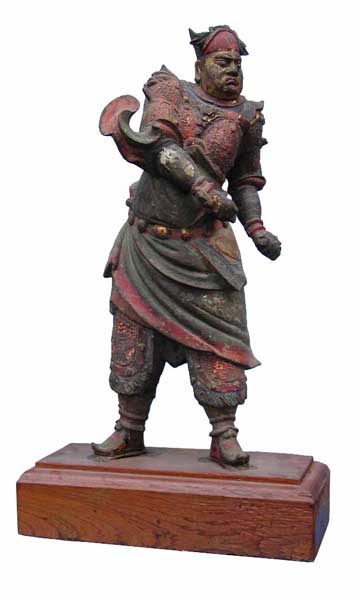
One of the stars of the Big Dipper
2026-04-15 11:51:31
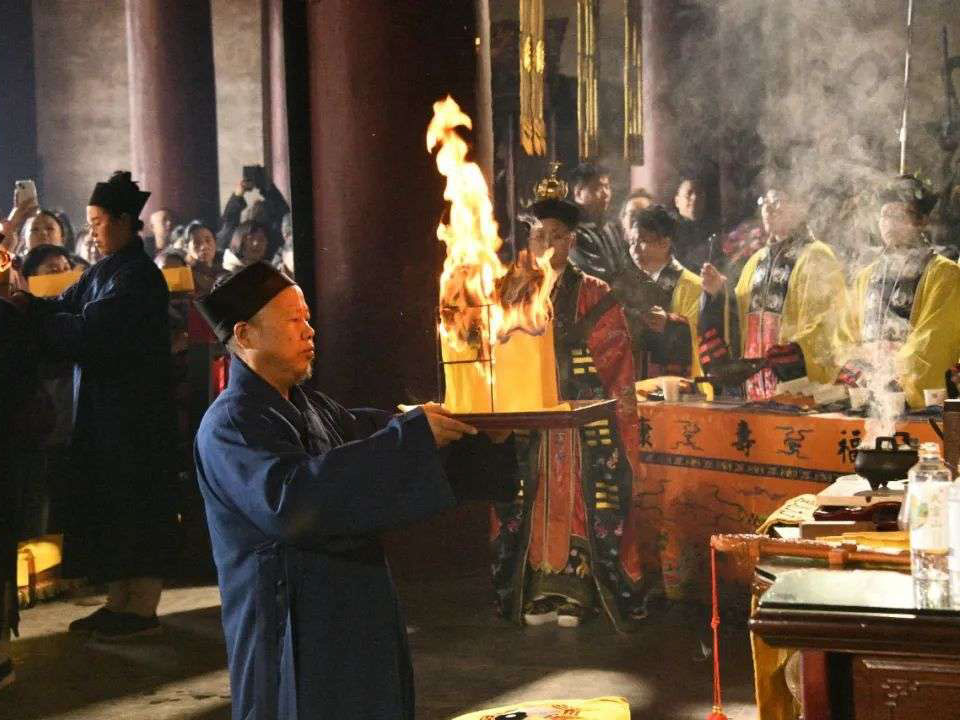
(1) The meaning of the ritual of fasting and Taoist ceremonies
2022-08-20 23:32:13
The original meaning of "zhai" was to be neat, harmonious an...
Yin GUI
2022-08-20 23:32:13
Chapter 27
2022-08-20 23:32:13
Chapter 72
2022-08-20 23:32:13
The couplet of the ancestral hall of the Wudang Mountain Temple
2022-08-20 23:32:13
The chapter on Pain Relief
2022-08-20 23:32:13