


"Zhengwen"
2022-08-20 23:32:13
Things come into being and achievements are accomplished because they arise from the formless and because of the nameless. The formless and nameless is the origin of all things. Neither too warm nor too cold, neither palace nor business. What cannot be heard is heard, and what cannot be seen is highlighted. The body cannot be known by obtaining it, and the taste cannot be savored by obtaining it. Therefore, when it is an object, it is mixed; when it is an image, it is formless; when it is a sound, it is faint; when it is a taste, it has no manifestation. Therefore, he can be the master of all things, having access to the universe and being invincible. If it is warm, it cannot be cool; if it is palace, it cannot be commercial. Form must have its part, and sound must belong. Therefore, a form that resembles an image is not an elephant. A sound is not a major sound. However, if the four images are not formed, the great image cannot flow freely. If the five tones remain silent, the great sounds cannot reach. When the four figures are in shape and the object has no subject to control, the great form will be unobstructed. When the mind is at ease with the five tones, the great sound will arrive. Therefore, if one holds the great elephant, the world will follow; if one uses the loud sound, customs will change. Without form, there is no flow. Even if the world moves forward, it cannot be released. Though customs may change, they cannot be discerned. Therefore, among the five innate things, nothing serves a purpose. The five teachings of the Sunnah are transformed without words. Therefore, "The Tao that can be spoken of is not the eternal Tao." A name that can be named is not a true name. The mother of the five things, neither hot nor cold, neither soft nor hard; The mother of the five religions, neither 皦 nor ignorance, neither kindness nor harm. Although times have changed and customs have shifted, this remains unchanged. As the saying goes, "From ancient times to the present, its name has never faded." If heaven does not act in this way, nothing will come into being. If governance is not carried out in this way, success will not be achieved. Therefore, the past and the present are interconnected, and the beginning and end are the same. By holding onto the past, one can control the present; by verifying the present, one can understand the beginning of the past. This is what is called "constant". There is no sign of 皦, nor is there any sign of warmth or coolness. Therefore, "knowing is always bright day by day." All things come into being and all achievements are made because of this. Therefore, it is "to read all the scholars". The speed of a lightning strike is not enough for a week, and the journey against the wind is not enough for a breath. The virtue of speed lies in not being hasty; the virtue of ultimate lies in not being able to move. Therefore, the grandeur that can be described is not yet sufficient to govern the universe. The ultimate form is not enough to encompass all things. Therefore, those who sigh at it cannot fully express such beauty, and those who sing of it cannot freely express such grandeur. It is not appropriate to name it, and it is not appropriate to call it. A name must have its part, and a title must have its reason. Where there is a division, there is not enough; where there is a reason, there is not enough. If it is not combined, its true nature will be greatly distinguished; if it is not combined, it cannot be named. This can be demonstrated and clarified. The "Tao" is derived from the origin of all things. The term "xuan" is derived from the source of the netherworld. "Deep" means to explore the profound but not delve into it. The term "great" refers to the pursuit of perfection without reaching the extreme. The word "far" refers to something that is long and unattainable. The term "micro" refers to something that is subtle and imperceptible. However, the terms "Dao", "Xuan", "shen", "da", "Wei" and "yuan" each have their own meanings and have not reached the extreme. However, it is boundless and cannot be described as fine. Subtle and intangible, it cannot be called great. Therefore, it is stated in this passage: "It is written as Dao" and "it is called Xuan", but it is not named. However, those who speak of it lose its nature, those who name it deviate from its truth, those who act on it lose its nature, and those who hold on to it lose its original intention. Therefore, if a sage does not rely on words, he will not go against the norm. If one does not take the name as constant, one will not deviate from the truth. If one does not take something for granted, one will not lose one's nature. If one does not adhere to stubbornness as a rule, one will not lose one's original purpose. However, if the text of the "Tao Te Ching" attempts to debate and question, it will lose its essence. Those who seek fame but criticize others are contrary to their original meaning. Therefore, it is the ultimate conclusion, discussing the origin of the primordial to clarify the nature of nature, and exploring the extreme of the netherworld to resolve the confusion and bewilderment. Therefore, one does not act, makes losses but does not give, reveres the root to suppress the branches, and guards the mother to preserve the children. A humble man's ingenious skills, for the sake of non-existence, should not be blamed on others; one must seek them within oneself. This is the most crucial point. While the law should be uniform and uniform, the punishment should be used to verify it. The name is to determine the truth, and the words are to correct it. Confucian scholars prefer to love everything and praise it to advance. Calligraphers prefer frugality and restraint, and thus strive to establish themselves. A mixture of all kinds of beauty is sought, but it is ultimately put into practice. When punishment is used to examine things, cunning and falsehood will surely arise. When a name is used to determine an object, reason and forgiveness are bound to be lost. Praise advances things, and competition is bound to arise. If one corrects oneself to establish oneself, one will surely act in defiance. If things are mixed with impurities, chaos and defilement will surely arise. All of them chose their sons over their mothers. When things are no longer carried, they are not enough to hold on to. However, when the paths are the same but different, and when the interests are in harmony, the learner is confused about the cause and lost in the interest. When they are uniform and consistent, it is called the law. When one sees its definite truth, it is called a name. If one examines pure love, he is called a Confucian scholar. When observing their frugality and thrift, they are called ink. When one sees that it is not connected, it is called mixed. According to what they have observed, they correct their names; in accordance with their preferences, they insist on following them. This is precisely why there are so many confusing and erroneous theories and so many intriguing disputes. Moreover, as a form of writing, it presents the end to prove the beginning, and from the beginning to the end. Open but not reach, guide but not lead. Only after seeking can one understand its meaning; only after reasoning can one fully grasp its principle. A good person begins with a good argument, and a wise person will conclude with a good writing. Therefore, those who share the same interest and are inspired all appreciate the beginning of their words and thus develop them. Those who construct independently with a different theme all mention the signs of their convergence as evidence. Though the paths may be different, we will all reach the same destination. No matter how many considerations there are, they will all be balanced. And the idea of raising one's husband's return is to understand the ultimate truth. Therefore, those who think about it upon encountering the same kind of people will all be delighted by the response of their thoughts and believe that they have grasped its meaning. All things exist because they are in the opposite form. The reason why achievements fail is that they go against their names. Those who survive do not exist for the sake of existence, but rather do not forget their own loss. Those who are at peace do not consider peace as peace; they never forget danger. Therefore, those who preserve their existence will perish; those who do not forget the deceased will survive. Those who remain in their positions will be in danger; those who do not forget danger will be in peace. To be good at lifting the tiniest details and to be good at hearing the thunderous sounds, this is the opposite of form. Those who are truly at ease are actually at ease, but those who are said to be at ease are not at ease. What exists actually exists, but what is not what exists exists. The act of a marquis or king who is truly respected but is said to be not respected. The universe is indeed vast, yet it is beyond the capacity of greatness to say so. The sacred merit truly exists, and it is said to be the establishment of the absolute saint. Benevolence and virtue are truly manifested, and it is said that the existence of benevolence is abandoned. Therefore, those who see the form but fail to convey the truth should not be indignant at their words. If one wants to determine the origin of something, even if it is near, one must start from a distance to prove its beginning. Those who wish to understand the origin of things must, even if they are obvious, describe their essence through their seclusion. Therefore, it takes from outside the universe to illuminate the inside of the body. The meaning of the lonely and widowed marquesses of the Ming Dynasty was expounded from the principle of Dao Yi. Therefore, those who fail to grasp the source of the flow when they observe closely will all assume that their words are false. Therefore, everyone has their own opinions, and people are in a state of chaos. Some talk in a roundabout way, some criticize others. If one understands but is confused, if one divides but is confused, this is the reason. A name is to determine something. To weigh is to follow to say. The name comes from others, and the name comes from me. Therefore, when it involves nothing and is not controlled, it is called the Dao. When one seeks something that is not wonderful and does not come out, it is called the mysterious. Subtlety stems from the mysterious, and all things come from the Tao. Therefore, "giving birth to and nurturing", without obstruction or blockage, understanding the nature of things, is what is called the Way. To be born without having, to act without relying, to grow without being overpowered, to have virtue without a master, this is the profound virtue. "Xuan" means profound. The "Dao" is called the great. Names arise from shapes, while titles come from desires. A name is born without reason, and a title is given without reason. Therefore, names and titles often fail to convey their essence, and designations do not fully express their purpose. Therefore, when it is called mysterious, it is "mysterious beyond mystery", and when it is praised, "there are four great elements in the realm". The book of Laozi can almost be summed up in one sentence. Ah! It is enough to focus on the root and suppress the branches. Observe the cause, seek the destination, speak without straying from the origin, and act without losing the master. Although there are five thousand writings, only one is coherent. Though righteousness is broad in vision, all are of the same kind. In a nutshell, there is no secret that one cannot fail to recognize. If everything has its own meaning, then even if one argues, one will become more confused. If we attempt to discuss it, we say: Is it the rise of evil? Could it be the act of evil? Is it because of lust that it arises? Is it because of lust that it is created? Therefore, to be free from evil lies in maintaining sincerity, not in being good at observing. To stop debauchery lies in leaving China, not in indulging in extravagance. The key to eliminating thieves lies in getting rid of their desires, not in severe punishment. The key to stopping litigation lies not in listening well. Therefore, do not attack their actions, so that they have no heart to act. It is to not harm their desires and to make them have no heart for desires. Plan before it happens and act before it begins. That's all. Therefore, the wisdom of the sage is exhausted to deal with cunning and falsehood, and the quality is not seen to calm the people's desires. To cultivate benevolence and righteousness to rectify vulgar practices is not as good as to embrace simplicity to achieve complete sincerity. To be resourceful and efficient in handling affairs is not as good as to be indifferent to selfish desires to quell the competition. Therefore, abandon the law of inspection, hide intelligence, encourage progress, cut off good reputation, abandon ingenious use, and despise valuable goods. The key is to prevent the people from developing love and desire, not to attack them as evil. Therefore, it is said that simplicity is used to eliminate the wisdom of the sage, few selfish desires are used to abandon cunning and profit, and all are based on the essence to eliminate the superfluous. The simple and unadorned way is not adhered to, but the beauty of desire is not concealed. Even if one is extremely wise and enlightened to observe it, and exhausts one's wisdom and thinking to attack it, the more ingenious and refined one's thinking is, the more changeable the falsehood becomes. The more one attacks, the more frequently one avoids it. Then it is the mutual deception of the wise and the foolish, the suspicion among relatives, the estrangement of simplicity and sincerity, and the treachery in everything. If one abandons the root and attacks the root, even if it is the ultimate wisdom of the sage, it will only lead to such disasters. How could this be the case under such techniques! If one restrains oneself with simplicity and plainness, one will correct oneself without doing anything. If one attacks them with the wisdom of the sage, the people will be poor but ingenious and respectful. Therefore, simplicity can be embraced, but sage wisdom can be abandoned. If the inspection department is simple, the avoidance will also be simple. If one exhausts all one's intelligence, even fleeing will be detected. Simplicity harms simplicity and scarcity; density leads to ingenuity, falsehood and depth. Only the wisdom of a sage can truly master the art of exploring the mysterious and the secluded. The harm it caused, how could it be remembered! Therefore, a hundredfold profit is never too much. If one cannot distinguish names, one cannot express reason. If a name cannot be given, it cannot be discussed as truth. All names arise from forms, and all forms arise from names. Therefore, where there is such a name, there must be such a form; where there is such a form, there must be its part. Benevolence cannot be called sainthood, and wisdom cannot be called benevolence. Then each has its own essence. Those who observe the minute details are the ultimate in understanding. Those who probe and hide are extremely cautious. To reach the ultimate clarity, is it not only the sage? Can one think to the extreme without relying solely on wisdom? After confirming the truth and naming it, one can observe the supreme sage and be free from confusion. If the virtue of simplicity and honesty is not attached, but the beauty of fame and conduct is displayed and valued, then one should cultivate what is valued and hope for its reputation; cultivate what is followed and hope for its benefits. To seek fame and fortune, one should act diligently; the more beautiful the name, the more sincere one becomes; the heavier the profit, the more competitive one's heart becomes. Father and son, brothers, if their emotions are not upright, if filial piety is not sincere, and if kindness is not genuine, all these are the reasons for their fame and deeds. If one is plagued by the thinness of the common people and the promotion of fame and action, and the reverence for benevolence and righteousness, the more false one becomes, how much more so is the undervalue of the arts? Therefore, "Abandoning benevolence and righteousness to restore filial piety and kindness" has not been widely promoted. When a city is high, it will thrive; when profits rise, one will seek depth. If one exists without desires, then "even if one rewards, one will not steal." If one indulges in selfish desires, one will only lose sight of cunning and profit. Therefore, "abandoning ingenuity and profit" and substituting it with few desires, "there are no thieves", is not perfect enough. He is a sage of wisdom and talent. Benevolence and righteousness are the greatest practices. "Skillful application means making good use of it." If the essence does not exist and these three beauties are brought about, the harm will be like this. Moreover, the advantages of the techniques, how can they be so simple and unadorned? Therefore, the ancients sighed and said, "What is so hard to understand!" Knowing what is not holy is not holy, yet not knowing what is holy is not holy. One knows that being unkind is unkind, but does not know that being kind is unkind. Therefore, only by eradicating the sage can the sage's achievements be complete; only by discarding benevolence can the virtue of benevolence be profound. If one desires to be strong, it is not because they are not strong; if one is strong, it is because they lose their strength. To abandon benevolence does not mean to desire to be unkind; if one pursues benevolence, it means to be insincere. There is order but chaos; there is peace but danger. "After the body, the body takes the lead." It is beyond the ability of the body to take the lead. "Outside the body, the body remains." The existence of the body is not the act of preserving the body. Merit cannot be taken and beauty cannot be utilized, so it is only necessary to take it as the mother of merit. The passage says, "Knowing one's son," yet one must "defend one's mother." This is the truth. How could there be any difficulty in seeking it?
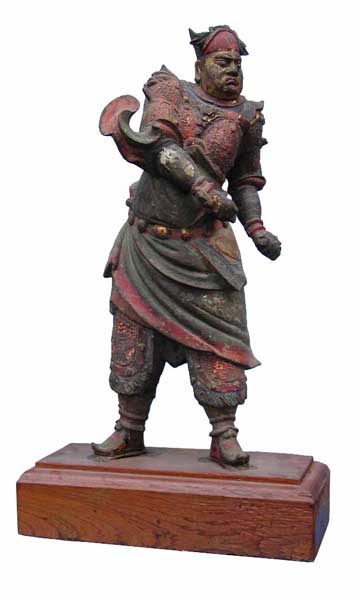
One of the stars of the Big Dipper
2026-04-15 11:51:31
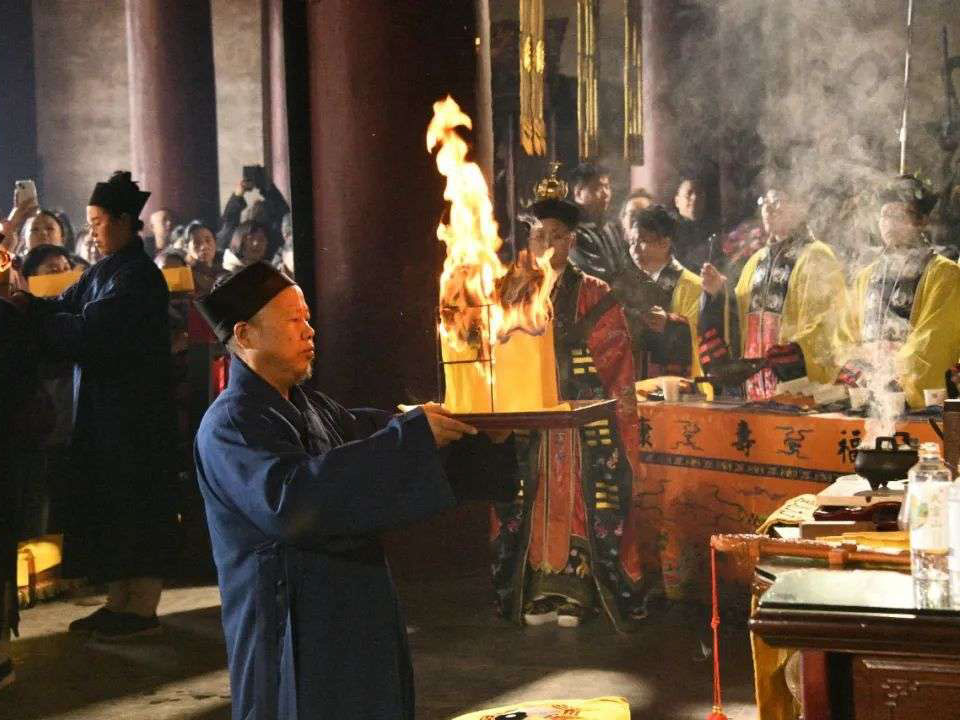
(1) The meaning of the ritual of fasting and Taoist ceremonies
2022-08-20 23:32:13
The original meaning of "zhai" was to be neat, harmonious an...
Yin GUI
2022-08-20 23:32:13
Chapter 27
2022-08-20 23:32:13
Chapter 72
2022-08-20 23:32:13
The couplet of the ancestral hall of the Wudang Mountain Temple
2022-08-20 23:32:13
The chapter on Pain Relief
2022-08-20 23:32:13