


Three poles
2022-08-20 23:32:13
The ultimate is to respect the sages. Guan Yinzi said, "When a sage governs the world, he does not distinguish between the virtuous and the foolish. Therefore, he makes virtuous people because they are virtuous and foolish people because they are foolish." Since I do not distinguish right from wrong, I follow what is right and refrain from what is wrong. Understanding the great similarities between ancient and modern times, one either predates the ancients or the present. Understanding the great harmony between the internal and external, one either prioritizes the internal or the external. There is nothing in the world that can be burdened, so one should always be humble. There is nothing in the world that cannot be excluded, so it is contained to be empty. Nothing in the world is difficult to achieve, so it is easier to do. There is nothing in the world that can be suppressed, so it is necessary to change it to gain power. In this way, the world can be governed by rituals. In this way, one can enjoy oneself with the world. In this way, the world can be managed and finances can be managed. By governing the world in this way, one can defend against foreign aggression. Because of this, laws can be enacted throughout the world. From this perspective, one can observe the world and make utensils. A sage does not govern the world by himself but by the world. The world owes to the sages, and the sages contribute to the world. Therefore, during the reigns of Yao, Shun, Yu and Tang, the world was governed by nature. It is said: The heavens cover everything, there is life and death, but the heavens have no love or evil. The sun shines without exception, with its beauty and ugliness, yet it has no thickness or thinness. It is said: The way of the sage is the mandate of heaven; it is not something the sage can follow on his own. The virtue of a sage is not something that a sage can cultivate by himself. A sage can do things by himself, but not by himself. Therefore, a sage has no way, no virtue, and no cause. It is said: The sage knows that I have no self, so he follows it with benevolence. To be selfless in handling affairs, one should assert authority based on righteousness. When one knows the heart without self, one should be cautious and courteous. Knowledge has no self, so it is guided by wisdom. Knowing that words are selfless, one keeps them in faith. It is said that the way of the sage is either to take benevolence as benevolence, or righteousness as benevolence, or propriety, wisdom and trustworthiness as benevolence. Benevolence, righteousness, propriety, wisdom and trustworthiness, all of which are possessed by sages without any restraint, will not be renowned throughout the world. It is said: Do not judge a sage by his conduct; the way leaves no trace. Do not judge sages by their words; the Tao is wordless. Do not think that one can observe the sages; the way is non-action. Do not judge sages by their appearance; the Dao is formless. It is said: Even if one's conduct is outstanding, it does not deviate from high or low. Even if one's words are of the highest standard, they cannot be separated from right and wrong. Even if one can reach the divine state, it does not depart from ingenuity or clumsiness. Though their appearances may vary greatly, they are not without beauty or ugliness. The sage uses this to show the world. The world understands this and thus sees the sage. It is said that the sage establishes the ruler and subjects by learning from bees, sets up nets by learning from spiders, establishes rituals by learning from rats, and sets up troops by learning from ants. All people learn from virtuous people, virtuous people learn from sages, and sages learn from all things. Only the sage shares the same thing, and thus has no self. It is said: The sage says the Way. He observes that heaven, earth, people and all others are his Way. He advocates harmony with it, adheres to it consistently, regards it as green and yellow, and regards it as the wings of the egg. He does not love the Way, nor does he abandon things. He does not respect the gentleman, nor does he despise the villain. The wise man said that things are different. They are all different. They are all different. If they are short, they should be long; if they are straight, they should be straight. This is what is called the change of things. Little do they know that sages are humble and separate from others, so they do not consider this as their own. It is said that for the common people, the sage is the same in terms of food and clothing, houses, boats and vehicles, wealth and poverty. All people are like sages, and sages are like all people. Is it true or false that those who admire their grandeur and extravagance do so? It is said: If a fish wants to be different from other fish, it will die if it leaves the water and jumps onto the shore. A tiger wants to stand out from the rest; it must leave the mountain and enter the market to capture it. A sage is not different from others; special things cannot be confined. It is said: The Dao has no action. Those who respond to the world with the Dao are doing things, not the Dao. The Dao has no fixed direction. Those who incorporate the Dao into things are things but not the Dao. Even a sage cannot ascend the path to show others. It is said: "Like the sound of a bell, like the sound of a drum, the words of the sage are so." Just as cars and boats are like this, so is the conduct of a sage. Only because one cannot make a name can one refrain from the words of the world. Only by not knowing can one seize the wisdom of the world. It is said: 蝍 maggots eat snakes, snakes eat frogs, frogs eat 蝍 maggots, and they eat each other. The words of the sages are the same. They talk about the drawbacks of being and non-being, as well as the drawbacks of neither being nor non-being, and also about eliminating the drawbacks of neither being nor non-being. The words are as swift as a saw, but only the virtuous and sages do not utter a word. It is said: If it is a dragon, if it is a dragon, if it is a snake, if it is a turtle, if it is a fish, if it is a clam, a dragon can do it all. Jiao, just a jiao, cannot be a dragon, nor can it be a snake, a turtle, a fish or a clam. The sage follows the dragon, and the virtuous follow the dragon. It is said: When one has no place to live, the form of things is self-evident. Its movement is like water, its stillness is like a mirror, its response is like a sound, its luster is like a blur, its stillness is like clarity. Those who share the same are harmonious, those who gain are lost. It never precedes others but always follows them. It is said: "Muddy and vast, wandering in the primordial, sometimes golden self, sometimes jade self, sometimes dung self, sometimes earth self, sometimes flying things, sometimes chasing things, sometimes mountain things, sometimes deep things, being noble and powerful, wild and foolish." It is said that those who are good at playing the zither, if they have a heart of compassion, their sound will be mournful; if they have a heart of contemplation, their sound will be slow; if they have a heart of resentment, their sound will be lingering; and if they have a heart of admiration, their sound will be melodious. Therefore, those who are sorrowful and envious are neither hands, nor bamboo, nor silk, nor paulownia trees. The heart that gains, the hand that talismans; A talisman obtained by hand. All those who follow the right path will follow the right way. It is said that the sage, because of his ability to speak, act and think, is the same as human beings. Those who have never spoken, never acted, and never thought are thus different from others. It is said that the clearer the sense of gain and loss, the less harmonious the relationship between relatives will be. The more enlightened the minds of the wise and the foolish are, the less likely they are to make friends. The clearer one's mind is about right and wrong, the less likely things will be accomplished; the clearer one's mind about good and ugly, the less likely things will be in harmony. Therefore, the sage purifies it. It is said: The foolishness of the world is blindly supported by others, while the foolishness of the sage is self-dispelling. Little do people know that sages are sometimes foolish and sometimes wise, sometimes clumsy and sometimes skillful. It is said: To have a sage teacher, a sage, and a virtuous person; To be a virtuous teacher and a sage, a sage. Because of the sage teachers and sages, they are distracted by traces and forget the truth. By following the virtuous teachers and sages, one can follow the path of enlightenment. It is said: The virtuous tend to move up and not see the lower, the common people tend to move down and not see the higher. The sage knows both the upper and the lower, but only makes it appropriate. How can it be said that there is a sage without the virtuous and the common people? It is said: The principle of the world is that husbands advocate, women follow, male men gallop, female women chase, male men sing, and female women respond. Therefore, sages regulate their words and deeds, while virtuous people restrain them. It is said: Even if the sage's way changes like a tiger, his affairs will proceed like a turtle; even if the way is divided like silk, his affairs will be laid out like a chessboard. It is said: The way of the sage is to be unrestrained, unrestrained, unrestrained, unrestrained, unrestrained and unrestrained. It is precisely because it can accommodate all things and nothing can accommodate it that it can value all things. It is said that the gathering and spreading of clouds and the flight of birds all occur in the void, which is why they are constantly changing. This is the way of the sages.
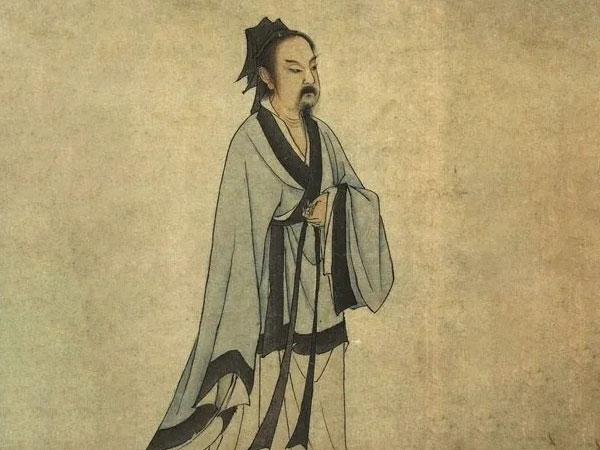
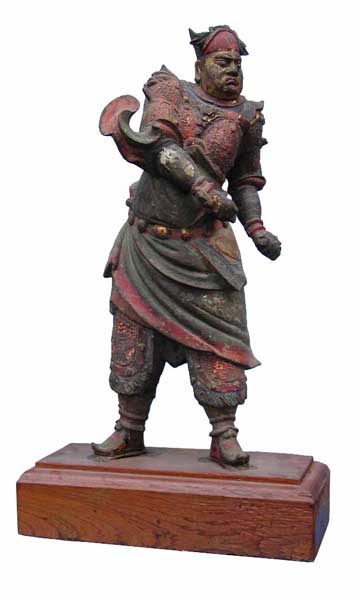
One of the stars of the Big Dipper
2026-04-15 11:51:31
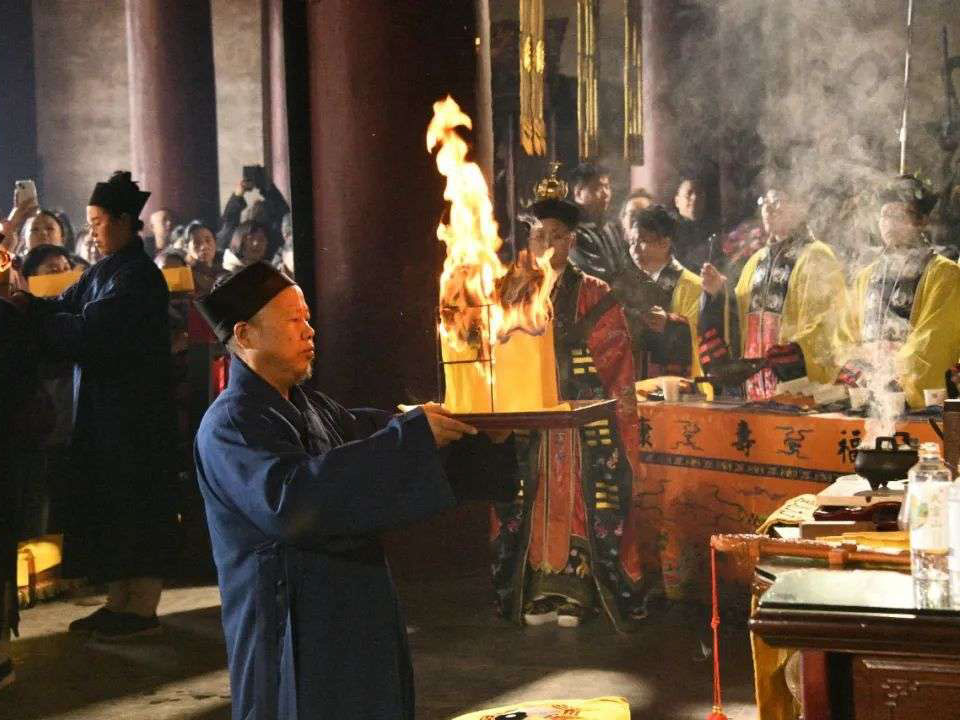
(1) The meaning of the ritual of fasting and Taoist ceremonies
2022-08-20 23:32:13
The original meaning of "zhai" was to be neat, harmonious an...
Yin GUI
2022-08-20 23:32:13
Chapter 37
2022-08-20 23:32:13
Chapter 47
2022-08-20 23:32:13
"Thunderbolt head"
2022-08-20 23:32:13
Zhao Yuanliang
2022-08-20 23:32:13