


Chapter Eighty
2022-08-20 23:32:13
A small country with few people. Make use of what tools one has. Make the people die rather than move away. Though there are boats and carriages, there is no one to ride in. Though there are armored soldiers, there is nothing to mention. To make people re-tie the rope ⑨ and use it. The ultimate state of governance. Enjoying delicious food, fine clothing, comfortable living, and happy customs, neighboring countries look at each other, the sounds of chickens and dogs can be heard, and people never have contact with each other until old age and death. Make the country smaller and the people fewer. Even though there are all kinds of utensils, they are not used. Make people value death and not migrate far away; Although there are ships and vehicles, there is no need to take them every time. Although there were weapons and equipment, there was no place to set up troops and fight. Enable the people to return to the natural state of knot-tying for record-keeping in ancient times. The country is governed extremely well, enabling the people to eat sweetly, dress beautifully, live comfortably and live happily. Countries can see each other and the crowing of chickens and dogs can be heard, but people do not travel with each other from birth to death. [Note] 1. A small country with few people: "Small" means... To become smaller, to be less, to make... Less. This sentence means to make the country smaller and the people fewer. 2. Make: even if. 3. Shibo's utensils: All kinds of utensils. "Shi Bo" means extremely numerous and diverse. 4. Valuing death: Valuing death, that is, not readily risking one's life to do things. 5. Migration: To move, to travel far away. 6. Yu: A vehicle. 7. Armored Soldiers: Weapons and equipment. 8. Chen: Display. This sentence is extended to mean setting up an array for battle. 9. Knot-tying: Before the advent of writing, people used ropes to record events. 10. Enjoy food, dress well, live comfortably and live joyfully: Let the people eat sweetly, dress beautifully, live comfortably and get used to their customs. This is a beautiful blueprint of the "state" in Laozi's ideal, and also a picture of rural joy brimming with the charm of the countryside. Laozi, with his idealistic brushstrokes, vividly depicted the rural social life scene of a "small country with few people", expressing his social and political ideals. This "country" was very small, with neighboring countries facing each other and the sounds of chickens and dogs being heard from each other. It was roughly equivalent to a village nowadays. There was no deception or cunning. The people were simple and honest, and life was peaceful and quiet. They recorded events by tying knots and did not engage in mental outwitting, so there was no need to risk their lives to make a living far away. Laozi's such conception is, of course, a fantasy and impossible to come true. [Commentary] A small state with few people is the ideal society depicted by Laozi, which reflects the self-sufficient lifestyle of ancient Chinese society. Laozi dreamed of reverting to the primitive society era without oppression or exploitation, where there was no exploitation or oppression, no war or plundering, no culture, and no ferocity or fear. This simple and unadorned society is truly an idealized depiction of rural life in ancient times. Hu Jichuang said, "When we study Laozi's thought of a small state with few people, we need to analyze the class roots that gave rise to this ideal, the factors of The Times, and the problems it aimed to solve." The so-called "small country with few people" was proposed in response to the policy of having a vast territory and a large population at that time. They believe that the policy of having a vast territory and a wide population is the root cause of all disasters. When a small country with a small population can eliminate wars of annexation, it can achieve the state where "even if there are armed soldiers, there is nothing to boast about." This way, the craftsmanship and skills that could prevent social disturbances caused by the acquisition of material resources would be avoided, and "what tools would be available but not used?" Then the wisdom that makes it difficult to govern the people can be abolished, and the method of recording events can be replaced by tying knots. This may enable people to be content with a simple life and not be lured by luxurious desires. This would enable the people to die far away and never have any contact with each other until old age, and even the means of transportation such as boats and carriages could be abolished. They do not understand that the policy of a vast territory and a large number of people is a reflection of the historical task of a unified national landlord regime demanded by the new relations of production when social productive forces have developed to a certain level in the policies of major countries. However, Laozi "forgot that in the primitive 'paradise' where there were utensils but they were not used, there were no fine food and clothing, nor were there exploited people who produced such food and clothing for them." Although Laozi was materialist in his worldview, he was trapped in idealistic fantasies in his social outlook, especially in his views on economic issues. This criticism is to the point. Facing the rapidly changing and turbulent social reality, Laozi felt a sense of loss and began to yearn for the primitive life of tying knots to record events in the ancient and ignorant times. This was an outlet of his resistance. During the Jin Dynasty, Tao Yuanming wrote a well-known piece, "Record of the Peach Blossom Spring", which has been passed down to this day. It should be said that this article was clearly influenced by the content of the eighty chapters of Laozi. This is a beautiful fantasy, but it also expresses his dissatisfaction with the darkness of society and reflects the people's aspiration to escape poverty and chaos. On this point, the thoughts of Laozi and Tao Yuanming are in the same line.
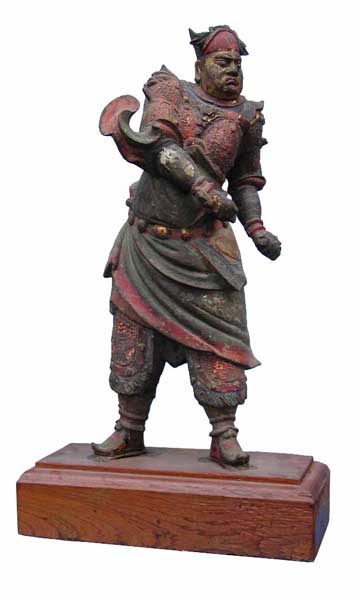
One of the stars of the Big Dipper
2026-04-15 11:51:31
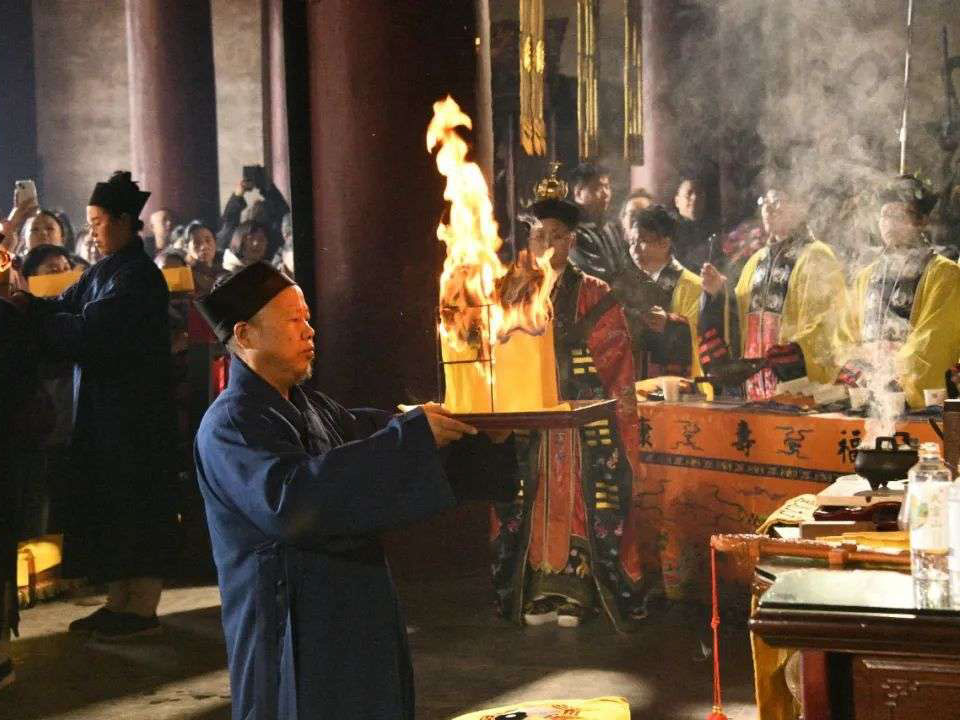
(1) The meaning of the ritual of fasting and Taoist ceremonies
2022-08-20 23:32:13
The original meaning of "zhai" was to be neat, harmonious an...
Yin GUI
2022-08-20 23:32:13
Chapter 27
2022-08-20 23:32:13
Chapter 72
2022-08-20 23:32:13
The couplet of the ancestral hall of the Wudang Mountain Temple
2022-08-20 23:32:13
Chapter 40
2022-08-20 23:32:13