


Chapter 81
2022-08-20 23:32:13
Faith is not good, and good words are not believed. A good person ② does not argue ③, while an arguer is not good. Those who know do not learn widely; those who learn widely do not know. The sage does not accumulate. The more he thinks of others, the more he has; the more he gives to others, the more he has. The way of heaven is to benefit without harming. The Way of the Sage ⑨ : Act without contention. True and trustworthy words are not beautiful, and beautiful words are not true. A kind person is not talkative, and a talkative person is not kind. Those who are truly knowledgeable do not show off. Those who flaunt how much they know are not truly knowledgeable. A sage does not have the heart of possession but does his best to care for others, and he himself is also more sufficient. He tries his best to give to others, and in the end, he becomes richer himself. The law of nature is to benefit all things without harming them. The code of conduct for a sage is to never compete with others for anything he does. [Note] 1. Word of faith: words that are true and reliable. 2. Good person: A person who speaks and acts kindly. 3. Debate: Skillful in debate and articulate. 4. Bo: Extensive and erudite. 5. The sage does not accumulate: A person of the Tao is not selfish and has no desire for possession. 6. Thinking that one has become more accomplished: Having devoted everything one has to helping others, one becomes even more fulfilled. 7. More: Opposite to "less", here it means "abundant". 8. Benefit without harm: Enable all things to gain benefits without harming them. 9. The Way of the Sage: The code of conduct for the sage. [Quotation] This chapter is the last chapter of the Tao Te Ching and should be the official conclusion of the entire book. This chapter adopts a form of maxims and aphorisms similar to those in Chapters Nine, Ten, Fifteen, Twenty, thirty-three, forty-five, sixty-four, and seventy-six. The first three sentences expound on the main theme of life, while the last two discuss the essence of governing the world. The maxims of this chapter can serve as the highest standards for human conduct, such as faithfulness, reticence, specialization, and benefiting the people without contention. The highest realm of life is the combination of truth, goodness and beauty, with truth at its core. This chapter contains simple dialectical thought and serves as the moral standard for judging human behavior. [Commentary] At the beginning of this chapter, three pairs of categories are presented: faith and beauty; Be good at debating; Knowledge and breadth are actually issues of truth and falsehood, beauty and ugliness, good and evil. Laozi attempted to illustrate that the surface phenomena of certain things often do not align with their essence. This contains rich dialectical thoughts and serves as the moral standard for judging human behavior. By following these three principles, one should demand of oneself "faithfulness", "good deeds" and "true knowledge", and achieve the harmony of truth, goodness and beauty within oneself. According to Laozi's thought, it is to return to "simplicity", to go back to the nature that has not been contaminated by deception, ingenuity, strife and other worldly things. Zhang Songru said, "There are various things in the world, and social phenomena are even more complex. If we simply assume that all 'trustworthy words' are not beautiful and all' beautiful words' are not to be believed, then..." Those who are "knowledgeable" are not broad-minded, and those who are "broad-minded" are all ignorant. This is one-sided. It cannot be said that the true, the good and the beautiful things in the world can never be unified, but can only exclude each other. If one only knows one aspect but not the other, it is inevitable to start with dialectics and end with metaphysics. In this regard, we believe that there is no need to be overly demanding of Laozi literally; otherwise, it would deviate from or misinterpret Laozi's original intention. In fact, in daily life, people often say this: "Good advice is hard to take" and "good medicine tastes bitter". After hearing these words, probably few people would get stuck in a rut and ask in return: Are all sincere advice unpleasant to the ear? Are all good medicines bitter? Therefore, there is no issue of absolutization in these aphorisms of Laozi.
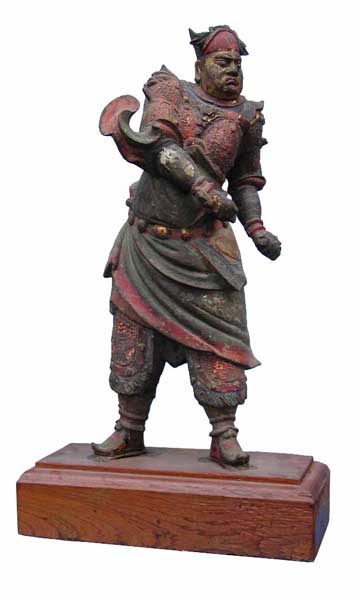
One of the stars of the Big Dipper
2026-04-15 11:51:31
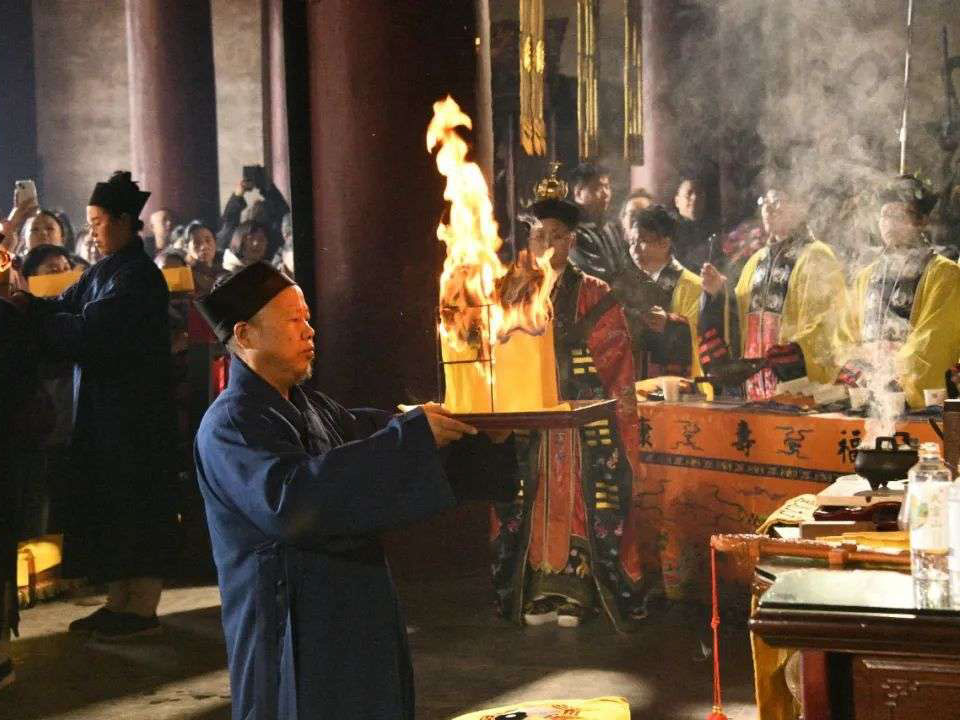
(1) The meaning of the ritual of fasting and Taoist ceremonies
2022-08-20 23:32:13
The original meaning of "zhai" was to be neat, harmonious an...
Yin GUI
2022-08-20 23:32:13
Chapter 27
2022-08-20 23:32:13
Chapter 72
2022-08-20 23:32:13
The couplet of the ancestral hall of the Wudang Mountain Temple
2022-08-20 23:32:13
Chapter 40
2022-08-20 23:32:13