


Chapter 72
2022-08-20 23:32:13
If the people do not fear authority, great authority will come. There is no attachment to one's abode, nor any aversion to one's birth. It is precisely because one never gets tired of it that one never gets tired of it. Therefore, the sage knows himself but does not see himself, loves himself but does not value himself. Therefore, abandon that and take this ⑧. When the people are not afraid of the oppression of their rulers, then terrifying chaos is about to come. Do not force the people to have no place to live, and do not block their way of making a living. Only by not oppressing the people can the people not detest the rulers. Therefore, the sage of the way not only has self-awareness but also does not show off himself. One has a heart of self-love but does not show off one's nobility. Therefore, one should abandon the latter (self-awareness and self-respect) and maintain the former (self-knowledge and self-love). [Note] 1. The people are not afraid of authority: Authority refers to the suppression and deterrence of the ruler. This sentence means that the common people are not afraid of the repressive policies of the rulers. 2. Great might: This might refers to the people's resistance and struggle. 3. "Wu Xia" : "xia" is a general term for "xia", meaning oppression or coercion. "Wu xia" means not to force. 4. No obstruction: "Obstruction" here means oppression or blockage. 5. No aversion: This aversion refers to the people's dislike and resistance against the ruler. 6. Not showing off: Not showing off or displaying oneself. 7. Self-love without self-exalting: It means that a sage only seeks self-love and does not seek to show off his nobility. 8. Discard the other and take the this: It means to give up "self-perception" and "self-respect" and instead take "self-knowledge" and "self-love". [Quotation] The previous chapter discussed self-awareness in general terms. This chapter focuses on the fact that rulers should have self-awareness, oppose the adoption of high-pressure politics, and oppose the wanton exploitation of the people. He believes that once the common people no longer fear the brutal rule of the rulers, then a terrifying anti-violence struggle will break out. He hoped that the ruler would not consider himself noble but rather be self-aware and self-loving, discarding self-opinion and self-exalting. In this way, he would not encounter the resistance of the people. This chapter talks about "not valuing oneself", which is different from the content of Chapter 13 about "valuing oneself" and Chapter 44 about "which is more important, name or body". "Valuing one's dignity" means maintaining one's dignity, respecting and loving oneself, and not allowing one's dignity to be undermined by honor, disgrace, troubles or other external things. The saying "Which is more precious, fame or personal gain?" suggests that a person's value is more valuable than empty fame and material gains. One should not take their own life or harm their health for the sake of competing for external fame and fortune. Some scholars hold that "this chapter reveals Laozi's hostility towards the people's oppression struggle" (New Translation of Laozi). Of course, we believe that Laozi did not wish for riots. Whether it was the tyranny of the rulers or the resistance struggles of the people, he strongly opposed them. This is because riots would cause serious disasters to society. Then, as long as we make a careful distinction, we will know that what Laozi mainly opposed was the repressive policies of the rulers and the political attitude of self-assertion and self-exalting. Because the people's resistance struggle must have a prerequisite, and this prerequisite is that it will only occur when the rulers impose tyranny on the people, oppress and plunder them. Therefore, Laozi warned the rulers that they must be lenient towards the people, "not taking pleasure in where they live, nor being tired of where they are born." If only terrorist means are relied upon to prevent the people from surviving as usual, then the common folk will rise up in huge riots to resist the tyranny of the rulers. However, Laozi lost faith in the rulers of his time and placed his hopes on the ideal "sage", a truth that only the "sage" could understand. A sage has self-awareness and a heart full of self-love. He doesn't show off or exaggerate himself, and thus can win the support and endorsement of the people. From this, we feel that the content of this chapter by Laozi precisely expresses the aspirations of the people, rather than merely being hostile to the people's struggle against oppression.
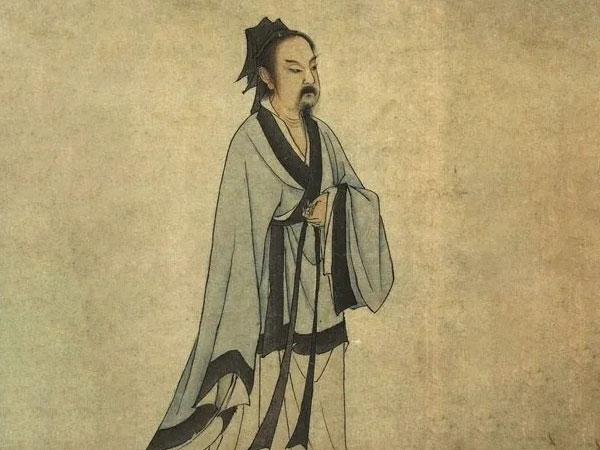
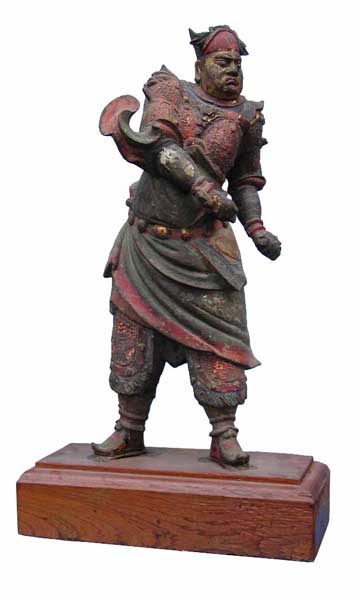
One of the stars of the Big Dipper
2026-04-15 11:51:31
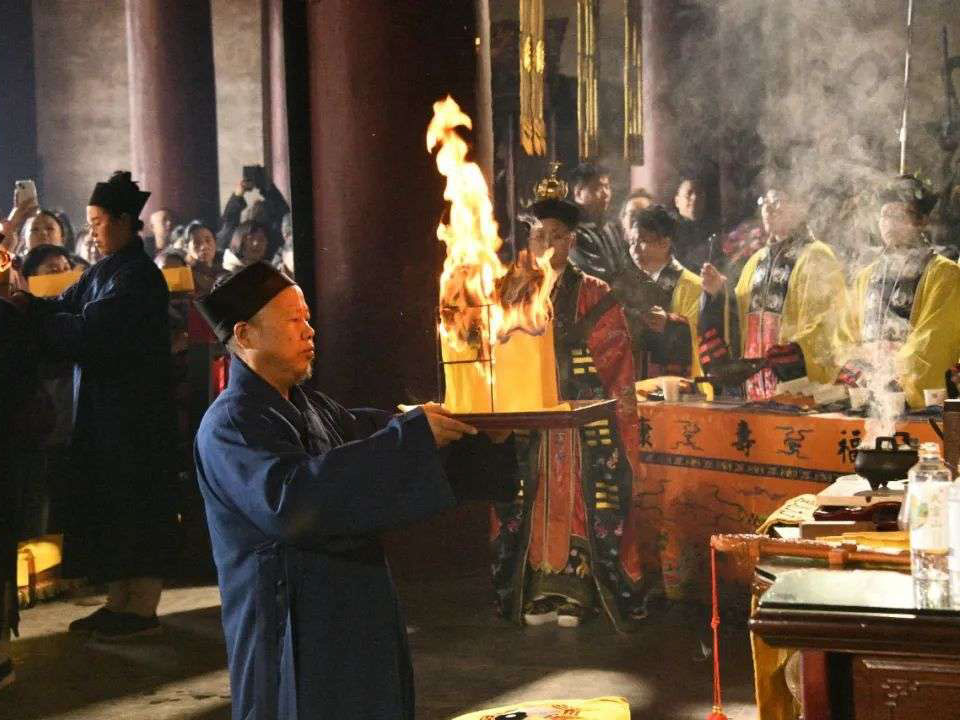
(1) The meaning of the ritual of fasting and Taoist ceremonies
2022-08-20 23:32:13
The original meaning of "zhai" was to be neat, harmonious an...
Yin GUI
2022-08-20 23:32:13
Chapter 27
2022-08-20 23:32:13
Chapter 72
2022-08-20 23:32:13
Chapter 25
2022-08-20 23:32:13
The couplet of the ancestral hall of the Wudang Mountain Temple
2022-08-20 23:32:13