


Chapter Seventy
2022-08-20 23:32:13
My words are very easy to understand and very easy to act upon. The world cannot know, nor can it act. There is a principle in words and a ruler in affairs. It is precisely because of ignorance that one does not know. Those who know me are rare, and those who know me are precious. Therefore, the sage is adorned with jade while being browned. My words are easy to understand and easy to put into practice. But no one in the world can understand, and no one can put it into practice. Words should have a main idea and actions should be based on evidence. It is precisely because people do not understand this principle that they do not understand me. Few people can understand me, so those who can learn from me are even rarer. Therefore, the sage with the Tao always wears coarse clothes and holds a fine jade in his bosom. [Note] 1. Words have a main theme: The speech has a certain main idea. 2. Having a ruler in charge: There is a certain basis for doing things. One "Lord" serves as the "master". "Jun" means having a foundation. 3. Ignorance: It refers to others not understanding. One theory refers to one's own ignorance. 4. Ze: Rule. Here it is used as a verb, meaning to imitate. 5. "Bei he" : "bei", "wearing"; Brown, coarse cloth. 6. Huaiyu: Jade, fine jade, here it is extended to mean knowledge and talent. "Huaiyu" means to hold knowledge and talent in one's heart. [Quotation] This chapter reveals Laozi's disappointment with the rulers of that time. The series of political propositions he put forward were easy to understand and implement, but no one understood or carried them out. It seems that his ideal of governing the world can only be realized by the "sage" in his imagination. It is impossible to achieve in reality. He failed to understand that any plan for governing a country must be adapted to the interests of the ruling class; otherwise, they would not adopt it or implement it. Thus, Laozi wrote this essay expressing his feelings. This chapter is specifically for those in power, not for the general public. The words "I" and "wu" in the text can be regarded as the personification of the "Way". [Commentary] In the previous chapters, Laozi discussed his political ideals and political doctrines, such as tranquility, gentleness, frugality, kindness, non-action, and non-contention, all of which are in line with the Dao and based on nature. In social life, it should be easy for people to understand and implement. However, people are obsessed with fame and fortune and are eager to make progress, which goes against the principle of non-action. Laozi attempted to explore people's thoughts and behaviors, and to make fundamental understandings and annotations of all things. He expounded profound truths in simple words, just like wearing coarse clothes but carrying fine jade. But he could not be understood by people, let alone put into practice. Therefore, he sighed, "Those who truly understand me are the most hopeful." In response to this, Mr. Ren Jiyu said, "He considers himself very astute and is rather frustrated by his talent being unrecognized and his lofty style being appreciated by few." In fact, what he sang was an elegy for the declining class. It's not that people don't know him. It was history that abandoned him. Mr. Zhang Songru does not agree with such a view. (New Translation of Laozi) He said, "History has not neglected him." Let's just talk about the Pre-Qin period: It is said that Shuxiang and Mozi of the Spring and Autumn Period, as well as Wei Wuhou and Yan Chu of the Warring States Period, all quoted his words. Zhuangzi praised him, saying, "How vast and profound the ancient man was!" (Zhuangzi: The World Chapter) The scholars of Jixia, represented by Song Yan and Yin Wen, inherited Laozi and developed into the Huang-Lao School. As for Han Fei, he has works such as "Interpreting Old Age" and "Expressing Old Age". By the time of the Qin Dynasty and the early Western Han Dynasty, the Huang-Lao School of thought once held a dominant position. Sima Tan's "On the Essentials of the Six Schools" actually highlights Taoism, and Sima Qian's "Records of the Grand Historian" specifically provides a biography for it. By the Eastern Han Dynasty, it had even been deified as the progenitor of Taoism. All of this cannot be said to have been abandoned by history, can it? (Pages 385-386 of Laozi's Proofreading) We feel that Mr. Ren and Mr. Zhang have different standards in their discussion on this issue. For instance, the question of what constitutes being abandoned by history. Mr. Ren Jiyu's point is that in the era when Laozi lived, the political propositions he put forward were not understood or adopted by people, thus he felt that his political aspirations were difficult to realize, and he was quite frustrated with his talents not being recognized and his lofty style being appreciated by few. In this sense, Laozi was not selected by The Times. Mr. Zhang Songru, on the other hand, studied the issue of whether Laozi was abandoned by history from the historical river of several years, several hundred years, or even over a thousand years after Laozi. Therefore, Mr. Ren and Mr. Zhang have different standards, and thus there are differences in their viewpoints. In history, it is often seen that gentlemen who are talented but unrecognized and unable to fulfill their political ambitions are often highly valued by people in later generations. Laozi was like this, and so was Confucius. Therefore, our understanding is that Laozi was abandoned by The Times he lived in, and his political propositions could not be implemented. However, he was also recognized by people in later generations. Some of his ideological doctrines and political propositions were accepted and implemented by the rulers, while others were elevated to the supreme position and deified as classics of Taoism.
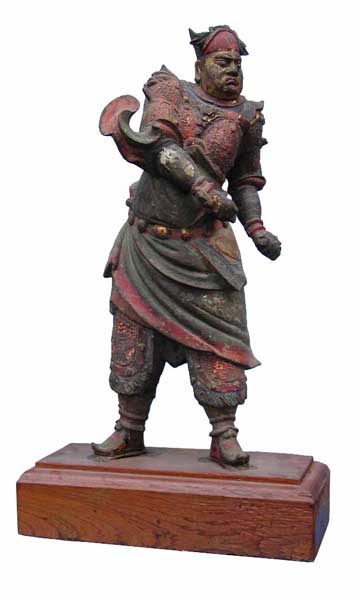
One of the stars of the Big Dipper
2026-04-15 11:51:31
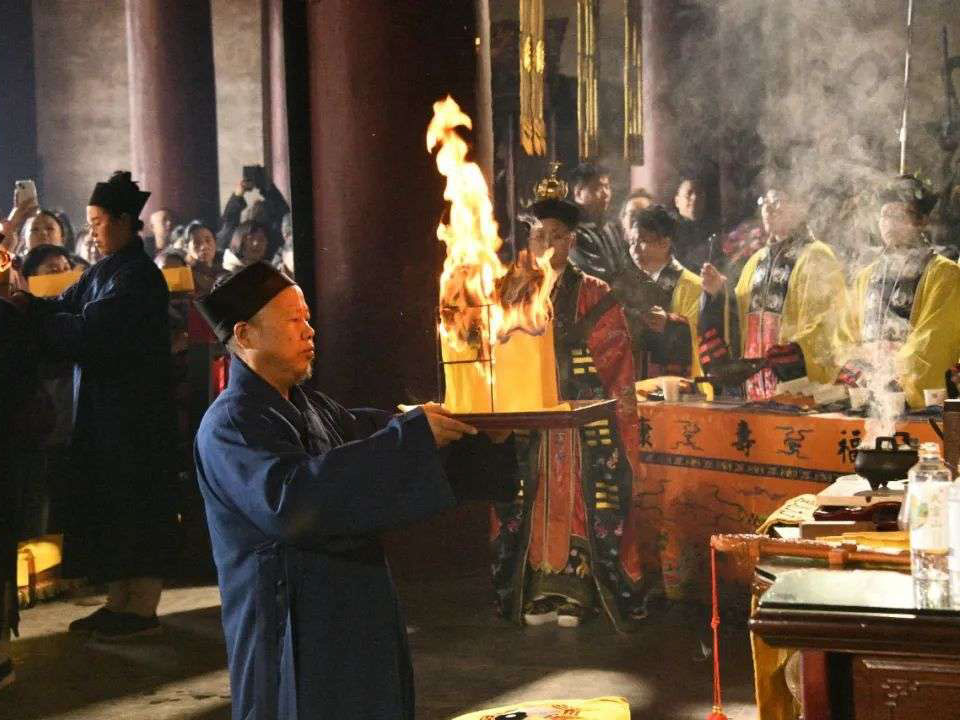
(1) The meaning of the ritual of fasting and Taoist ceremonies
2022-08-20 23:32:13
The original meaning of "zhai" was to be neat, harmonious an...
Yin GUI
2022-08-20 23:32:13
Chapter 27
2022-08-20 23:32:13
Chapter 72
2022-08-20 23:32:13
The couplet of the ancestral hall of the Wudang Mountain Temple
2022-08-20 23:32:13
Chapter 19
2022-08-20 23:32:13