


Chapter Sixty-Five
2022-08-20 23:32:13
Those who were good at practicing the way in ancient times did not aim to enlighten the people but to deceive them. The difficulty in governing the people lies in their abundance of wisdom. Therefore, governing a country with wisdom is the enemy of the state. If a country is not governed by wisdom, it will be blessed. Knowing these two ⑤, also refer to Equation ⑥. To constantly understand the patterns of verification is called the profound virtue. The profound virtue is far and wide, contrary to all things, and then even leads to great harmony. In ancient times, those who were good at practicing the Tao did not teach the people to know the cunning and falsehood, but to teach them to be simple and honest. The reason why people are hard to rule is that they use too much cunning and scheming. Therefore, governing a country with wisdom and cunning will inevitably harm it. Governing a country without wisdom and cunning is the true happiness of the country. Understanding the differences between these two ways of governing a country is a rule. Regularly grasping this rule is called "mystic virtue". Xuan De is profound and far-reaching. Only when concrete things return to their true simplicity can they be greatly in harmony with nature. [Note] 1. Mingmin: "Ming" means knowing the tricks and cunning. "Mingmin" means to make the people aware of cunning and trickery. 2. To be foolish: Foolish, honest, simple and unassuming, without any ulterior motives. It's not deception or ignorance. This sentence means to ensure that the common people have no ulterior motives, are honest, simple, kind and loyal. 3. Wisdom Abundance: Wisdom, cunning and treacherous, rather than wisdom or knowledge. 4. Thief: It means to hurt. 5. Both: Referring to the phrase "governing a country with wisdom is the enemy of the state; "If a country is not governed by wisdom, it will be blessed." 6. Jishi style: A set of rules and regulations, one book is called "Kai style". 7. To go against the object: To go against, to return. This sentence means that "virtue" and things return to their true simplicity. 8. Dashun: Natural. [Quotation] This chapter mainly discusses the principles of governance. There is a view that, judging from the content of this chapter and the next one, the nature of Laozi's work can be summed up in one sentence as "the art of governing the south". That is to say, it was nothing more than offering advice and strategies to the ruling class, and all the schemes were insidious and cunning. We do not agree with this view. Our opinions will be elaborated in the analysis of this chapter. [Commentary] This chapter contains several sentences such as "Not to enlighten the people, but to deceive them" and "The people are difficult to govern because they are full of wisdom". Judging from the surface meaning of the words, it is easy to draw the conclusion that "they offer advice to the ruling class, and all the strategies they plan are insidious and cunning." Since ancient times, feudal rulers have implemented a "policy of keeping the people ignorant" towards the masses. This cannot be said to be completely unrelated to Laozi's statement that "if it is not to enlighten the people, it will be to deceive them", but a direct conclusion cannot be drawn. Because in Laozi's original intention, he definitely did not propose a set of tricks to keep the people ignorant to meet the needs of the rulers. Some scholars say: "He wishes that people would be as foolish as me, eliminate all classes in the world, and achieve the great equality of self and object, so as to reduce many 龃龆 disputes among people." Some scholars also hold that Laozi's idea of keeping the people ignorant was later absorbed by the Legalists and became an increasingly absurd policy of keeping the people ignorant. (Zhang Mosheng, Laozi, page 60) Moreover, it has been passed down in a continuous line and is responsible for the formation of a national character characterized by the spirit of Ah Q and the absence of anger and contention. We cannot agree with this argument. As Chen Guying said, "Laozi believed that the essence of politics often lies in the mindset and approach of the ruler." If the rulers are sincere and simple, they can foster a good political atmosphere. With a good political atmosphere, society can tend to be peaceful. If the ruler is cunning and shrewd, a corrupt political atmosphere will arise. When the political atmosphere deteriorates, people will deceive and harm each other, and society will have no peace. From this perspective, Laozi expected the rulers to guide the people to be "foolish". Laozi was born in a chaotic world. He felt that the root cause of the chaos was that people were competing with each other in terms of wits and hypocrisy. Therefore, he called on people to abandon the disputes over mundane values and return to simplicity and nature. Laozi, in response to the ills of The Times, made such a statement of indignation and correction towards the world. On page 315 of "Commentary, Translation and Evaluation of Laozi", Mr. Chen Guying made a profound and practical assessment of Laozi's proposition that "it is not to enlighten the people but to deceive them", and this assessment was extremely pertinent. Laozi hoped that people would not be bewitched and confused by ingenuity and competition, nor would they lose their original simplicity and honesty in nature. Instead, they should follow the natural course. The "foolishness" mentioned in this chapter is actually another expression of simplicity and naturalness.
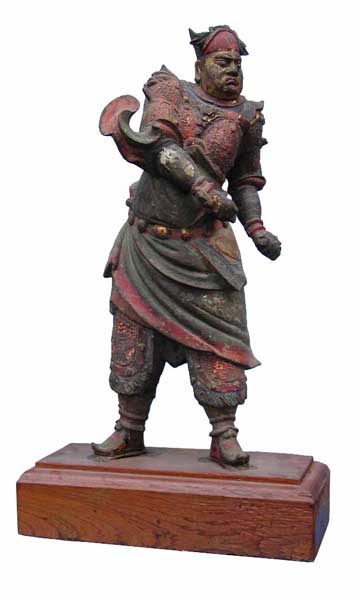
One of the stars of the Big Dipper
2026-04-15 11:51:31
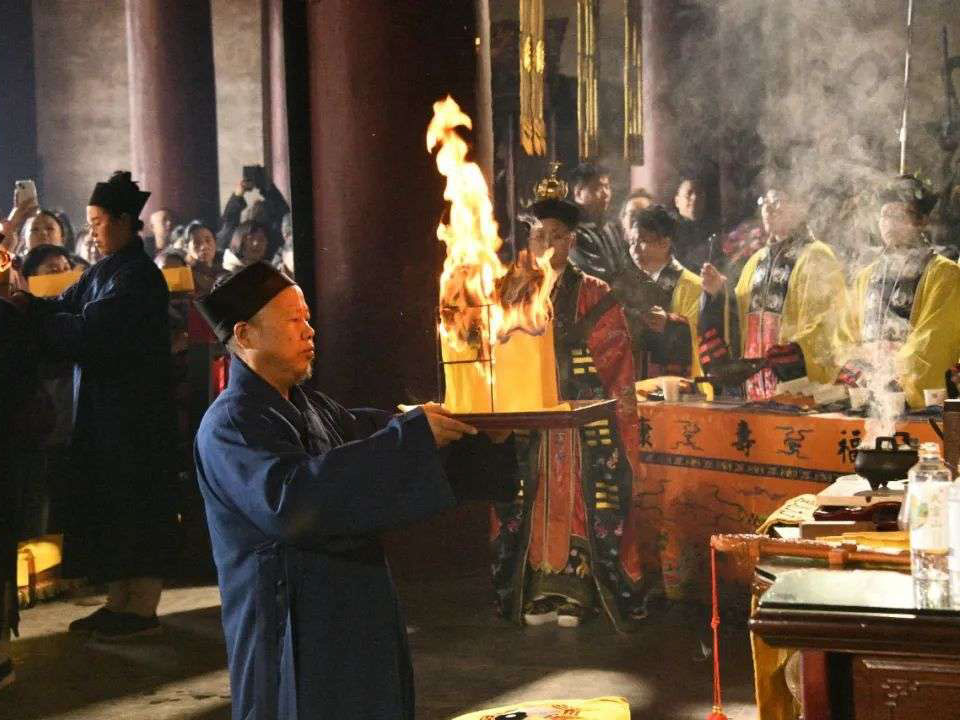
(1) The meaning of the ritual of fasting and Taoist ceremonies
2022-08-20 23:32:13
The original meaning of "zhai" was to be neat, harmonious an...
Yin GUI
2022-08-20 23:32:13
Chapter 27
2022-08-20 23:32:13
Chapter 72
2022-08-20 23:32:13
The couplet of the ancestral hall of the Wudang Mountain Temple
2022-08-20 23:32:13
The Record of Ascending to the Summit of Wudang
2022-08-20 23:32:13