


Chapter Sixty-Six
2022-08-20 23:32:13
The reason why Jiang Hai can be called the king of all grains is that he is good at subduing others, and thus can be called the King of all grains. Therefore, if a sage wants to serve the people, he must speak to them. If you want your ancestors, you must follow them after them. Therefore, when a sage is in a high position, the people do not respect him; when he is in the front, the people do not harm him. Therefore, people all over the world enjoy promoting it without getting tired of it. Because it does not contend, no one in the world can contend with it. The reason why rivers and seas can become the confluence of all streams is that they are good at being in low places, and thus can be the Kings of all streams. Therefore, if a sage wants to lead the people, he must show humility to them with words. If he wants to lead the people, he must put his own interests behind them. Therefore, although the sage with the way holds a higher position than the people, the people do not feel burdened. Be ahead of the people, yet the people do not feel harmed. All the people in the world are willing to admire it without getting tired of it. Because he does not contend with the people, no one in the world can contend with him. [Note] 1. King of All Valleys: The place where all rivers and narrow valleys submit. 2. Sage: There is no such word in this book. 3. Heavy: Tired, unable to bear the burden. [Quotation] This chapter discusses the political philosophy of "non-contention". Laozi, through the relationship between great and small states, expounded the principle that "the great should be at the bottom", and also said that "sages" should also be at the bottom. He believed that a ruler should be at the bottom and at the back, so as to be lenient and inclusive towards the people, just as a ruler at the lower reaches of a river or sea can embrace the waters of all rivers. Does this chapter really offer advice and strategies to the rulers? We still need to study it in the analysis and evaluation of this chapter. The beginning of this chapter uses rivers and seas as metaphors, which is the same as the meaning of Chapter 32: "The way of the world is like rivers and valleys to rivers and seas." Laozi often used rivers and seas as metaphors for people's humble and backward positions, and at the same time, he also used rivers and seas to symbolize people's tolerance and magnanimity. [Commentary] As mentioned in the previous chapter, some commentators in the study of Laozi believe that this chapter expresses Laozi's set of political tactics for exploiting and governing the people. For instance, Mr. Zhang Songru said, "This is a piece of advice to the ruler, somewhat similar to what Ban Gu referred to as' the art of a ruler facing the south. '" However, Mr. Zhang's view is not entirely in line with the opinion of some scholars that Laozi was merely offering advice to the rulers. Instead, he believes that Laozi's propositions reflect the aspirations of farmers and small producers. He said, "If a 'sage' wants to rule the people, he must show humility to them with words." If you want to lead the people, you must put yourself behind them. Finally, one should achieve the principle that "when in a superior position, the people will not be respected; when at the forefront, the people will not be harmed." Wasn't this precisely the urgent wish of the vast number of small-scale agricultural producers who were in dire straits at that time? In fact, among the feudal rulers, who could achieve this? To strive without contention and to act without action is in line with dialectics. It is also a social thought determined by the economic characteristics of small agricultural producers and their class interests. Of course, he could only offer this idea as advice to the "sage" he envisioned who embodied the "Way". Why must it be like this? Because "They can't represent themselves; they must be represented by others." Their representatives must be their masters at the same time, the authority standing high above them, and the unrestricted power of the government, which protects them from being violated by other classes and bestows upon us rain and sunshine from above. The peasant class has always been imperialists, and this was especially true when they first stepped onto the historical stage in ancient times. There are indeed innocent fantasies. To call them slick and insidious is to overstep the line, isn't it? (ibid.) We basically agree with Mr. Zhang Songru's statement. If Laozi was offering advice and strategies to the rulers, he was also standing from the perspective of the working people and Shouting for the interests of the country and the people. This stance and viewpoint, we feel, have some similarities or close ties with the idea of "the ruler is at the end and the people are at the end" advocated by Confucius, Mencius and Confucianism, because "the ruler is at the end and the people are at the end" is still about making long-term plans for the feudal rulers. However, this proposition has been basically affirmed by scholars in today's academic research. Then, do we think these propositions of Laozi should also be affirmed? We think the answer should be affirmative.
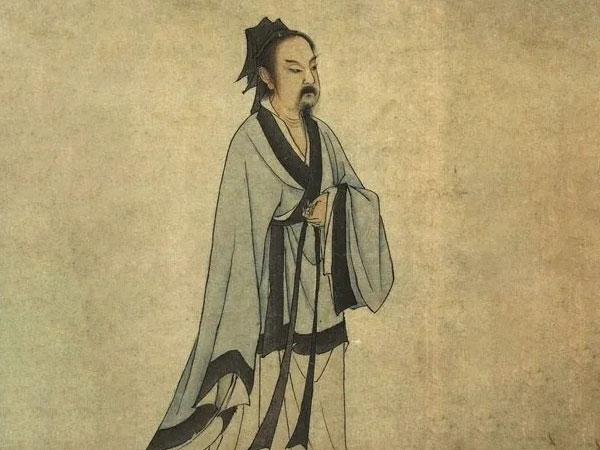
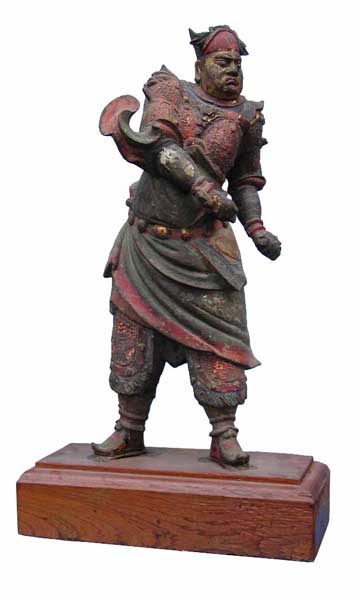
One of the stars of the Big Dipper
2026-04-15 11:51:31
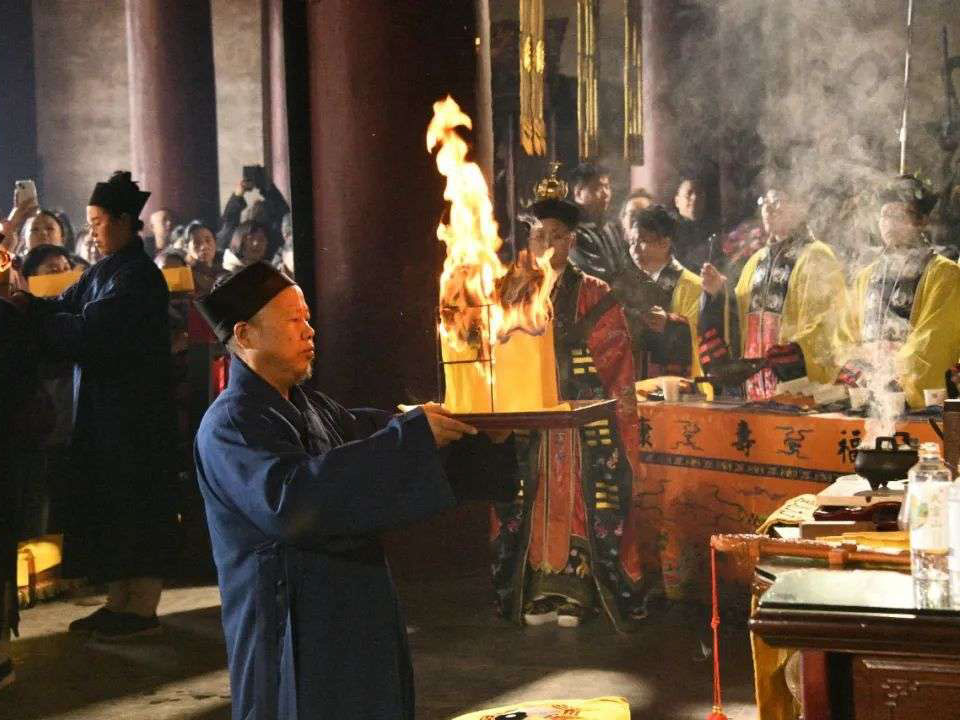
(1) The meaning of the ritual of fasting and Taoist ceremonies
2022-08-20 23:32:13
The original meaning of "zhai" was to be neat, harmonious an...
Yin GUI
2022-08-20 23:32:13
Chapter 27
2022-08-20 23:32:13
Chapter 72
2022-08-20 23:32:13
The couplet of the ancestral hall of the Wudang Mountain Temple
2022-08-20 23:32:13
The Record of Ascending to the Summit of Wudang
2022-08-20 23:32:13