


Chapter Sixty-Four
2022-08-20 23:32:13
Its stability is easy to maintain, and its unpredictability is easy to plan for. It is brittle and easy to disperse, and slightly loose. Act before it has occurred and govern before chaos sets in. A tree that fills your arms starts from a tiny sprout. A nine-story tower begins with a heap of earth. A journey of a thousand miles begins with a single step. Those who act will fail; those who hold on will lose. Therefore, the sage does not act and thus does not fail; he does not cling and thus does not lose. When people are engaged in something, they often fail when they are almost done. If one is as cautious at the end as at the beginning, there will be no failure. Therefore, the sage does not desire what he desires, does not value what is hard to come by, does not learn what he studies, follows the faults of others, and assists the natural state of all things without daring to act. When the situation is stable, it is easy to maintain and preserve; when there are no signs of trouble, it is easy to plot. Things tend to dissolve easily when they are fragile. Things tend to be lost when they are small. One should handle things properly before they occur. To govern a country, one should make preparations in advance before disasters occur. The embracing big tree grows from tiny sprouts. The nine-story high platform is built from every pile of earth. A journey of a thousand miles begins with the first step of your feet. Those who make achievements will lead to failure, and those who are stubborn will suffer damage. Therefore, the sage does nothing and thus will not suffer failure; he has no attachments and thus will not be harmed. People often fail when they are about to succeed. So when something is almost done, one should be as cautious as at the beginning. Then there is nothing that cannot be accomplished. Therefore, the sage of the way pursues what others do not pursue, does not yearn for goods that are hard to obtain, learns what others do not learn, and corrects the mistakes that people often make. In this way, it follows the natural nature of all things without arbitrary intervention. [Note] 1. Its brittleness and ease: "pan", "disperse", "dissolve". Fragile items tend to dissolve easily. 2. Tiny sprout: A tiny sprout. 3. Soil accumulation: Piling up soil. 4. Those who act fail it, and those who hold it lose it: One theory is that Chapter 29 was wrongly simplified here. 5. Therefore, the sage does not act and thus does not fail; he does not cling and thus does not lose. This sentence is still suspected to be a mistake in the simplification of Chapter 29 from this chapter. 6. Learn: Here it refers to the lessons learned from mistakes made in handling affairs. 7. And dare not do: This sentence is also suspected to be a wrong abbreviation. [Quotation] This chapter, in terms of content, continues the previous one and still discusses the dialectics of the development and change of things. When read in connection with the previous chapter, it can also be said that it returns to the principle of "acting without acting, acting without acting, and tasting without taste." Laozi believed that great things always start from small things and develop. The emergence of any thing always has its own process of generation, change and development. People should understand this process and pay special attention to the links where things may cause trouble in this process to prevent their occurrence. Starting from the perspective that "the great is born of the small", Laozi further expounded on the laws of the development and change of things, explaining that the great undertakings such as "a tree that fills one's arms", "a nine-story platform", and "a journey of a thousand miles" all began from "a tiny sprout", "a heap of earth", and "a single step", vividly proving that all great things develop from small ones. It also warns people that no matter what they do, they must have strong perseverance and start from small things in order to possibly achieve great things. [Commentary] Laozi, based on his experiences of life and insights into all things, pointed out that "What people do often fails when they are almost done." Many people cannot persevere and always fail when things are about to succeed. What are the reasons for this situation? Laozi believed that the main reason lies in the fact that when success is approaching, people are not cautious enough, start to slack off, fail to maintain the enthusiasm they had at the beginning of the matter, and lack resilience. If one can achieve the state of "being as cautious at the end as at the beginning, there will be no failure." Laozi believed that a person can only achieve the best state of intelligence or skills when they are in a natural state of mental peace. In conclusion, if one is as cautious at the last moment as they were at the beginning, failure will not occur. In the second part of this chapter, Laozi employs three parallel sentences: "A tree that fills one's arms grows from a tiny sprout; A nine-story tower begins with a heap of earth. A journey of a thousand miles begins with a single step. From this, let's take a look at these sentences written in Xunzi's "Encouragement of Learning" : "A mountain is formed by the accumulation of earth", "A deep pool is formed by the accumulation of water", "Without accumulating small steps, one cannot reach a thousand miles." "Without the accumulation of small streams, there can be no rivers or seas." It can be seen that there are certain similarities or inheritances in their ideological viewpoints, or rather, Xunzi absorbed this viewpoint of Laozi. However, the conclusion that follows is different from that of Laozi. Xunzi said, "If one perseveres without giving up, even metal and stone can be carved." People should be like earthworms, "with one heart and one mind." Even if they have "the sharpness of claws and teeth and the strength of muscles and bones," they should still "eat the earth above and drink the gold below." Put forward proactive and enterprising propositions; Laozi, on the other hand, advocated "non-action" and "non-attachment", which actually meant that people should act in accordance with the laws of nature, build up the confidence of certain victory and strong willpower, and complete tasks patiently bit by bit. The slightest slackness often leads to the failure of all previous efforts and the failure at the last moment.
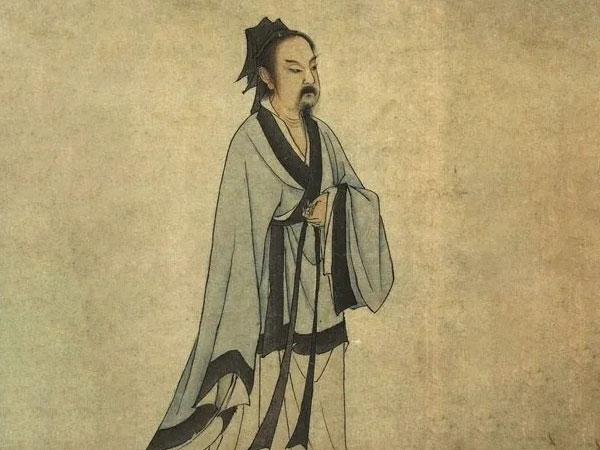
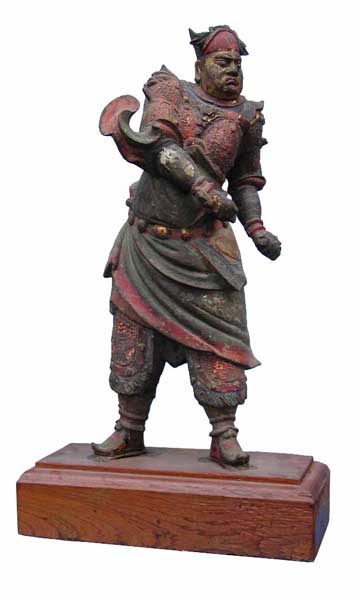
One of the stars of the Big Dipper
2026-04-15 11:51:31
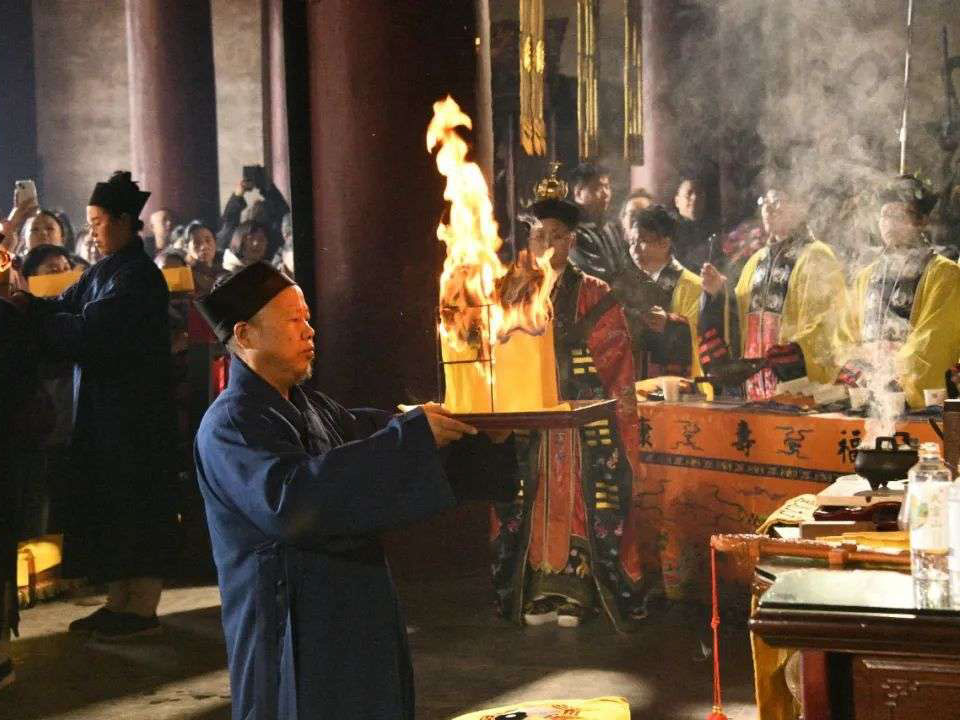
(1) The meaning of the ritual of fasting and Taoist ceremonies
2022-08-20 23:32:13
The original meaning of "zhai" was to be neat, harmonious an...
Yin GUI
2022-08-20 23:32:13
Chapter 27
2022-08-20 23:32:13
Chapter 72
2022-08-20 23:32:13
The couplet of the ancestral hall of the Wudang Mountain Temple
2022-08-20 23:32:13
The Record of Ascending to the Summit of Wudang
2022-08-20 23:32:13