


Chapter 63
2022-08-20 23:32:13
To act without action, to act without action, to taste without taste. What's the size? ② Repaying resentment with virtue ③. The more difficult the picture is, the easier it is; the greater the detail is. All difficult tasks in the world must start from the easy ones. Great undertakings in the world must start from small details. Therefore, the sage never becomes great, and thus can achieve greatness. A promise made lightly is bound to be untrustworthy; what is easy is bound to be difficult. Therefore, even the sage finds it difficult, and thus there is no difficulty in the end. To achieve something with a non-actional attitude, to handle things in a way that does not cause trouble, and to consider simplicity and plainness as having flavor. Great things arise from small ones, and many things start from few. To deal with problems, one should start from the easy aspects; to achieve great goals, one should start from the minute details. All the difficult things in the world must start from the simple ones. Great events in the world always start from the smallest details. Therefore, the sage with the "Way" never seeks great contributions, and that is why he can achieve great things. Those who make promises easily are bound to seldom keep them. Those who take things too lightly are bound to encounter many difficulties. Therefore, the sage with the way always values difficulties, and thus eventually there are no difficulties. [Note] 1. To act without action, to act without action, and to taste without flavor: This sentence means to treat non-action as action, to act without action as action, and to taste without flavor as flavor. 2. Size and quantity: The great emerges from the small, and the many from the few. Another explanation is that what is big is regarded as small, what is small as big, what is much as little, and what is little as much. There is also a theory that one should discard the big and take the small, discard the much and take the little. 3. Repaying resentment to show virtue: This sentence should be moved to the end of Chapter 79's "There must be residual resentment", so it is not translated here. 4. Not being great: It means that a person of the way does not consider himself great. [Quotation] This chapter aims to expound the principle of "non-action yet nothing is left undone", which can also be regarded as a philosophy of life. Laozi expounded the principle that "to act is not to act; to act is not to act; to taste is not to taste." Judging from the content of the previous chapters, Laozi opposed binding the people's hands and feet with complicated prohibitions to restrict and disrupt their lives. To achieve something, one must adopt an attitude of following nature and treat life with calm thoughts and actions. He reminded people that doing anything starts from small to big, from little to much, and from easy to difficult. [Commentary] In Laozi's ideal, the "sage" treats the world with an attitude of "non-action", that is, to act in accordance with the laws of nature, which is why it is called "acting without action". When this principle is extended to the common affairs of human society, it means to handle things with an attitude of "doing nothing". Therefore, the so-called "nothing to do" means hoping that people will start from the objective actual situation. Once the conditions are ripe, things will fall into place naturally and be accomplished. Here, Laozi does not advocate that rulers issue orders at will based on their subjective will and force the implementation of anything. The phrase "taste without flavor" is a metaphor used in daily life, which is extremely vivid. To understand flavor, one must first start by tasting without flavor, treating it as flavor. This is what is meant by "taste without flavor". Next, Laozi said, "To make things difficult is to make them easy." This is a reminder to people that when dealing with difficult matters, one must start from the small and easy aspects. When facing small and easy matters, one must not be careless. "Difficult to do", this is a cautious attitude, meticulous thinking and careful action. The maxim of this chapter is an unshakable truth for people, whether in their actions or in their studies. This is also a methodology of simple dialectics, which implicitly conforms to the law of the unity of opposites and implies the law of the leap from quantitative change to qualitative change. At the same time, we also see that the "non-action" in this chapter does not mean that people do nothing, but rather that through "non-action", they achieve "nothing is left undone". He said, "Therefore, the sage never does great things, and thus can achieve great things." This precisely demonstrates from a methodological perspective that Laozi indeed advocated achieving something through non-action.
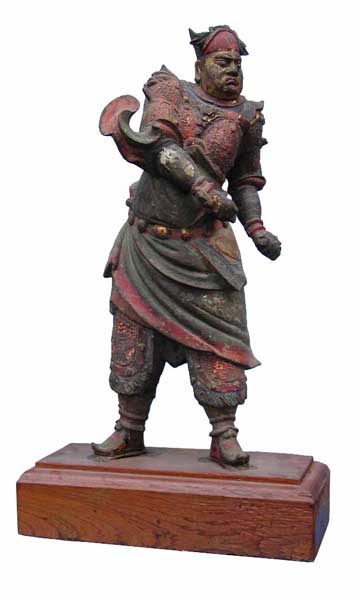
One of the stars of the Big Dipper
2026-04-15 11:51:31
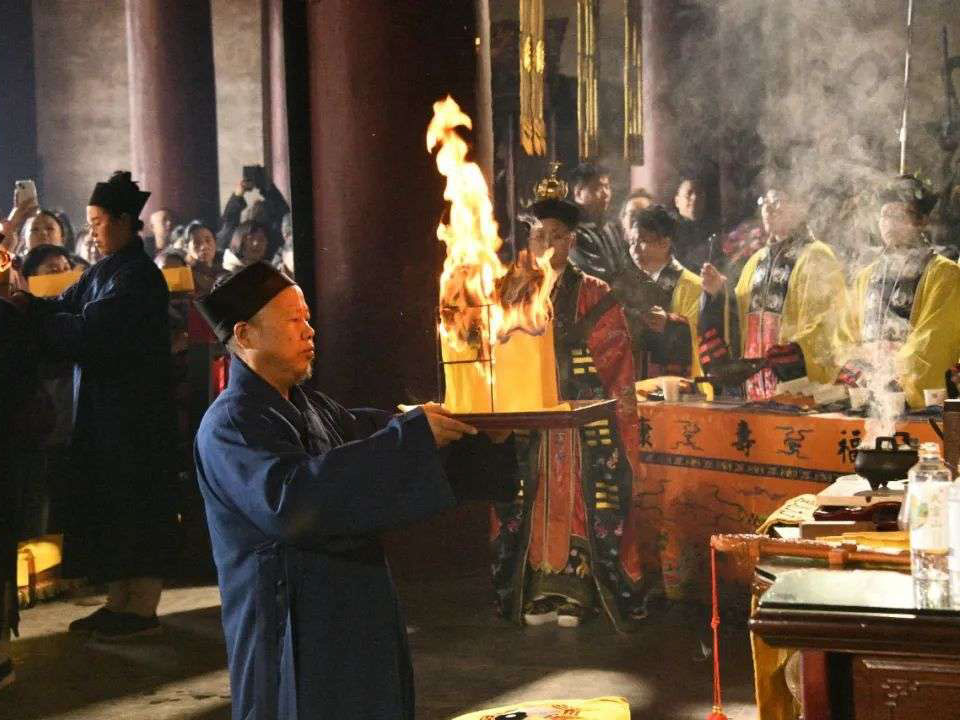
(1) The meaning of the ritual of fasting and Taoist ceremonies
2022-08-20 23:32:13
The original meaning of "zhai" was to be neat, harmonious an...
Yin GUI
2022-08-20 23:32:13
Chapter 27
2022-08-20 23:32:13
Chapter 72
2022-08-20 23:32:13
The couplet of the ancestral hall of the Wudang Mountain Temple
2022-08-20 23:32:13
The Record of Ascending to the Summit of Wudang
2022-08-20 23:32:13