


Chapter Fifty-Nine
2022-08-20 23:32:13
To govern human affairs and nature, nothing is better than to be frugal. Only frugality is called taking medicine early. Taking it early is called accumulating virtue again. If one accumulates virtue, nothing can be overcome. If nothing is overcome, no one knows its ultimate limit. Without knowing its ultimate limit, there can still be a country. With the mother of the country ⑤, one can last long. This is called the way of having deep and solid roots and achieving longevity and long-term vision. There is nothing more important than cherishing the spirit in governing the people and nurturing their minds and bodies. Cherish your spirit so that you can make preparations in advance. Making preparations early means constantly accumulating "virtue". If one keeps accumulating "virtue", there is nothing that cannot be overcome. If nothing is insurmountable, then his power cannot be measured. With such immeasurable power, one can shoulder the heavy responsibility of governing the country. With the principles and principles for governing a country, it can be sustained for a long time. When a country's fortune lasts for a long time, it is called having deep and solid roots, which conforms to the way of long-term maintenance. [Note] 1. Governing human affairs and nature: Governing people, governing the common folk; Follow the will of heaven, preserve vital energy and nourish the body and mind. There are two interpretations of "heaven" : one refers to the body and mind, and the other refers to nature. This sentence means to preserve one's talents. 2. Frugality: to cherish and maintain. 3. Take early: Prepare early. 4. Accumulate virtue: Continuously accumulate virtue. 5. The mother of the state: "You Guo" implies the meaning of safeguarding the state. Mother, fundamental, principle. 6. Longevity and long-term vision: To maintain and exist for a long time. [Quotation] This chapter discusses the principles and methods of governing a country and maintaining health. From the perspective of the text, Laozi expounded a principle that was different from others. He praised stinginess as an important virtue for self-cultivation rather than specifically referring to the cherishing of property. Laozi believed that being stingy means paying attention to accumulating, nurturing and thickening one's foundation in spirit and cultivating strength. To truly achieve spiritual "frugality", one must accumulate abundant virtue. With virtue, one approaches the Dao, which is closely related to the governance of a sage. Here, it is also acceptable to interpret "shi" as frugality, because in Laozi's case, he attached great importance to the virtue of "frugality", which is also a consistent ideological feature of Taoism. [Commentary] First, let's talk about the saying, "To govern human affairs and nature, nothing is better than frugality." As mentioned above, "frugality" can be interpreted as the fundamental principle for governing a country and ensuring its stability, and it can also be interpreted as the virtue of thrift. Laozi put forward the concept of "frugality", which was quite unique in the intellectual circle at the end of the Spring and Autumn Period. Laozi regarded "frugality" as one of the "Three Treasures". He said, "I have three treasures that I hold and preserve: the first is kindness, the second is frugality, and the third is not daring to be the first in the world." He believes that only by being thrifty can one further expand the scope of life; otherwise, one is bound to die. Zhang Songru said, "Frugality is also frugality." Frugality means leaving room for maneuver. Only by leaving some leeway can one be well-prepared in advance. Only by making preparations in advance can we solve problems in time when they are about to occur. Only by addressing issues in a timely manner when they are about to occur can one accumulate resources extensively. With extensive accumulation, one will naturally be invincible in battle and unable to overcome any obstacle. Invincible in battle and invincible in attack, one naturally possesses boundless power. Laozi believed that whether it is to maintain the rule of a country on a large scale or to sustain the longevity of life on a small scale, both cannot do without the principle of "frugality", and both should start from this principle. So it is said to be "the way of longevity and long-term vision." Frugality and thrift, of course, conform to the idea of "non-action yet nothing is left undone". However, if one emphasizes that it is a negative and regressive political tendency, it is merely looking at the issue from the surface and may not necessarily have grasped its essence. (Laozi's Proofreading, p. 331
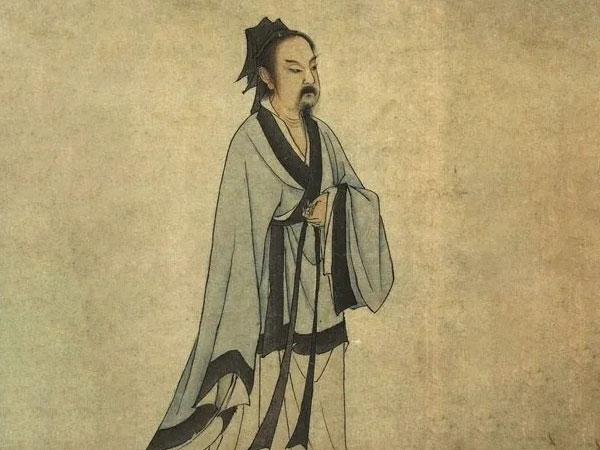
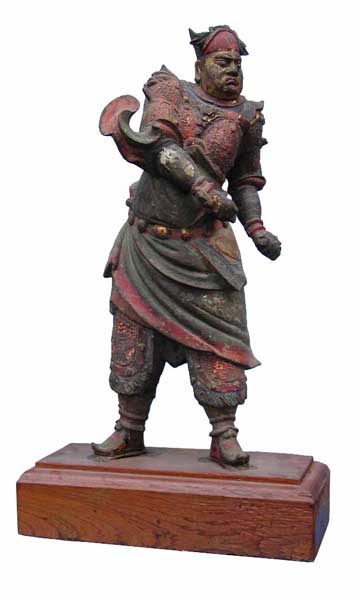
One of the stars of the Big Dipper
2026-04-15 11:51:31
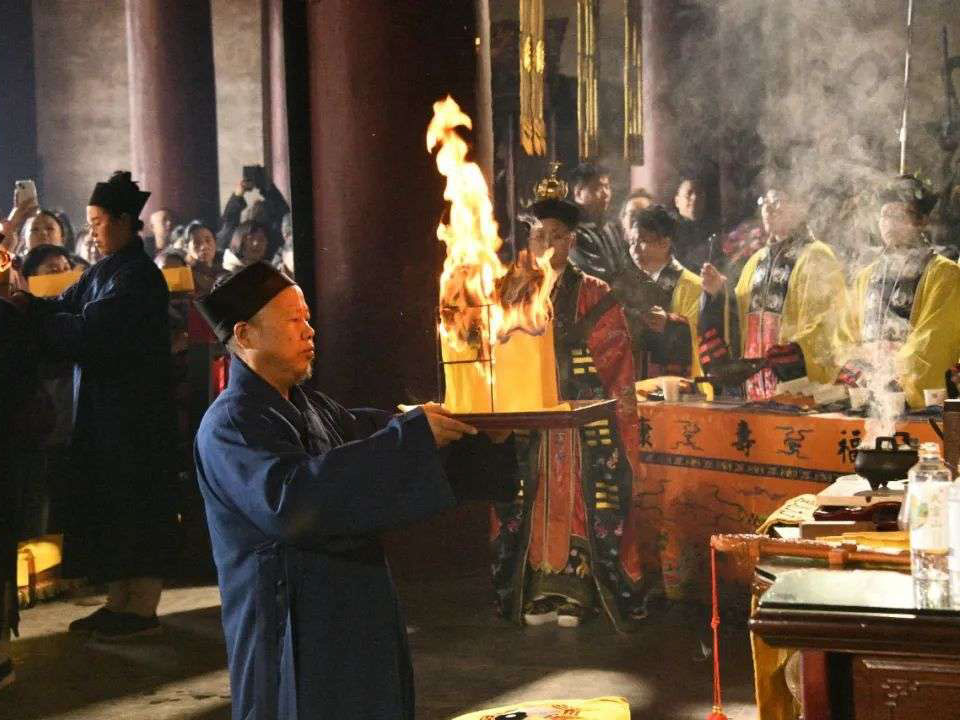
(1) The meaning of the ritual of fasting and Taoist ceremonies
2022-08-20 23:32:13
The original meaning of "zhai" was to be neat, harmonious an...
Yin GUI
2022-08-20 23:32:13
Chapter 27
2022-08-20 23:32:13
Chapter 72
2022-08-20 23:32:13
The couplet of the ancestral hall of the Wudang Mountain Temple
2022-08-20 23:32:13
The Record of Ascending to the Summit of Wudang
2022-08-20 23:32:13