


Chapter Fifty-Eight
2022-08-20 23:32:13
His governance is dull and his people are honest and simple. His governance is meticulous, and his people are lacking. Misfortune may be a blessing in disguise. Fortune may hide misfortune. Who knows its extreme: it has no right path. Just as the righteous become extraordinary, the virtuous become demonic. The mystery of man makes his days long. Therefore, the sage is square but not cutting, upright but not 刿⑨, straight but not excessive ⑩, bright but not dazzling ⑾. If politics is generous and upright, the people will be simple and loyal. When politics is harsh and dark, the people become cunning and complain. Disaster, happiness lies within it; Happiness, misfortune lurks within it. Who can know whether it is a disaster or a happiness? They do not have definite standards. The confusion that righteousness suddenly turns into evil and goodness suddenly turns into wickedness has a long history. Therefore, a sage with the Tao is square but not stiff, sharp but not hurtful, straightforward but not presumptuous, bright but not dazzling. [Note] 1. "Manman" : A state of being in a daze and confused, with the meaning of generosity. 2. Chun Chun: In one book, it is written as "Dun Dun", which means simple and honest. 3. Cha Cha: Strict, demanding. 4. Quque: It implies cunning, complaint, and dissatisfaction. 5. It is not correct: Correct, standard, definite; "Qi" refers to the alternation of fortune and misfortune. This sentence means: They do not have definite standards. 6. Being upright and then extraordinary, being good and then demonic: "upright" means square and upright; Strange, abnormal, evil; Goodness, kindness; Demon, evil. This sentence means: What is good turns evil, and what is good turns evil. 7. If a person is confused by the door of misfortune and fortune and does not understand the principle of their mutual generation and cycle, his days will surely be long. (Yan Lingfeng's Interpretation) 8. Square but not cutting: Square and upright but not cutting people. 9. Honest but not 刿 : honest, sharp; Youdaoplaceholder0, cut. This sentence means: Sharp but not harmful. 10. Straightforward but not overbearing: Be straightforward but not presumptuous. 11. Bright but not dazzling: Bright but not blinding. The previous chapters discussed the manifestation of "virtue" in politics, society and life. This chapter delves into the dialectics of politics, society and life. This chapter mentions, "Misfortune may be a blessing in disguise." "Fortune may hide misfortune." This sentence will be discussed in detail in the analysis of this chapter. Some scholars believe that the meanings of the paragraphs in this chapter are inconsistent and incoherent, and there might be mistakes in abbreviations. Here we still quote based on the original text and have not made any textual adjustments. [Commentary] Laozi proposed in this chapter, "Misfortune may be a blessing in disguise; The phrase "Blessing may hide misfortune" has been an extremely famous philosophical proposition since ancient times and is often quoted by scholars to explain Laozi's dialectical thought. When analyzing this sentence, Feng Youlan said: "The dialectical thought in Laozi's philosophy is a reflection of the drastic social changes during the Spring and Autumn and Warring States periods in people's minds." In the history of Chinese philosophy, since the "I Ching", there have been dialectical thoughts, but expressing them in the form of general laws is still Laozi's contribution. However, Laozi had not yet put forward objective dialectics as the most general law in nature and society. In addition, Laozi's dialectical thought had many serious shortcomings and made significant concessions to metaphysical thought. First, although Laozi recognized that all things in the universe are in motion and change, he believed that these movements and changes are basically cyclical, not processes of ascending and advancing. The term "circulation" it refers to implies a cycle. Secondly, regarding motion and rest, it is an important issue in philosophy. 'motion' and 'stillness' are also significant categories in Chinese philosophy. Laozi acknowledged that things are constantly changing, but he also said, "All things are numerous and diverse, each returning to its root. Returning to the root is called stillness" (Chapter Sixteen). The "root" of all things is the Dao, and "returning to the root is stillness." He believes that the "Tao" also has its "quiet" aspect. And when it comes to this single sentence, "stillness" is the most important. Therefore, in practice, he particularly emphasized tranquility and non-action, believing that "heaviness is the root of lightness, and stillness is the ruler of restlessness" (Chapter 26), and "the female always overcomes the male with stillness, and stillness is the lowest" (Chapter 61), which actually indicates his aversion to the changing and moving of things. Thirdly, opposites can only transform into each other under certain conditions. Without certain conditions, they cannot be transformed. Misfortune can be transformed into blessing, and blessing can also be transformed into misfortune, but this is only the case under certain conditions. For instance, subjective effort or lack of effort, etc., are all conditions. As Laozi said, it seems that without subjective effort, misfortune can automatically turn into blessing. Despite subjective efforts, good fortune is bound to turn into misfortune. This is against the facts. Laozi's thought is also a manifestation of the consciousness of the declining slave-owning class. They have lost everything in the past, thinking they are in trouble, but they are powerless to resist, only hoping that it will automatically turn into a blessing. Laozi believed that since opposites transform into each other, it is very difficult to determine which aspect is positive and which is negative. Such an idea of "nothing is right" opens a door to relativism. Later, Zhuangzi thus fell into relativism." Laozi's dialectical thought is of great significance. Mr. Feng Youlan's criticism is very pertinent and points out the key issues within it. However, our views are slightly different from those of Mr. Feng. We feel that Laozi's dialectics has already possessed the nature of the law of unity of opposites and opposites. Opposite things can complement each other, and at the same time, he knew that opposite things can transform into each other. This dialectical method of observing and understanding things is Laozi's greatest contribution in philosophy.
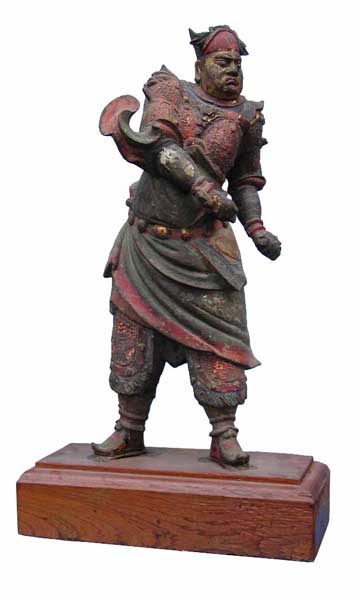
One of the stars of the Big Dipper
2026-04-15 11:51:31
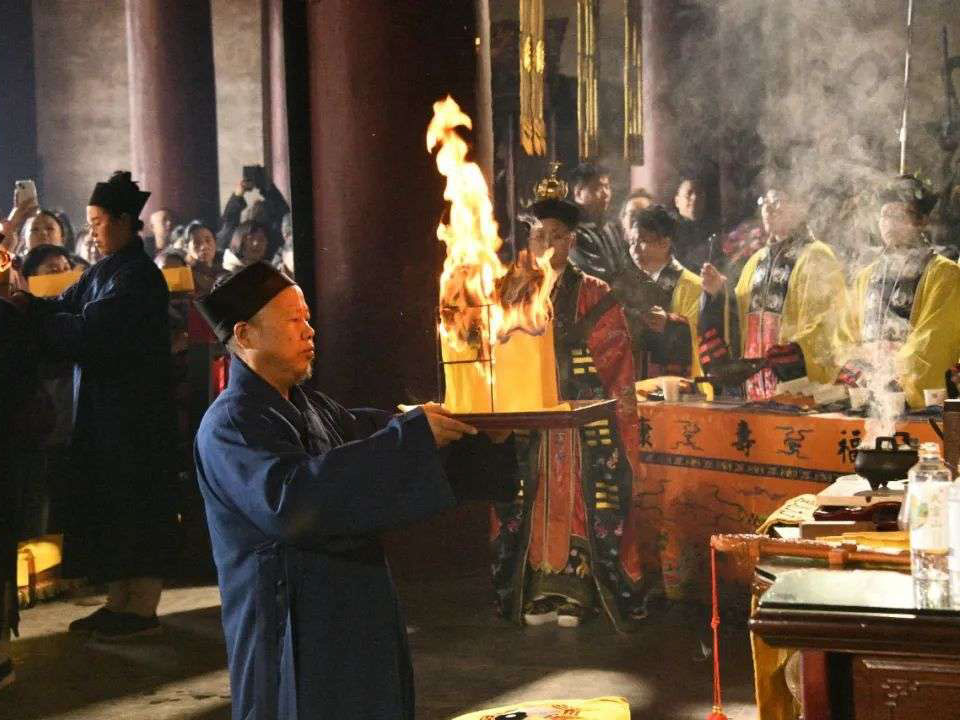
(1) The meaning of the ritual of fasting and Taoist ceremonies
2022-08-20 23:32:13
The original meaning of "zhai" was to be neat, harmonious an...
Yin GUI
2022-08-20 23:32:13
Chapter 27
2022-08-20 23:32:13
Chapter 72
2022-08-20 23:32:13
The couplet of the ancestral hall of the Wudang Mountain Temple
2022-08-20 23:32:13
The Record of Ascending to the Summit of Wudang
2022-08-20 23:32:13