


Chapter Fifty-Seven
2022-08-20 23:32:13
Govern the country with uprightness, wage war with ingenuity, and win the world without causing trouble. How do I know this? Thus ④ : The world is full of taboos ⑤, and the people become poorer. When people have many powerful tools, the country will deteriorate. With many people and ingenious skills, strange things arise. With the flourishing of laws and regulations, there are many thieves. Therefore, the sage said, "I do nothing, and the people will transform themselves." I am quiet, and the people are upright by themselves. When I have nothing to do, the people will naturally become prosperous. I have no desires, and the people are naturally simple. To govern a country by the way of non-action and tranquility, to wage war by ingenious and mysterious means, and to govern the world by disturbing and harming the people. How do I know it's like this? The basis lies precisely here: The more taboos there are in the world, the poorer the common people will fall into. The more sharp weapons the people have, the more chaotic the country will be. The more skills people have, the more rampant the evil wind and strange things become. The stricter the laws, the more the number of thieves keeps increasing. Therefore, the sage with the Tao said, "If I do nothing, the people will cultivate themselves." When I am quiet, the people will naturally be prosperous. I have no desires, and the people are naturally simple and honest. [Note] 1. "Zheng" here refers to the way of non-action and tranquility. 2. Odd: Ingenious and mysterious. 3. Conquer the world: Govern the world. 4. Thus: This refers to the following passage. This is based on the following passage. 5. Taboos: Taboo, avoidance. 6. People: One is written as "people", and the other as "court". 7. Sharp weapon: A sharp weapon. 8. Many people are skillful and resourceful: "Skillful and resourceful" refers to skills and wisdom. This sentence means that people have many ingenious tricks. 9. Strange things: Evil deeds, strange events. 10. I do nothing, yet the people transform themselves: Self-transformation, self-nurturing. When I do nothing, the people will naturally become obedient. In Chapters Two, Five and Ten, Laozi has extended the idea of the natural way of heaven to the human way and put forward the idea of "governing by non-action". In this chapter, Laozi states, "When there are many taboos in the world, the people become poorer." When the people have many powerful tools, the state is in turmoil. The people are wise, yet evil deeds arise. The laws and regulations are well-structured, but the thieves often claim that the counter-evidence should be "taking the world without doing anything", all of which do not rely on the words of the "sages". They long advocate governance through non-action, with orderly rules and regulations. In the era when Laozi lived, society was in turmoil and unrest. The harsh reality made him feel that the rulers, relying on power and force, acted wantonly and did whatever they wanted, resulting in a chaotic situation where "the people became poorer and poorer", "the state was in turmoil", and "there were many thieves" throughout the land. Therefore, Laozi proposed a governance plan of "non-action", "non-stillness", "non-activity" and "non-desire". His political propositions could not have been accepted by the ruling authorities at that time and there was absolutely no possibility of their realization. In conclusion, this chapter is a summary of his social and political views on "non-action", brimming with unrealistic and fantastical elements. But this would be beneficial for a clear-headed ruler to govern the people. [Commentary] First, let's talk about "using the unconventional in military strategy". The Tao Te Ching is not a military treatise, but it cannot be ruled out that it contains content related to military affairs, which is a problem we have already mentioned in the previous chapters. For instance, this chapter talks about "using the odd in military strategy", which actually refers to military issues. In Laozi's view, waging war is a mysterious and cunning act. Therefore, when waging war, one should pay attention to thinking of unconventional methods, setting up unconventional plans and coming up with unconventional strategies. Only in this way can one achieve victory by surprise. This indicates that Laozi's strategies for military strategy are completely different from those for governing a country and ensuring its stability, that is, military strategy should be unconventional while governance should be upright. "Using the odd in military strategy" actually means being unpredictable and elusive. War is an abnormal phenomenon and a last resort adopted by a country when its politics cannot operate normally. Laozi opposed war, but war is inevitable. Therefore, Laozi cannot but put forward his own opinions in the "Tao Te Ching". This "unconventional military strategy" was not intended to advise a tyrannical monarch or a tyrant, but was conceived for the weak and for a just army. Let's talk about the second meaning. Laozi said, "If there are many taboos in the world, the people will become poorer." When there are too many people, there are powerful tools; when there are too many people, the country will deteriorate. With many people and ingenious skills, strange things arise. With the flourishing of laws and regulations, there are many thieves. This is Laozi's specific reflection on the national economy and people's livelihood. Hu Jichuang wrote: "Laozi regarded craftsmanship and skills as the cause of social chaos. They demanded the abolition of craftsmanship and skills, and even believed that the emergence of thieves was also due to craftsmanship and skills." "It is evident that they detested craftsmanship and skills deeply." Firmly opposing craftsmanship and techniques is a characteristic of Taoist economic thought. In the early days, Confucianism was not fundamentally opposed to craftsmanship. It only disapproved of Confucian scholars engaging in craftsmanship and sometimes even recognized the significant role of craftsmanship. The Mohist school's emphasis on craftsmanship goes without saying. The various schools of Confucianism and Legalism in the late Warring States period, although they despised craftsmanship, still affirmed its social role. Only Taoists wrongly regarded craftsmanship as the root cause of social chaos. Laozi's opposition to craftsmanship and techniques is very peculiar and quite different from the thoughts of various schools of thought during the Warring States Period and the feudal periods that followed. This view itself is not only negative and backward, but also reactionary. (From "A History of Chinese Economic Thought", p. 211) Although this analysis has its merit, we feel that there are still some issues that need to be further distinguished. Laozi valued "non-action", "simplicity" and "diligence and frugality". His opposition to industry and commerce was not only due to his guiding ideology but also to other reasons. Objectively speaking, Laozi did not generally or absolutely oppose industry and commerce. What he mainly opposed was the rulers' use of industry and commerce to amassing wealth and goods, leading a luxurious and debauchery life. He did not oppose the common people's pursuit of wealth, because in this chapter, Laozi said, "When I have nothing to do, the people will naturally become rich." This is a very important piece of evidence. To generally say that Laozi opposed the development of industry and commerce, it is probably necessary to find some more evidence.
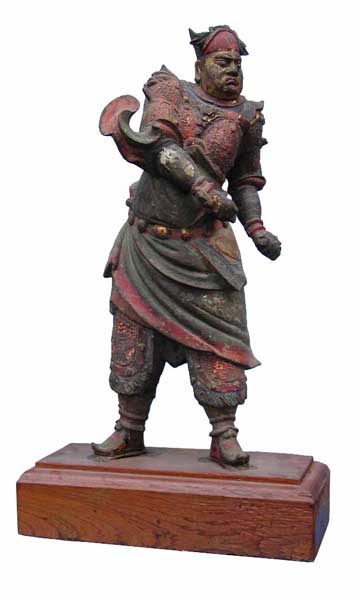
One of the stars of the Big Dipper
2026-04-15 11:51:31
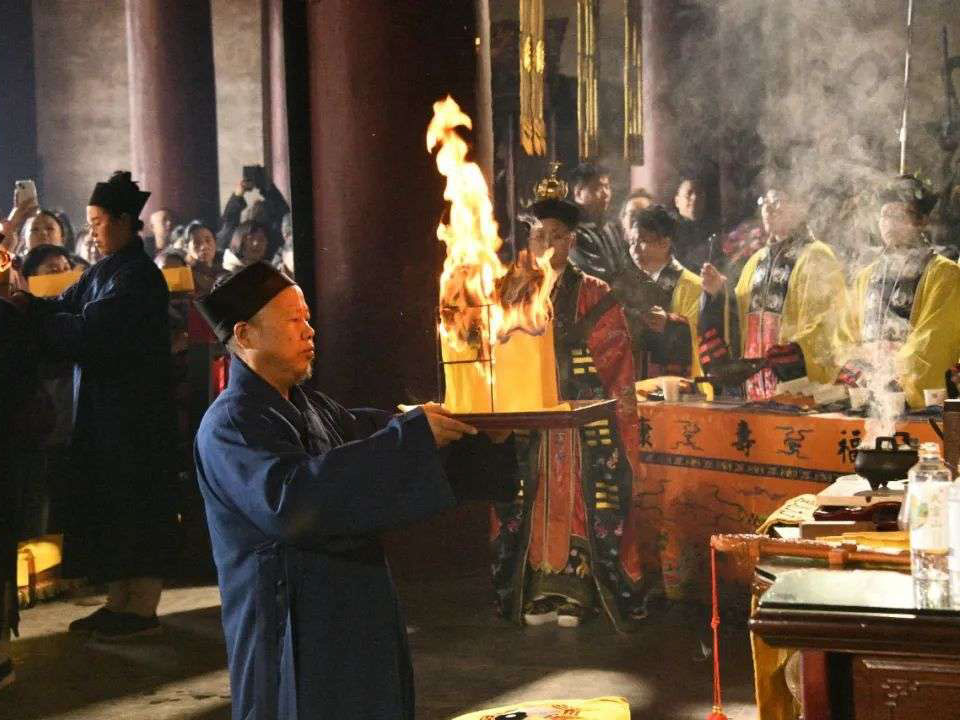
(1) The meaning of the ritual of fasting and Taoist ceremonies
2022-08-20 23:32:13
The original meaning of "zhai" was to be neat, harmonious an...
Yin GUI
2022-08-20 23:32:13
Chapter 27
2022-08-20 23:32:13
Chapter 72
2022-08-20 23:32:13
The couplet of the ancestral hall of the Wudang Mountain Temple
2022-08-20 23:32:13
The Record of Ascending to the Summit of Wudang
2022-08-20 23:32:13