


Chapter Fifty-Six
2022-08-20 23:32:13
Those who know do not speak; those who speak do not know. Stop it and close the door. Sharpen the sharpness and resolve the disputes; To be in harmony with its light and be in harmony with its dust is called being in harmony with the mysterious. Therefore, one should not be close to someone they cannot obtain, nor should they be distant from someone they cannot obtain. It cannot be obtained for benefit, nor can it be obtained for harm. Unattainable and precious, unattainable and cheap ⑤ Therefore, it is the most precious in the world. Wise men do not talk much, and those who gossip everywhere are not wise men. Block the orifices of desire and close the path of desire. Not showing off one's sharpness, resolving disputes, dampening people's sharpness, freeing them from disputes, restraining their brilliance, and blending with their mundane world - this is the profound Xuantong. Those who have reached the realm of "Xuan Tong" have transcended the mundane boundaries of closeness and distance, interests and benefits, and social status, and thus are respected by all people in the world. [Note] 1. Those who know do not speak, and those who speak do not know: This sentence means that those who know do not speak, and those who love to talk do not know. Another explanation is that smart people don't talk much, and those who gossip everywhere are not smart. Another explanation is that those who have grasped the "Way" do not force orders; everything follows its natural course. Those who issue forceful orders do not attain the "Way". The second explanation is adopted here. 2. Block the orifice and close the door: Block the orifice of desire and close the path that stirs up desire. 3. To temper the sharpness and resolve the confusion: To harmonize the light and blend with the dust: This sentence means to temper the sharpness, dissolve the confusion, calm the brilliance and blend with the mundane world. 4. Xuantong: Mysterious and harmonious, here it also refers to "the Way". 5. Be close to someone who cannot be obtained, and be distant from someone who cannot be obtained. It cannot be obtained for benefit, nor can it be obtained for harm. Unattainable yet precious, unattainable yet humble: These lines indicate that the realm of "Xuantong" has transcended the mundane categories of closeness and distance, interests and benefits, and nobility and baseness. [Quotation] Chapter 42 and the previous chapter both discuss "harmony". This chapter continues from the previous one and also focuses on "harmony". Chapter 42 states, "Harmony is achieved through mutual struggle," which means that the two conflicting sides of a matter reach harmony and unity through struggle. The phrase "Knowing harmony is called constancy" mentioned in the previous chapter means taking harmony as the normal state of all things. This chapter discusses how to maintain normalcy and. These three chapters delve deeper layer by layer and are highly logical, presenting to people the highest moral realm of "harmony". However, this chapter is profound in its text. It not only refers to those in power but also encompasses the life philosophies of people in the world in dealing with matters and conducting themselves. He called on people to enhance their self-cultivation, eliminate selfish desires, refrain from showing off their sharpness, transcend disputes, blend in with the mundane world, and not distinguish between close and distant relationships, gains and losses, or social status. They should treat all people and things with an open mind and an impartial state of mind. In this way, the world can be well governed. [Commentary] In Laozi's view, a sage who has attained the "Way", that is, a person who has cultivated an ideal personality, is capable of "sharpening the sharp", "resolving disputes", "enlighten the light", and "harmonize with the dust", which reaches the highest realm of "profound unity". In response to this, the in-car commentary stated: "Sharpness, conflict, light, and dust should be discussed in opposition. Sharpness, conflict resolution, and light should be discussed in unity with dust." Sharp objects are prone to breakage and cannot be preserved for long. By grinding off the sharp objects, the risk of breakage can be avoided. Everyone starts from a one-sided perspective and insists on their own opinions, rejecting others'. As a result, there are many disputes and people are at a loss. The solution to the disputes lies in getting everyone to look at the problem from a comprehensive perspective and abandon one-sided opinions. Wherever the sunlight reaches, there must be a dark side that cannot be reached. Only seeing the illuminated side and ignoring the other side that cannot be reached cannot be regarded as truly understanding the principle of light. Only by uniformly grasping the two aspects of "negative Yin" and "embracing Yang" can one understand the principle of "using its light to restore its brightness". The universe is filled with dust everywhere, and so are the complex situations in the human world. The idea and action of transcending the mundane world are unrealistic. The idea and action of being the only one who remains pure while all others are impure will not work. These are all principles that only understand the opposing side but not the unified side. Only those who eliminate preconceptions and have no selfish motives can allow the good aspects to play their best without hindrances and also guide the bad aspects in accordance with the situation and be good at helping them play their due role. "To be in harmony with the dust" is a higher application of the principle of unity of opposites. (On Laozi, Page 48
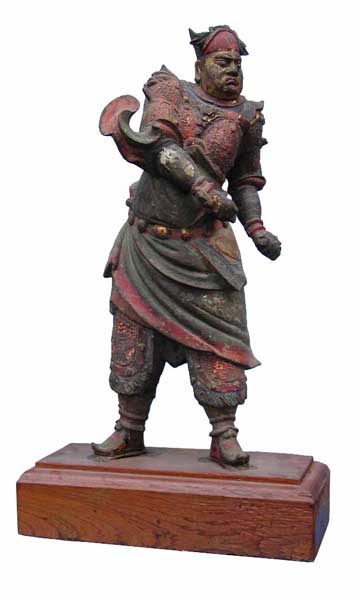
One of the stars of the Big Dipper
2026-04-15 11:51:31
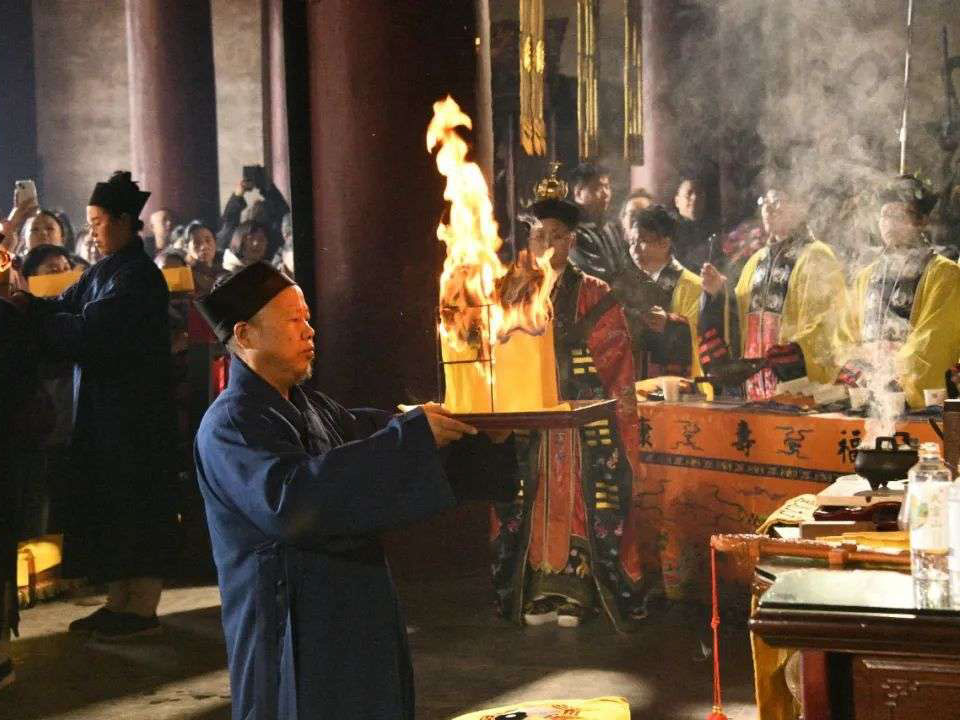
(1) The meaning of the ritual of fasting and Taoist ceremonies
2022-08-20 23:32:13
The original meaning of "zhai" was to be neat, harmonious an...
Yin GUI
2022-08-20 23:32:13
Chapter 27
2022-08-20 23:32:13
Chapter 72
2022-08-20 23:32:13
The couplet of the ancestral hall of the Wudang Mountain Temple
2022-08-20 23:32:13
The Record of Ascending to the Summit of Wudang
2022-08-20 23:32:13