


Chapter Fifty-Two
2022-08-20 23:32:13
The beginning of the world is regarded as the mother of the world. By knowing one's mother, one can understand one's son. Knowing his son and guarding his mother, he will never be in danger. Stop it, close the door ④, and never be diligent for life ⑤. Open up the exchange, help the matter ⑥, and never save the person for life. To see the small is to be enlightened ⑦; to be gentle is to be strong ⑧. With its light, restore its brightness ⑨, and leave no trace of one's own misfortune ⑩. This is called inheriting the norm. All things in heaven and earth have their own beginnings, and this beginning serves as the source of all things in heaven and earth. If one knows the root, one can understand all things. If one understands all things and grasps the essence of all things, then there will be no danger throughout one's life. Plug the holes of desires and close the doors of desires, and there will be no troubles in your life. If the hole of desire is opened, it will add to the myriad of events and be beyond redemption for a lifetime. The ability to perceive the minute details is called "clarity". Those who can hold on to their weakness are called "strong". By using its radiance to reflect the inner light, it will not bring disaster to itself. This is called the eternal "constant way" that endures through the ages. [Note] 1. Beginning: Originally, here it refers to "the way". 2. Mother: Root, here referring to "Dao". 3. Zi: A type of creature, referring to all things produced by the "mother". 4. Plug the dui and close the door: Dui refers to the mouth, and when extended, it means a hole. "Door" refers to the path of a door. This sentence means: Block the holes of craving and close the path of desire. 5. Diligence: Labor. 6. Open up the holes of desires and relieve the chaos of events: Open up the holes of desires and increase the complexity of events. 7. See the small to be clear: "Small" means subtle. Only by being able to perceive the minute details can one be called "enlightened". 8. Strong: Robust and self-improving. 9. Use its light to restore its brightness: Light shines outward, and brightness penetrates inward. The luminous body itself is "bright", and when it illuminates external objects, it is light. 10. Do not bring trouble or disaster upon oneself: Do not cause oneself trouble or misfortune. 11. Inheriting the common way: To carry on the common way. [Quotation] This chapter is another discussion of epistemological issues in philosophy following Chapter 47. Laozi believed that the growth and development of all natural things in the world have a general origin. People should trace this general origin from all things and grasp the principles. People know all things in the world but cannot depart from their ultimate source. They should not rush outward; otherwise, they will lose themselves. In cognitive activities, one must remove the obstructions of selfish desires and delusions to truly grasp the essence and laws of things. [Commentary] In this chapter, Laozi once again employed the pair of concepts "mother" and "son". Here, "mother" represents "the Way", and "son" represents all things in the world. Therefore, the relationship between mother and son is the Way and all things. Theory and practice Abstract thinking and perceptual cognition; A synonym for the relationship between the primary and the secondary. Zhang Songru believed that "By knowing one's mother, one can understand one's son." Knowing his son and then guarding his mother is precisely taking the theoretical proof of the formation of concepts as a method of understanding specific things. Since the Western Zhou Dynasty, China has developed primitive and spontaneous materialism such as the Five Elements Theory. When Laozi first attempted to advance that elemental "physical form" to a higher stage of theoretical form, his materialist thought in theoretical form also showed a certain immaturity due to the limitations of historical and scientific conditions. This immaturity, when reflected in the more complex field of epistemology, is very likely to take on the characteristic of viewing things from the perspective of the "Tao". This is an important reason why Laozi stumbled in his understanding and fell into the water. We basically agree with this view, but we also think that Laozi did emphasize abstract thinking and did not explain the relationship between abstract thinking and perceptual cognition clearly enough. This is what we have learned from the content of this chapter. However, this point should not be exaggerated. On the contrary, we feel that Laozi's discussion on this issue adopted a dialectical method. His viewpoints of "knowing one's mother" and "knowing one's son" are one of the essences of Laozi's philosophical thought. Not only at the end of the Spring and Autumn Period, but also for a considerable period of time after that, his ideological level was beyond the reach of many philosophers. The implication of this chapter is that people all like to show off their intelligence and do not know how to restrain and reflect on themselves. This is a very dangerous thing. He earnestly hopes that people will not always show off but accumulate and restrain themselves, so as not to bring disasters to themselves.
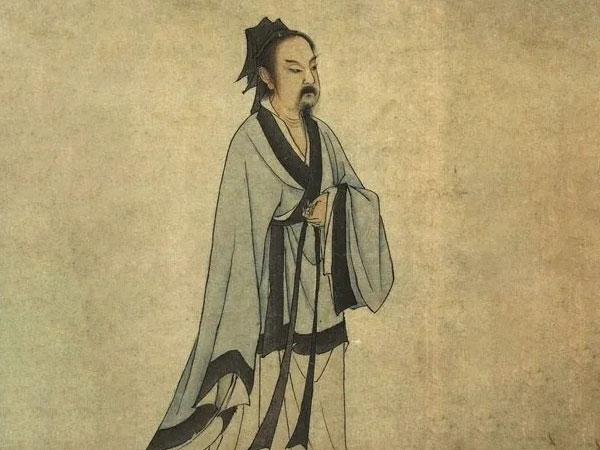
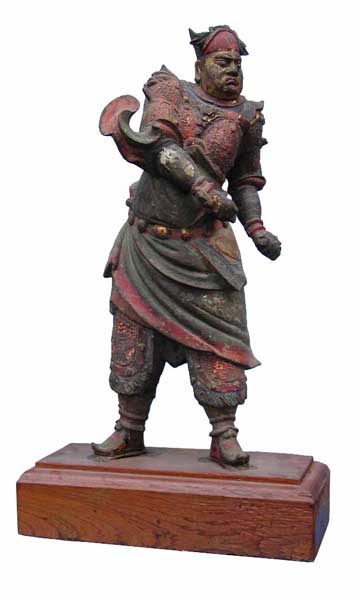
One of the stars of the Big Dipper
2026-04-15 11:51:31
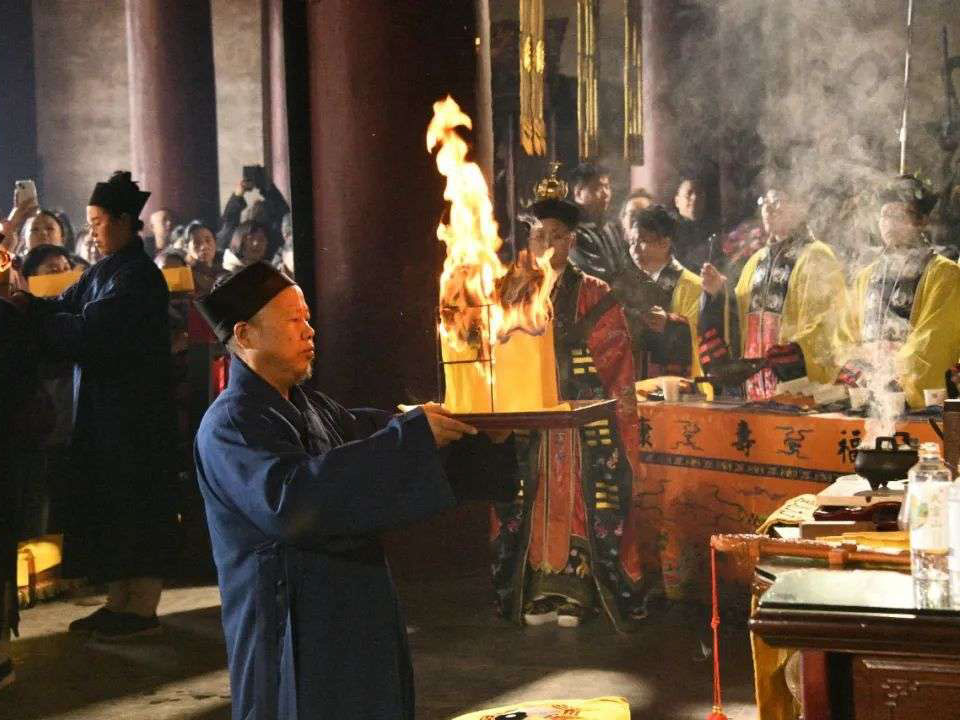
(1) The meaning of the ritual of fasting and Taoist ceremonies
2022-08-20 23:32:13
The original meaning of "zhai" was to be neat, harmonious an...
Yin GUI
2022-08-20 23:32:13
Chapter 27
2022-08-20 23:32:13
Chapter 72
2022-08-20 23:32:13
The couplet of the ancestral hall of the Wudang Mountain Temple
2022-08-20 23:32:13
The Record of Ascending to the Summit of Wudang
2022-08-20 23:32:13