


Chapter 49
2022-08-20 23:32:13
The sage always has no heart; he takes the hearts of the people as his heart. What is good, I will do well. Those who are not good, I am good to them. Virtue is good. Those who believe, I believe. Those who do not believe, I believe. Virtue and faith. The sage is in the world, 歙歙 he ③ purifies his heart ④ for the world, the people all pay attention to his ears and eyes ⑤, and the sage all children with him ⑥. Sages are often selfless and take the hearts of the people as their own. I treat kind people well. For those who are not kind, I also treat them kindly. In this way, kindness can be obtained, and thus everyone can be kind. I trust those who keep their word. For those who do not keep their word, I also trust them. In this way, I can gain honesty and thus make everyone keep their word. The sage with the way, when in his position, restrains his desires and brings the minds of the world back to simplicity and purity. The common people were all focused on their own discerning eyes and ears, and the wise brought them all back to the innocent state of infants. [Note] 1. Always without a mind: This phrase means having no mind at all. It means to maintain a selfless heart for a long time. 2. "De" : Falsely referred to as "gain". 3. Youdaoplaceholder0: pronounced as Xi, meaning to inhale. Here it refers to restraining one's desires. 4. Purify the mind: To transform one's thoughts into simplicity and purity. 5. The common people all pay attention to his eyes and ears: The common people all use their own wisdom and strategies, causing many troubles. 6. Sages are all children: Sages restore the common people to a state of innocence and simplicity like that of infants. This chapter expresses Laozi's political thoughts. The "sage" mentioned in the text is the ruler in Laozi's ideal. Laozi believed that an ideal ruler has no selfishness, takes the hearts of the people as his heart, and makes everyone trustworthy and virtuous. Laozi entrusted his hope of governing the world with the "Tao" to an ideal "sage". Under his governance, everyone returned to the innocent state of an infant, nurturing and growing themselves. This view is progressive. This chapter, both in terms of wording and content, closely follows the issues raised in the previous chapter and conducts in-depth analysis and argumentation. [Commentary] A "sage" is born in the world. He can appropriately restrain his own desires, work diligently without indulging himself, without competing with the people for benefits, and without acting rashly based on his own subjective will. When governing the country, he often demonstrated a muddle and simple nature. However, for the common people who watched intently, listened attentively, and used their own intelligence and even cunning tricks, the sage wanted them all to return to the innocent and desireless state of an infant. This sage who embodies the Dao is a ruler glorified by Laozi, which has already been discussed in the previous chapters. But, as Mr. Zhang Songru said, "What position did Laozi stand on when speaking?" Isn't it obviously standing on the side of the feudal rulers? No, we have pointed this out time and again. He spoke as an expresser of the aspirations of small-scale agricultural producers, namely the smallholder peasant class. (Laozi's Proofreading, p. 286
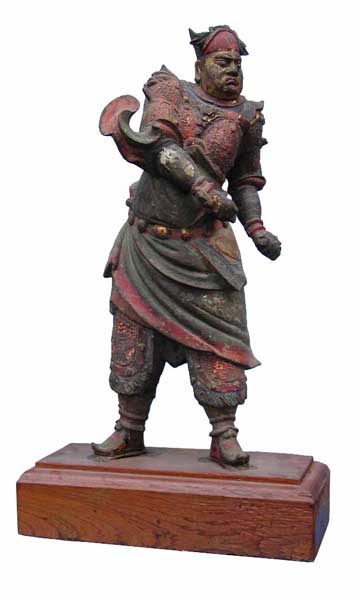
One of the stars of the Big Dipper
2026-04-15 11:51:31
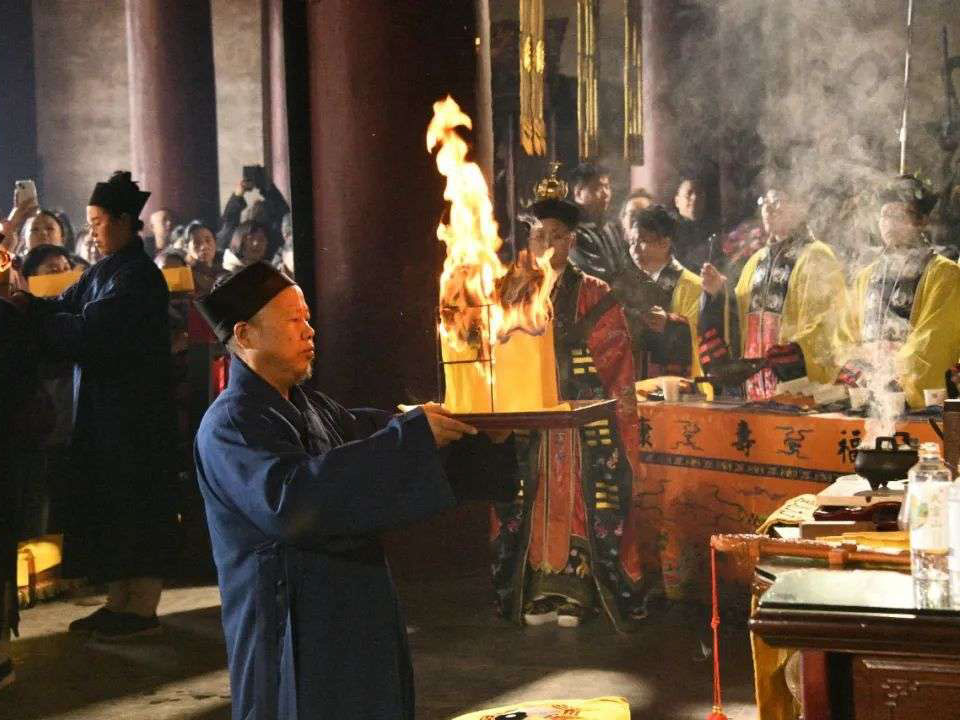
(1) The meaning of the ritual of fasting and Taoist ceremonies
2022-08-20 23:32:13
The original meaning of "zhai" was to be neat, harmonious an...
Yin GUI
2022-08-20 23:32:13
Chapter 27
2022-08-20 23:32:13
Chapter 72
2022-08-20 23:32:13
The couplet of the ancestral hall of the Wudang Mountain Temple
2022-08-20 23:32:13
The Record of Ascending to the Summit of Wudang
2022-08-20 23:32:13