


Chapter 48
2022-08-20 23:32:13
Learning increases day by day, and the way of the Tao diminishes day by day. It diminishes again and again until it leads to non-action. By doing nothing, nothing is left undone; by taking ④, the world is always free from trouble. There are so many matters that are not enough to conquer the world. The desires of those who pursue their studies increase day by day. The desires of those seeking the truth decrease day by day. Reduce and reduce, until eventually it reaches the state of "non-action". If one can achieve non-action, that is, not act rashly, one can make a difference in any matter. Those who govern a country should always take not harassing the people as the foundation of governance. If they constantly disturb and harm the people with harsh policies, they are not qualified to govern the country. [Note] 1. To learn increasingly: "to learn" reflects the pursuit of knowledge about external things. Here, "learning" should refer to politics, education, rites and music. Day by day: It refers to increasing one's knowledge, insight, wisdom and dexterity. 2. The daily decline of the Way: The Way is to understand the undifferentiated state of the "Way" of things through meditation or experience. Here, "Dao" refers to the way of nature and the way of non-action. "Loss" refers to the gradual fading of erotic and literary adornment. 3. Do nothing but achieve nothing: If you do not act rashly, there is nothing you cannot accomplish. 4. Qu: It means to cure, to control and to transform. 5. No disturbance: That is, no disturbance. 6. There are issues: The cumbersome and harsh policies are disturbing people's livelihood. [Quotation] This chapter discusses the issues of "learning" and "the Way". He first talked about "learning", which is to seek external experience and knowledge. The more experience and knowledge are accumulated, the more they become. Laozi looked down upon external empirical knowledge, believing that the more such knowledge one mastered, the more selfish desires and delusions would emerge. "Practicing the Way" and "practicing learning" are not the same. It is through intuitive perception to grasp the undifferentiated state of things or to seek one's own empty and quiet state of mind. It constantly eliminates selfish desires and deluded views, enabling people to gradually return to simplicity and nature, and ultimately reach the state of "non-action". The "learning" discussed in this chapter reflects the "study of politics, education, rites and music", which Laozi believed was sufficient to bring about wit and ingenuity. Only those who are "quiet and non-actional", free from selfish desires and deluded views, can govern a country. Therefore, Laozi hoped that people would follow the path of "being the Tao". Mr. Ren Jiyu believed that: "Laozi acknowledged the pursuit of knowledge and the accumulation of knowledge every day. The more one accumulates, the richer one's knowledge becomes." As for understanding the general law of cosmic change or the ultimate source of the universe, it cannot rely on the accumulation of knowledge, but rather on "contemplation" and "quiet observation". It is correct that he attaches importance to rational thinking, and it is also correct to point out that the methods of recognizing general laws and individual things should be different. Laozi's mistake lies in absolutizing rational thinking, which led him to fall towards idealism and even into the error of rejecting sensory knowledge. Mr. Zhang Songru said, "The saying 'Those who study are increasing day by day, those who follow the Tao are decreasing day by day' is not some mysterious, ignorant and anti-rational proposition of Laozi, but rather an objective reflection of historical phenomena in a certain development in terms of ideological form." This chapter precisely summarizes the exploration and criticism of the origin of "Li" from the perspectives of epistemology and methodology, and it is quite profound. In this process of analysis, due to the limitations of class and history that cannot be broken through, the conclusions drawn still carry a certain degree of retroist color, revealing the infatuation of the bones rather than casting a forward-looking gaze. However, this cannot overshadow the brilliance of its dialectical thinking concerning "learning" and "the Way", as well as "increasing day by day" and "diminishing day by day". "Non-action yet nothing is left undone" is a highly wise proposition put forward by Laozi. (Laozi's Proofreading, page 281) In fact, in ancient China, Laozi was not the only scholar who advocated "non-action". For instance, Confucius once said, "Those who govern by non-action, even Shun follows. Why is that? He is just facing the south." The meaning of this sentence is that the only person who managed to bring peace to the world without doing anything himself was probably Shun. What did he do? He merely sat solemnly on his throne. Laozi elevated the idea of "non-action" to an extremely high level and demonstrated its social significance from a philosophical perspective. On the surface, "non-action" seems to be a means of retreat, but its true purpose lies in avoiding the contradictions and problems existing in the process of progress, thereby taking the initiative and achieving the ultimate goal of "nothing is left undone".
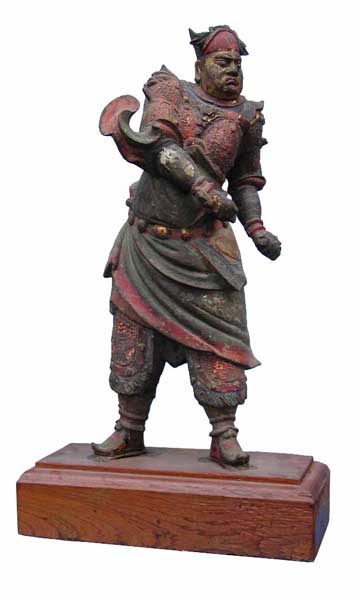
One of the stars of the Big Dipper
2026-04-15 11:51:31
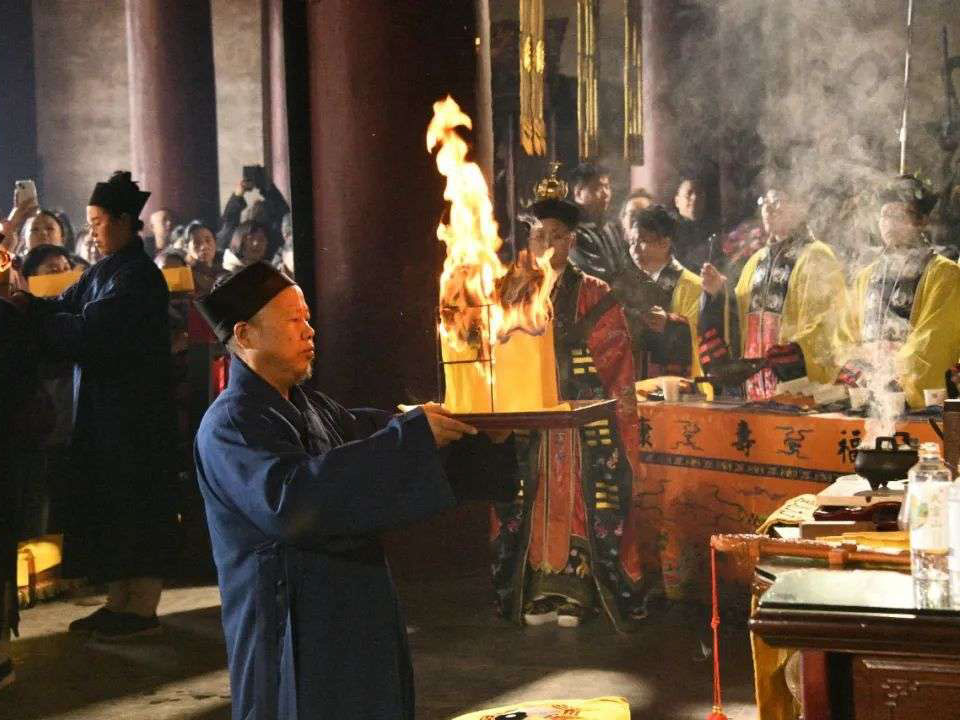
(1) The meaning of the ritual of fasting and Taoist ceremonies
2022-08-20 23:32:13
The original meaning of "zhai" was to be neat, harmonious an...
Yin GUI
2022-08-20 23:32:13
Chapter 27
2022-08-20 23:32:13
Chapter 72
2022-08-20 23:32:13
The couplet of the ancestral hall of the Wudang Mountain Temple
2022-08-20 23:32:13
The Record of Ascending to the Summit of Wudang
2022-08-20 23:32:13