


Chapter 46
2022-08-20 23:32:13
When there is justice in the world, yet horses ride on dung; when there is no justice in the world, soldiers are born in the suburbs. The greatest disaster is to be insatiable. There is no greater fault than the desire for gain. Therefore, contentment is always enough. When governing the world in accordance with the "Way", peace and stability can be achieved, and warhorses can be returned to the fields for farmers to cultivate. Governing the world does not conform to the "Way". Even a pregnant mare is sent to the battlefield, where she gives birth to her foal cubs on the outskirts of the battlefield. The greatest evil is insatiability, and the greatest fault is the desire for greed. Those who know at what point they should be content are always content. [Note] 1. "Que" : to screen out, to retreat. 2. Riding horses with manure: manure, farming, sowing. This sentence means to cultivate fields with warhorses. 3. Military horse: Warhorse. 4. Giving birth to a foal: It refers to a mare giving birth to a foal on the outskirts of a battlefield. 5. Therefore, contentment is always enough: This kind of contentment that knows contentment is eternal contentment. This chapter mainly reflects Laozi's anti-war ideology. During the Spring and Autumn Period, warlords vied for power, and wars of annexation and plundering occurred year after year, causing heavy disasters to social production and the lives of the people. In response to this, Laozi clearly expressed his position. He analyzed the causes of the war and believed that it was due to the rulers' excessive greed. Then the solution to the problem is to demand that the rulers be content with what they have. This view is understandable, but he did not clearly distinguish the nature of the wars, because at that time, the wars included the mutual annexation of power by slave-owning nobles, the wars where the landlord class rose to overthrow the rule of the slave-owning people, and the resistance struggles of the working people. Therefore, in this chapter, the viewpoints expressed by Laozi have two issues. One is the root cause of war; The second is that there is no distinction made between wars. [Commentary] Mr. Zhang Songru wrote in his book "Laozi's Proofreading" : "The first four sentences of this chapter express anti-war thoughts." Laozi, of course, opposed the frequent wars of annexation and plundering among the noble Lord groups of the various states during the Spring and Autumn Period. Although some people have pointed out that these wars, in their mainstream sense, also show a certain progressive trend; However, for the people, especially for the vast number of working people engaged in agricultural production, it is inevitable to bring about all kinds of tragic disasters, atrocities and calamities. This is conceivable. Isn't it only natural that Laozi opposed these wars? By the way, someone once said that Laozi was a military strategist. But since ancient times, where could there have been anti-war strategists? Here, Laozi believed that war was caused by the insatiable and greedy nature of feudal rulers. As long as one could be content, be content with the status quo and not seek anything, war would not break out. "Contentment is always enough." This is an idealist view of history. As for the proposition of "few desires" and "contentment", it was no different from a strong protest against the insatiable desires of the feudal noble Lord group at that time. Mr. Hu Jichuang said, "The concrete manifestation of having few desires is' contentment '." (Pages 270-271 of Laozi's Proofreading) The Laozi school regards contentment as extremely important, believing that it can determine people's honor and disgrace, survival, and fortune and misfortune. ... Not only that, they also take contentment as the subjective criterion for distinguishing wealth from poverty. If one is content, even if one's objective wealth is not much, one can still consider oneself rich subjectively. "Contentment makes one rich" and "there is no greater wealth than contentment." Therefore, knowing that the reason why "foot" is foot, one is always foot. Of course, always foot can be regarded as wealth. On the contrary, although there is a lot of objective wealth, due to subjective insatiability and greed, it can cause great harm. From this, it can be seen that Laozi's wealth is determined by his subjective contentment and insatiability, that is, by "whether he desires or not", so it has an idealist tint. But they attach great importance to the role of objective stimuli in generating desires. As they say, "Joy and bait, passers-by stop." Vulgarity and contentment are inseparable. There is no one who can have few desires and never be content, nor is there anyone who can have few desires and never be content. Laozi's proposition of having few desires and being content was a strong protest against the insatiable desires of the powerful nobility at that time. However, for ordinary people, holding such a view would lead them down a passive and retreating path, and would hinder the development of the economic base from the ideological aspect. The above remarks made by Mr. Zhang Songru and Mr. Hu Jichuang in "A History of Chinese Economic Thought", page 290, are pertinent. The cause of war is often the aggressor's ambition, the capture of cities, the annexation of neighboring countries and the harassment of the people. This chapter warns those in power not to be insatiable and greedy, and to remember the precept of tranquility and non-action. This is indeed a painstaking effort for the development of society and the stability of the people, and it is still worthy of recognition.
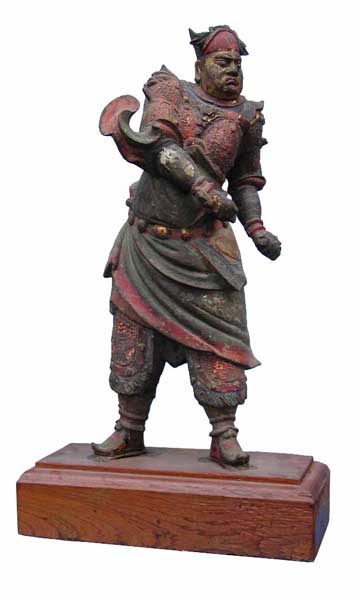
One of the stars of the Big Dipper
2026-04-15 11:51:31
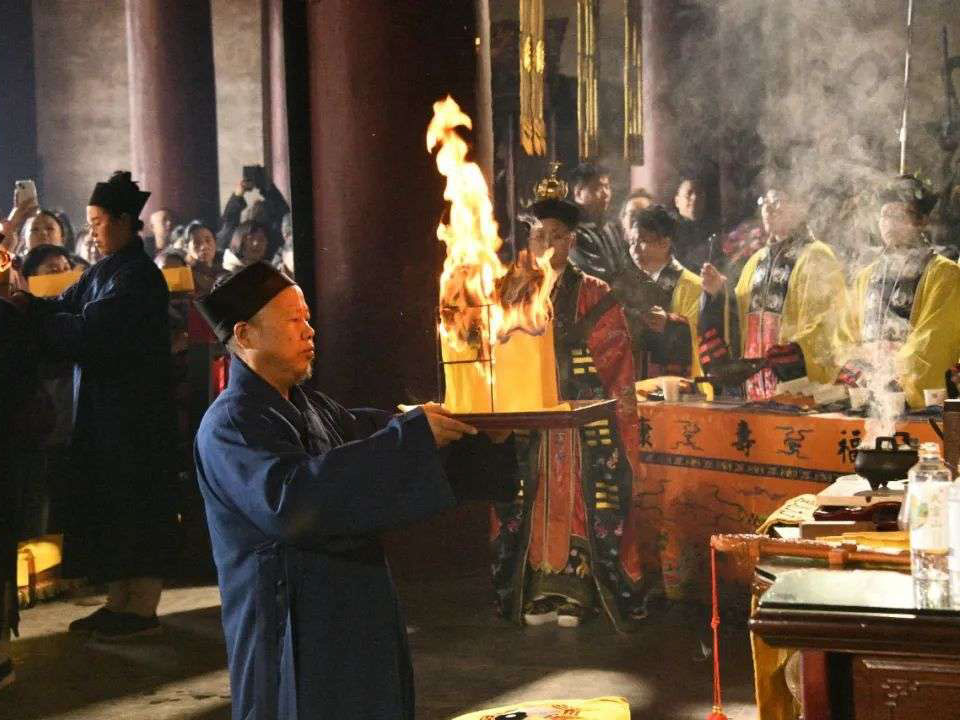
(1) The meaning of the ritual of fasting and Taoist ceremonies
2022-08-20 23:32:13
The original meaning of "zhai" was to be neat, harmonious an...
Yin GUI
2022-08-20 23:32:13
Chapter 37
2022-08-20 23:32:13
"Thunderbolt head"
2022-08-20 23:32:13
Zhao Yuanliang
2022-08-20 23:32:13
Chapter 47
2022-08-20 23:32:13