


Chapter 42
2022-08-20 23:32:13
The Dao gives birth to one ①, one gives birth to two ②, two gives birth to Three ③, and three gives birth to all things. All things carry Yin and embrace Yang ④, and the interaction of qi brings harmony ⑤. The only things that people detest are loneliness, scarcity and lack of grain, which are regarded as worthy by the nobility. Therefore, things may be damaged to gain or increased to lose. What others teach, I teach as well. A strong man shall not die; I will be regarded as the godfather. The Dao is unique. The Dao itself contains the two energies of Yin and Yang. When the two energies of Yin and Yang intersect, they form a balanced state, and all things come into being in this state. All things face away from the Yin and towards the Yang, and form a new harmonious body through the mutual stimulation of Yin and Yang energies. The words that people detest most are "loneliness", "scarcity" and "lack of grain", but the princes and Dukes use these words to refer to themselves. So all things, if reduced, are instead increased; If it is increased, it will instead be reduced. When others teach me in this way, I teach others in the same way. A violent person has no place to die. I take this sentence as the principle of my teaching. [Note] 1. One: This is the numerical representation used by Laozi to replace the concept of the Dao, that is, the Dao is absolutely non-even. 2. Two: Refers to Yin energy and Yang energy. The "Dao" itself contains two opposing aspects. The unity nurtured by the Yin and Yang energies is the "Dao". Therefore, both opposing sides are contained within "one". 3. Three: It is the third party that emerges from the mutual contradiction and conflict between two opposing aspects, and then gives rise to all things. 4. Negative Yin and embracing Yang: Facing away from the Yin and towards the Yang. 5. "Chong for Harmony" : "Chong" means conflict or integration. This sentence means that the two energies of Yin and Yang conflict and blend with each other to form a uniform and harmonious state, thus creating a new unity. 6. Loneliness, scarcity, and lack of grain: These were all humble terms used by ancient monarchs to refer to themselves. 7. Godfather: Father, some scholars interpret it as "beginning", some as "root", and some as "rule". It means fundamental and guiding ideology. [Quotation] The first half of this chapter discusses Laozi's theory of the generation of the universe. Here, Laozi mentions "one", "two", and "three", which refer to the process by which the "Tao" creates all things. This is another important discussion on the fundamental principles of the "Tao" following Chapter Forty. The ultimate source of all things in the universe is the "Dao", which is "mixed as one". For all things in their myriad forms, the "Dao" is unique. Another passage is a warning to the princes that they should take baseness as their foundation and the lowly as their base. Some scholars believe that the latter part of the content has no connection with the principle discussed in the previous part and suspect that the text of Chapter 39 has been mistransferred from this chapter. Another view is that although the two paragraphs are not closely related, their meanings are still similar. This means that the two sides of a contradiction are both opposing and unified. Things are opposite yet complementary. The two sides are not unchanging but can transform into each other. Therefore, this chapter once again expresses Laozi's dialectical thought. [Commentary] The first paragraph of this chapter mentions the numbers one, two, and three. This does not mean that one, two, and three are regarded as specific things or specific quantities. They merely represent the process in which the "Tao" gives birth to all things from less to more, from simple to complex. This is what is called "harmony through mutual influence". Here, Laozi denied the existence of God, evolving from a pluralistic view of the universe to a monistic one, which is commendable. Feng Youlan said, "The Book of Laozi states, 'The Dao gives birth to one; one gives birth to two; two gives birth to three; three gives birth to all things; all things carry Yin and embrace Yang; through the interaction of qi, harmony is achieved.'" (Chapter 42) There are three types of qi mentioned here: impulsive qi, Yin qi and Yang qi. I think the so-called "chong qi" means one, "Yin and Yang" means two, and "three" in the Pre-Qin period meant the majority. The saying "Two give birth to three" means that with the presence of Yin and Yang, many things come into being. So, what kind of energy is "chong qi" exactly? According to the later "Huainanzi", as described in the sequence of the universe's occurrence, before the existence of heaven and earth, there was a kind of chaotic and undivided qi. Later, this qi began to differentiate. The light and clear qi rose to form the sky, while the heavy and turbid qi sank to form the earth. This was the beginning of heaven and earth. Light and clear qi is Yang qi, while heavy and turbid qi is Yin qi. When the Yin and Yang energies start to differentiate but have not yet fully differentiated, the energy in this situation is called "chong qi". "Chong" is a nature of the Dao. "When the Dao is chong, it may not be fully utilized" (Chapter Four). This kind of qi that has not yet fully differentiated is not much different from the Dao, so it is called "chong qi". It is also called one." Mr. Feng's analysis is very insightful. (Page 41 of "Collected Discussions on Laozi's Philosophy") In the latter part of this chapter, Laozi expounded that being weak and retreating is the highest principle in dealing with matters. Modesty brings benefit, while arrogance leads to loss. This is also in line with the dialectical way.
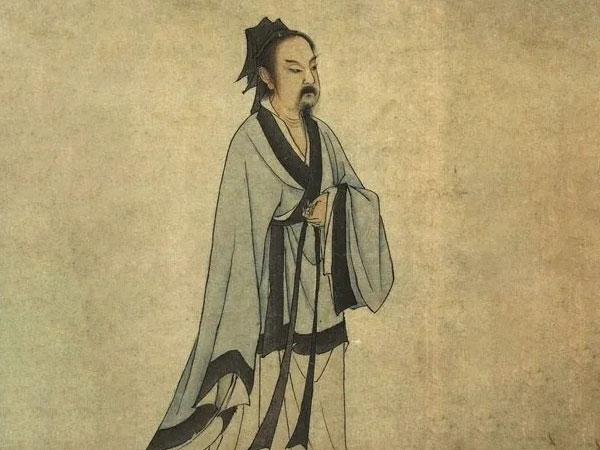
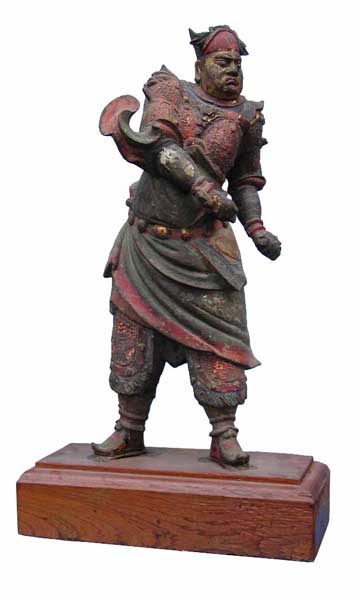
One of the stars of the Big Dipper
2026-04-15 11:51:31
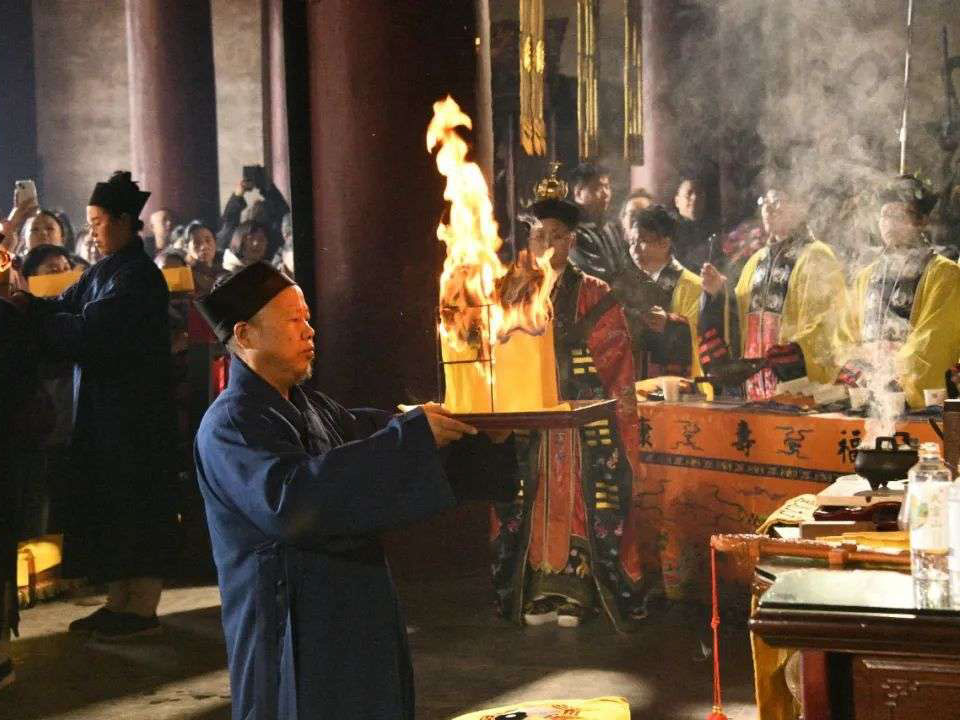
(1) The meaning of the ritual of fasting and Taoist ceremonies
2022-08-20 23:32:13
The original meaning of "zhai" was to be neat, harmonious an...
Yin GUI
2022-08-20 23:32:13
Chapter 27
2022-08-20 23:32:13
Chapter 72
2022-08-20 23:32:13
The couplet of the ancestral hall of the Wudang Mountain Temple
2022-08-20 23:32:13
The Record of Ascending to the Summit of Wudang
2022-08-20 23:32:13