


Chapter 41
2022-08-20 23:32:13
When a senior monk hears the truth, he diligently practices it. The sergeant, upon hearing the truth, was either alive or dead. When the corporal heard the truth, he burst into laughter. It's hard not to smile. Therefore, there is a suggestion ① : If the path of understanding is obscured, if the path of advancement is retracted, if the path of elimination is 颣②. The highest virtue is like a valley. Dabai Ruoshi ③ If one's virtue is insufficient; Jiande Ruohua ④ The quality is as true as Yu. Generous and boundless ⑥ A late bloomer; Great sound is silent. The elephant is formless. The Dao is hidden and nameless. Only by adhering to the way can one be good at lending and achieve success. The sergeant, upon hearing the theory of the Tao, endeavored to put it into practice. The sergeant, after hearing Dao's theory, was half convinced and half skeptical. The corporal burst into laughter upon hearing the Tao's theory. If one is not ridiculed, it is not enough to be regarded as a way. Therefore, ancient swordsmen said such words: The way of light is like darkness. The way forward seems to go backward. A smooth road seems rough. Noble virtue is like a canyon. It seems that the vast virtue is insufficient. A vigorous virtue is like idleness. Simple and innocent, as if still muddled. The purest things, on the contrary, contain dirt. The most square things, on the contrary, have no sharp edges. The loudest sound, on the contrary, sounds completely silent. The largest form, on the contrary, has no shape. The Dao is secluded and nameless, nameless and silent. Only the "Tao" can ensure that all things have a good beginning and a good end. [Note] 1. Offer advice: to make a statement. 2. Yi dao ruo 颣 : yi, flat; Youdaoplaceholder0, rough, bumpy. 3. Great White Humiliation: Humiliation, black dirt. It is said that this name should be placed before the phrase "generous and boundless". 4. Build virtue as if it were stolen: The vigorous virtue seems to be in a state of idleness. "Steal" means idleness. 5. True and pure like Yu: Yu means filth. Simple and innocent, as if turbid. 6. Generous without corners: Corner, corner, or wall corner. The most square thing has no corners. 7. Be good at lending and achieve success: Lending, giving, bestowing. It is extended to mean help or assistance. This sentence means: The Tao enables all things to have a good beginning and a good end, and all things cannot do without the Tao from beginning to end. This chapter quotes twelve ancient sayings, listing a series of two sides of things that constitute contradictions, indicating the contradictory and unified relationship between phenomena and essence. They are different from each other, opposed to each other, yet interdependent and unified. From the perspective of contradictions, it explains that opposites and complements are the laws of the development and change of things. Here, Laozi expounded on the attitudes of the senior, middle and junior soldiers towards "hearing the Tao" : The senior soldier, after hearing the Tao, strives to put it into practice; The sergeant, upon hearing this, remained unmoved and half-convinced. The corporal, upon hearing this, burst into laughter. It is said that the "corporal" only sees the surface and fails to see the essence, and even seizes upon some superficial phenomena to mock the Dao, but the Dao is not afraid of being ridiculed by the shallow. [Commentary] The previous part of this chapter first discussed the reflections of the Dao by the "senior Sergeant", "Middle Sergeant", and "Junior Sergeant". A "senior sergeant" refers to a brilliant petty slave-owning noble, a "middle sergeant" refers to an ordinary noble, and a "junior sergeant" refers to a shallow noble. The terms "upper, middle and lower" do not refer to a political hierarchy, but rather to the level of their ideological understanding. The essence of the "Way" is hidden behind phenomena, and the shallow cannot see it. Therefore, it cannot be called the "Way" if it is not ridiculed. Among the twelve idioms quoted later, the first six refer to "Dao" and "De". The words "Zhi zhen", "Da bai", "da fang", "da qi", "da Yin" and "da xiang" in the last six lines refer to "Dao" or the image of Dao, or the nature of Dao. So after quoting these twelve maxims, summarize them in one sentence: "The Dao" is obscure and nameless. Its essence is the former, while its manifestation is the latter. These twelve sentences, from the essence and phenomena of various things in various fields such as the tangible and the intangible, existence and consciousness, nature and society, demonstrate the universality of contradictions and reveal the true meaning of dialectics. This is extremely wise.
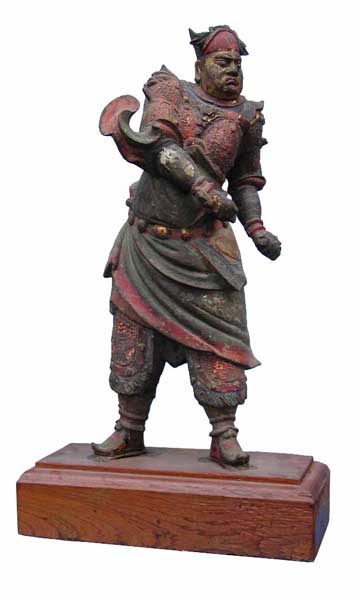
One of the stars of the Big Dipper
2026-04-15 11:51:31
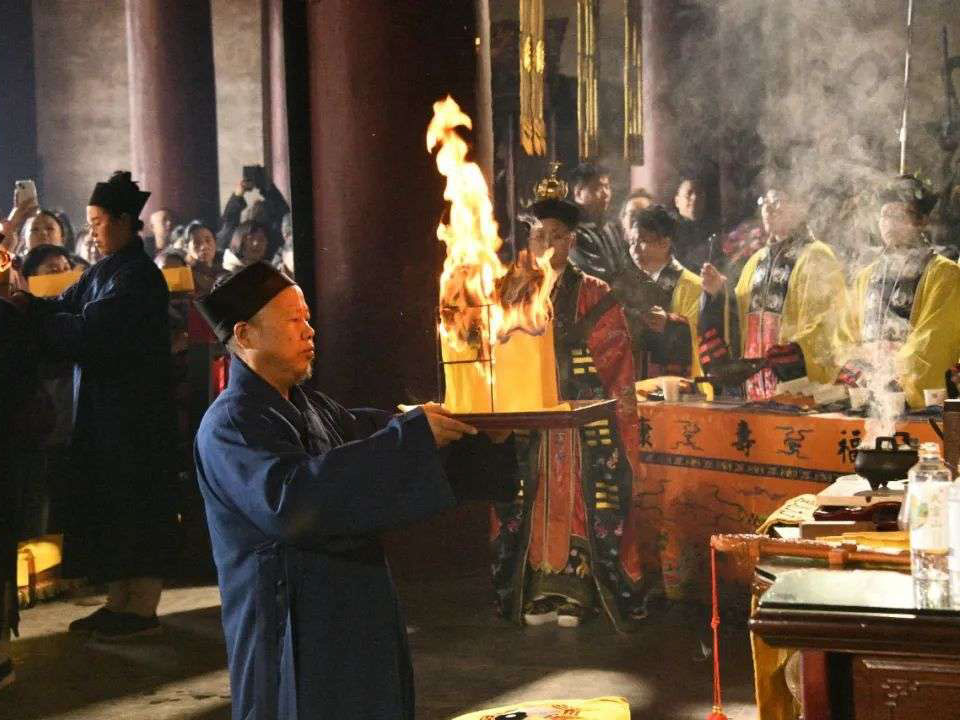
(1) The meaning of the ritual of fasting and Taoist ceremonies
2022-08-20 23:32:13
The original meaning of "zhai" was to be neat, harmonious an...
Yin GUI
2022-08-20 23:32:13
Chapter 27
2022-08-20 23:32:13
Chapter 72
2022-08-20 23:32:13
The couplet of the ancestral hall of the Wudang Mountain Temple
2022-08-20 23:32:13
The Record of Ascending to the Summit of Wudang
2022-08-20 23:32:13