


Chapter 39
2022-08-20 23:32:13
In the past, when one attained one, heaven attained one and became clear. The land gains peace. God received one Spirit. Grain is full when it is full, and all things are alive when they are full. When the King of Hou got one, he regarded it as the first of heaven. The reason for this is that the sky cannot be cleared, and there is a fear of splitting. If the land is not at peace, it will be feared to be abandoned. If God is not enlightened, there will be fear of rest. The grain is not full, for fear of drying up ⑨ If all things cannot come into being, they will fear extinction. If the king is unable to correct himself, he is likely to stumble. Therefore, nobility is based on lowliness, and nobility is founded on lowliness. Therefore, King Hou self-proclaimed himself as "lonely, few, and ungrateful". Is this not based on baseness? Isn't that so? Therefore, Zhi Yu has no reputation ⒁. Therefore, I do not wish for 琭琭 to be like jade ⒂ and luo luo to be like stone ⒃. The heavens, having attained the Way, become clear and bright. One gains the Tao and becomes peaceful. God (man) attained the Tao and became a spirit. The river valley is filled with the Tao. All things grow when they obtain the Dao. The marquis obtained the Dao and became the leader of the world. In short, if the sky is not clear and bright, it is likely to shatter. The earth will not be at peace; it may crumble. If man cannot maintain his spirituality, he is afraid of extinction. The river valley cannot maintain its flowing water and is afraid of drying up. If all things cannot keep growing, they will probably perish. If the marquis cannot maintain his position as the leader of the world, he is likely to be overthrown. Therefore, nobility is based on lowliness and nobility on lowliness. That's why the marquesses and Kings called themselves "lonely", "few", and "unyielding". Isn't this taking lowliness as the foundation? Isn't it so? Therefore, the highest honor does not require praise or commendation. It is not required that 琭琭 be as lustrous as jade, but rather as hard as mountain stones. [Note] 1. Attaining the one: that is, attaining the Tao. 2. God received one Spirit: God may refer to a person. Ling: Spiritual or ingenious. 3. Zheng: One book reads "Zhen". It means leader. 4. To put it simply: to infer. 5. It is said that if one were to say. The silk manuscript reads "stomach". 6. The sky cannot be clear: If the sky is separated from the Tao, it cannot be clear and bright. 7. Waste: Abandonment. 8. Rest: Disappearance, extinction, or cessation. 9. Exhaustion: Drying up, depletion. 10. Zheng: One is written as "noble", and the other as "steadfast". 11. "Jie" : To fall, fail, or suffer setbacks. 12. Self-reference: One book reads "self-description". 13. Solitary, lonely, and unyielding: Ancient emperors referred to themselves as "solitary", "lonely", and "unyielding". "Bu Gu" means not good. 14. The highest honor requires no praise or compliment: The highest honor does not need to be praised or commended. 15. Youdaoplaceholder0: describing the beautiful appearance of jade. 16. Luolu: Describes the appearance of Shi Jian. [Quotation] This chapter discusses the universal significance of the "Tao". The first half of the paragraph discusses the role of the "Tao". All things in heaven and earth originate from the "Tao", or to put it another way, the "Tao" is an indispensable element for the composition of all things. Without the "Tao", all things in heaven and earth could not exist. The latter part of the passage extends to the human world, warning the rulers to start from the principles of the "Way" and always be able to "be humble", "be at the back", and "be humble", that is, the noble should take the humble as the foundation and the high as the base. Without the common people as the foundation and base, there would be no noble marquesses or Kings. Therefore, in the content of this chapter, dialectical factors are also included. [Commentary] In the Tao Te Ching, Laozi often uses "one" to refer to "Dao", as stated in Chapter 22, "The sage holds one as the model of the world." In this chapter, Laozi uses the character "one" seven times in a row, and its meaning is quite profound. Yang Xingshun said, "Everything is in flow and changing, but Laozi believed that the foundation of change is unity rather than the struggle of contradictions." "Heaven's first clarity"... Laozi exposed the contradictions in the objective world, attempting to weaken them and prevent their intensification. For this purpose, he regarded unity as the foundation of all things and absolutized it. In fact, Laozi believed that there is only one origin of the universe and only one general law of the universe. Therefore, he emphasized "one", that is, the monism of the origin of the universe, and it is material. Among all the natural things in the world, Laozi listed many contradictory opposites and believed that the opposites are interdependent, transform into each other, and eventually converge into unity. So, his repeated use of the word "one" also indicates that he believes contradictions and oppositions must eventually be unified. In human society, Laozi also emphasized unity, believing that even Kings and marquesses should pay attention to the sole "Dao" in order to provide a standard for the world. What is this criterion? Laozi said, "Nobility is based on lowliness, and nobility is founded on lowliness." The marquis and king should recognize that "lowliness" and "inferiority" are their foundation. A person of virtue does not need to be as radiant as jade; simplicity is better. In conclusion, the beginning of this chapter points out the commonality and significance of preaching. Whether it is heaven, earth, God, valley, all things, or Kings and marquesses, they all originate from the Tao. If the Tao is lost, nothing will exist anymore.
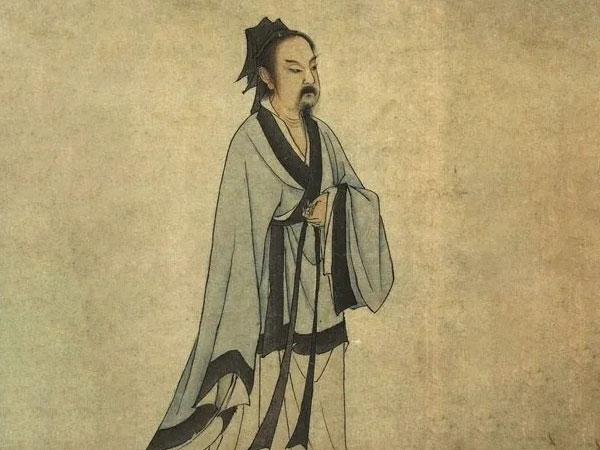
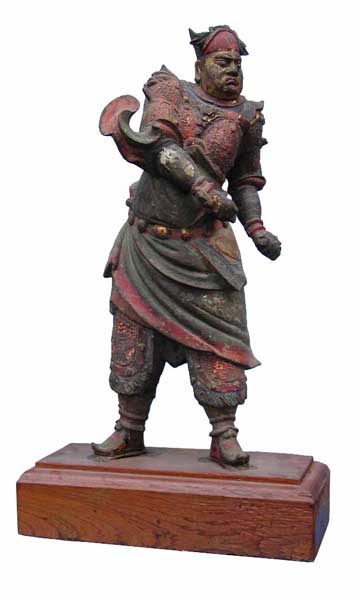
One of the stars of the Big Dipper
2026-04-15 11:51:31
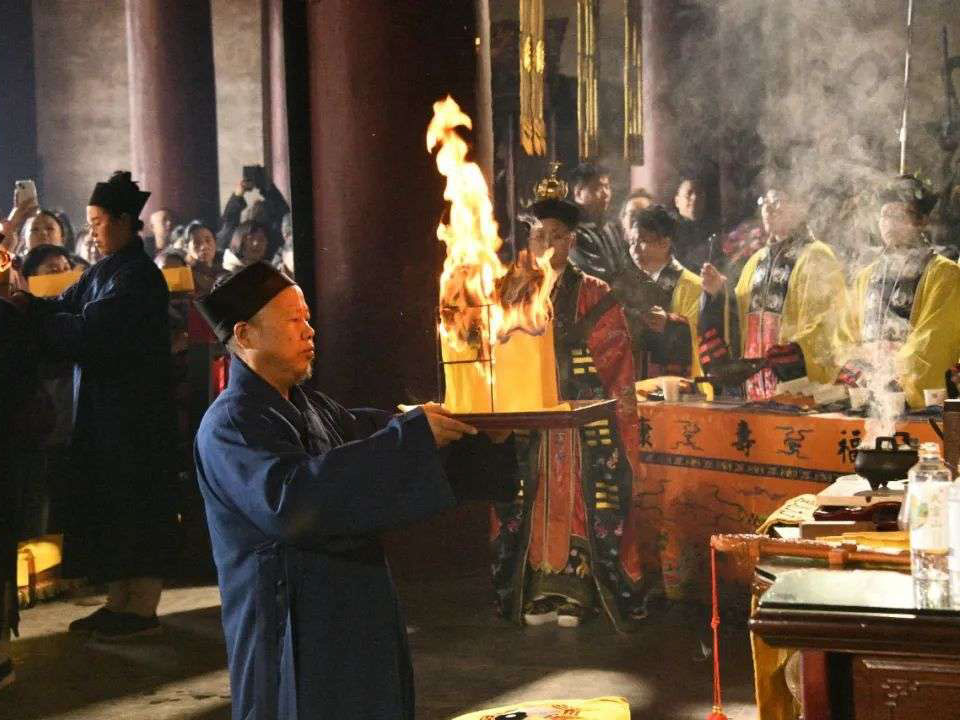
(1) The meaning of the ritual of fasting and Taoist ceremonies
2022-08-20 23:32:13
The original meaning of "zhai" was to be neat, harmonious an...
Yin GUI
2022-08-20 23:32:13
Chapter 27
2022-08-20 23:32:13
Chapter 72
2022-08-20 23:32:13
The couplet of the ancestral hall of the Wudang Mountain Temple
2022-08-20 23:32:13
The Record of Ascending to the Summit of Wudang
2022-08-20 23:32:13