


Chapter 38
2022-08-20 23:32:13
The highest virtue is not virtue ①, and thus there is virtue. A person of low virtue does not lose virtue, and thus has no virtue. The highest virtue does nothing and thus has no intention. The lower virtue is to act without doing anything. The most benevolent act without any thought. The upper meaning is to act with a sense of purpose. If one offers a bow but does not respond, one should throw it away with a shrug. Therefore, one loses the way and then becomes virtuous; loses virtue and then becomes benevolent; loses benevolence and then becomes righteous; loses righteousness and then becomes courteous. Propriety is the thinnest of loyalty and trustworthiness, but the foremost of chaos. The first to understand is ⑨, the flower of the Dao ⑩, but the beginning of ignorance. Therefore, a true man does not dwell on his thinness when it is thick. Stay true to oneself, not to dwell on one's splendor. Therefore, abandon that and take this. A person of "supreme virtue" does not manifest as having virtue outwardly, and thus is actually virtuous. A person with "lower virtue" is manifested as not deviating from the "Way" on the outside, and thus actually has no "virtue". A person of "high virtue" follows nature without any intention to act, while a person of "low virtue" follows nature with intention to act. The most virtuous person wanted to do something but did not respond to him, so he raised his arms and forced others to do so. Therefore, only after losing the "Way" can there be "virtue", only after losing "virtue" can there be "benevolence", only after losing "benevolence" can there be "righteousness", and only after losing righteousness can there be propriety. The concept of "propriety" is the product of insufficient loyalty and trustworthiness, and it is also the beginning of chaos. The so-called "prophets" are merely the vanity of the "Way", from which ignorance begins to emerge. Therefore, a true man is honest and upright, and does not dwell on being spoiled. Keep a simple heart and do not dwell in ostentation. Therefore, one should abandon the superficial and ostentatious and adopt simplicity and honesty. [Note] 1. Superior virtue and unvirtue: Unvirtue does not manifest as formal "virtue". This sentence means that a person of supreme virtue follows nature and does not manifest it in form. 2. Be virtuous without losing virtue: A person of low virtue adheres to the "virtue" in form, while not losing virtue means not deviating from virtue in form. 3. Lack of virtue: Unable to embody true virtue. 4. The highest virtue is non-action and non-action: "Yi" means heart or intention. "Having no intention means having no heart to act." This sentence means: A person of supreme virtue follows nature without any intention to act. 5. A person of lower virtue acts without doing anything: This sentence corresponds to the previous one, that is, a person of lower virtue follows nature and acts intentionally. 6. Arm out and throw it away: Arm out, stretch out one's arm; "Throw" means strong pulling. 7. Thin: Insufficient, weak and thin. 8. Head: Start, beginning. 9. Prescient: A person who has the foresight and insight. 10. "Hua" : Empty splendor. 11. Fulfill one's aspiration: Be honest and simple in one's conduct. 12. "Bo" : It refers to the decline and thinness of propriety. [Quotation] This chapter marks the beginning of the Tao Jing. Some people believe that the first part begins with "Dao", so it is called the "Tao Jing". The second part begins with the character "virtue", which is why it is called the "Classic of Virtue". This chapter is rather difficult to understand in the Tao Te Ching. Laozi believed that the attribute of the "Tao" is manifested as "virtue". Any behavior that conforms to the "Tao" is "virtuous", while the opposite is "lacking virtue". "Dao" and "De" are inseparable, but there are differences between them. Because "virtue" is divided into upper and lower levels, "upper virtue" is fully in line with the spirit of the "Way". "De" is the manifestation of "Dao" in the human world. "Dao" refers to objective laws, while "De" means that human beings recognize and act in accordance with objective laws. The function that emerges when people apply the "Tao" to human society is the "De". [Commentary] The Tao Te Ching, on the one hand, discusses the "Tao", and on the other hand, delves into the "De". Laozi believed that "the highest virtue" is the spirit that is completely in line with the "Tao". Chapter 21 once wrote: "The guests of Confucius followed only the Tao." Chapter 28 states: "For all streams in the world, constant virtue never leaves, returning to infancy." "For all grains in the world, constant virtue is sufficient, returning to simplicity." Chapter 51 says: "To be born without having, to act without relying, to grow without being slaughtered, this is called the profound virtue." The "Kongde", "Changde" and "Xuande" mentioned above all refer to the "Shangde" referred to here. From a political perspective, when analyzing and understanding the so-called "supreme virtue", we believe it is different from the "virtuous governance" as advocated by Confucianism. Laozi criticized the Confucian "virtuous governance" for disregarding the objective actual situation and merely implementing it based on people's subjective will. This is not "the highest virtue", but "the lowest virtue". Laozi's "supreme virtue" is "non-action" and "non-action". It does not deviate from the objective natural laws. The ruler has no utilitarian intention and does not act solely based on subjective will. The result of doing so is, of course, non-action yet nothing is left undone, that is, fully embodying the spirit of the "Tao" in the human world. Therefore, it is also "having virtue". However, "lower virtue" is the "non-action" of "having a purpose", but it holds a utilitarian purpose and acts according to one's own will. In this chapter, Laozi divided politics into two types and five levels. The two types are "non-action" and "action". "Dao" and "De" belong to the type of "non-action". Benevolence, righteousness and propriety belong to the category of "taking action". The five levels are Dao, De, Ren, Yi and Li. Among these five levels, virtue and benevolence are the highest standards, but "virtue" only refers to "superior virtue", not "inferior virtue". Losing the Way leads to virtue. This is said within the category of non-action. If one loses the Way, they will degenerate into the lowest virtue, which is almost the same as the highest benevolence. "Losing virtue leads to benevolence. This means that benevolence comes only when one leaves the type of" non-action "." Benevolence has already reached the level of "acting" and "doing", so "losing benevolence and then righteousness" and "losing righteousness and then propriety" are the different levels manifested within the scope of "acting". In this chapter, Laozi used the term "great man", which is the only noun employed throughout the book. In the past, some people interpreted it as "a person of high wisdom", and the original meaning was roughly the same, but it also contained elements of boldness, decisiveness, and fortitude. Laozi felt that interpersonal relationships were becoming increasingly difficult to get along with, so in a very excited mood, he used the word "a true man" and said, "A true man acts on the strong and does not dwell on the weak." Stay true to oneself, not to dwell on one's splendor. Therefore, abandon that and take this. This chapter employs some specific norms to fix people's thoughts and behaviors within a fixed form, that is, to act in accordance with loyalty and trustworthiness and not to perform excessive rituals. Therefore, Laozi's minimum requirement for politics was to abandon "thinness" and "magnificence" and restore "thickness" and "substance".
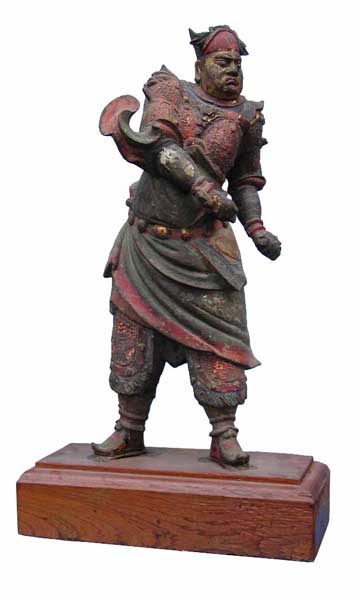
One of the stars of the Big Dipper
2026-04-15 11:51:31
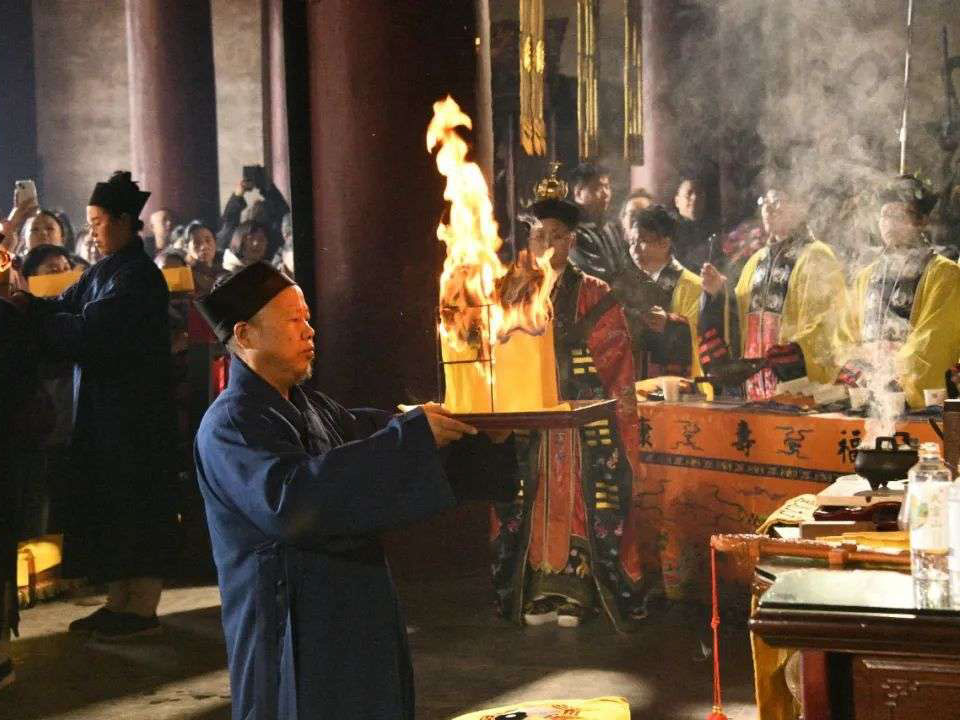
(1) The meaning of the ritual of fasting and Taoist ceremonies
2022-08-20 23:32:13
The original meaning of "zhai" was to be neat, harmonious an...
Yin GUI
2022-08-20 23:32:13
Chapter 27
2022-08-20 23:32:13
Chapter 72
2022-08-20 23:32:13
The couplet of the ancestral hall of the Wudang Mountain Temple
2022-08-20 23:32:13
A Tour of Taihe Mountain (Excerpt)
2022-08-20 23:32:13