


Chapter Thirty-Six
2022-08-20 23:32:13
If you want to 歙 ①, you must firmly expand ②. If you want to weaken something, you must strengthen it. If you want to abolish something, you must strengthen and revitalize it. If you want to take ③, you must firmly hold onto ④. This is called "subtle clarity", where softness overcomes hardness. A fish cannot escape from the deep water; a nation's sharp weapons must not be shown to others. If you want to restrain it, you must first expand it; if you want to weaken it, you must first strengthen it; if you want to abolish it, you must first elevate it; if you want to seize it, you must first give it. This is what is called, though subtle yet obvious, the triumph of weakness over strength. The survival of fish cannot be separated from the deep pool. The criminal law and political education of a country should not be flaunted to others, nor should they be easily used to scare people. [Note] 1. Youdaoplaceholder0: to converge, to close. 2. Gu: for the time being. 3. Take: One copy is written as "seize". 4. "Yu" : to give, the same as the character "yu". 5. Faint light: A subtle omen. 6. "Tuo" : to leave or detach. 7. The country's powerful tools must not be shown to others: Powerful tools refer to the country's criminal law and other political and educational systems. Show to others, to be seen by others, to show off to others. [Quotation] Some people think that this chapter is also about the principles of military strategy, but we believe that it mainly describes Laozi's dialectical thought. This chapter discusses several issues regarding the mutual transformation between the two sides of a contradiction. For instance, sayings like "When things reach an extreme, they will reverse" and "when they reach their peak, they will decline" can all be regarded as the laws of movement and change in nature. At the same time, they use the dialectics of nature to compare social phenomena, in order to draw people's vigilance and attention. This view runs through the entire Tao Te Ching. [Commentary] Judging from the content of this chapter, it mainly discusses the duality of things and the dialectical relationship of the transformation of contradictions. At the same time, it uses the dialectics of nature to compare social phenomena, which has aroused the vigilance and attention of some people. In the course of the development of things, they will all reach a certain limit. At this point, they will inevitably change in the opposite direction. The first eight sentences of this chapter are Laozi's specific analysis of the development of events, which runs through Laozi's dialectical thought that "when things reach an extreme, they will reverse." Among the four pairs of contradictory unity of opposites - "unity" and "expansion", "weakness" and "strength", "waste" and "prosperity", and "taking" and "harmony" - mentioned above, Laozi preferred to remain on the weak side. After conducting in-depth and universal observation and research on people and things, he realized that weak things often contain restraint, are highly resilient, have vigorous vitality and great potential for development. On the contrary, what seems powerful and strong often loses its prospects for development due to its ostentation and exposure, and thus cannot last long. In the opposition between weakness and strength, Laozi asserted that the manifestation of weakness is superior to the appearance of strength.
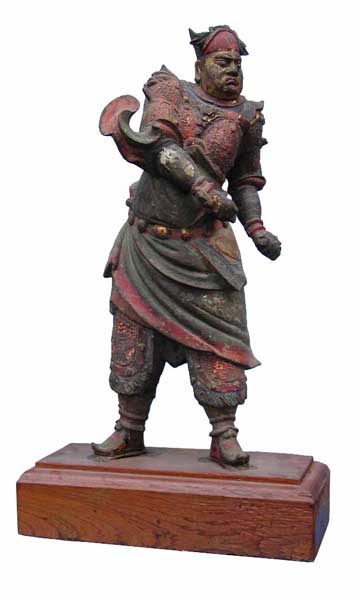
One of the stars of the Big Dipper
2026-04-15 11:51:31
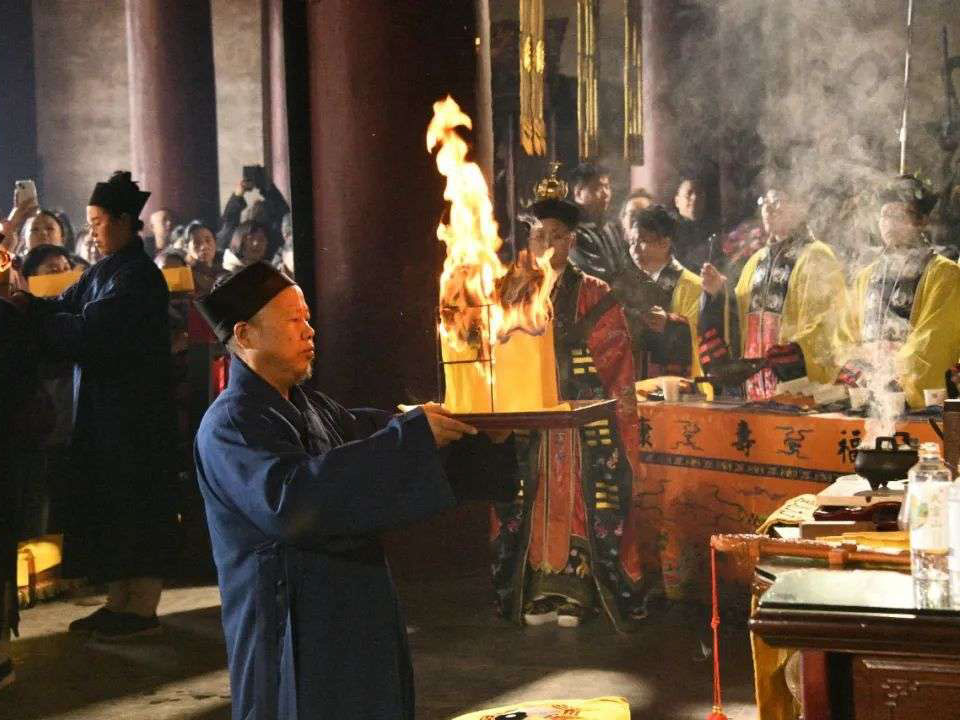
(1) The meaning of the ritual of fasting and Taoist ceremonies
2022-08-20 23:32:13
The original meaning of "zhai" was to be neat, harmonious an...
Yin GUI
2022-08-20 23:32:13
Chapter 27
2022-08-20 23:32:13
Chapter 72
2022-08-20 23:32:13
The couplet of the ancestral hall of the Wudang Mountain Temple
2022-08-20 23:32:13
The Record of Ascending to the Summit of Wudang
2022-08-20 23:32:13