


Chapter 34
2022-08-20 23:32:13
The great way is perilous; it can be left or right. All things rely on it to live without hesitation, and to achieve success without achieving anything. Clothing nourishes all things but does not dominate them; always having no desires, one can be called small. When all things return to this place without being the master, it can be called great. Because it does not consider itself great in the end, it can achieve greatness. The Great Way is widely popular, reaching everywhere, left and right, up and down. All things rely on it to grow without hesitation. When they have accomplished their deeds and completed their undertakings, they do not possess fame. It nurtures all things without considering itself the master, and can be called "small". All things submit to it without considering themselves the master, and can be called "big". It is precisely because he does not consider himself great that he can achieve and complete his greatness. [Note] 1. Si: The same as fan, extensive or excessive. 2. Ci: Words or expressions, or statements. "Bu Ci" means not to criticize, not to decline, and not to yield. 3. Not having: Not considering oneself to have achieved something. 4. "Yi Yang" : In one book, it is written as "yi bei", meaning to cover. 5. Not being the master: Not considering oneself the master. 6. Always free from desire: This book does not contain these two characters and considers it a derivative text. 7. Small: Insignificant. 8. Great: Great. This chapter explains the role of the "Tao", which is Laozi's second discussion on the issue of the "Tao" in the "Tao Te Ching". He believes that the "Tao" gives birth to all things, nurtures all things, and enables all things to obtain what they need, yet the "Tao" does not dominate all things but completely follows nature. These viewpoints have already been discussed by Laozi in some of the previous chapters. This chapter continues to expound the principles of the Thirty-two chapters, stating that the "Dao" can be called "small" or "great". Although it does not explicitly point out "sages" or "marquesses and Kings", it actually hopes that the rulers should play a "simple" role like the "Dao". From another perspective, the content of this chapter is also discussing the qualities that a "sage" or "marquis" should possess. [Commentary] In the academic circle, there are several different viewpoints regarding the attribute of Laozi's "Dao", the most typical of which is the stark opposition between materialism and idealism. Scholars holding the "idealist" view believe that "Laozi's 'Dao' is an undifferentiated and absolutely static spiritual entity that transcends time and space." In response to this, Zhang Songru believes, "We don't see it this way." How can "the great way is vast and varied; it can be left or right" be an "absolutely static spiritual entity"? Moreover, in terms of its ability to restore all things without claiming to be the master, "then it is always desireless and can be called less than." From the perspective that all things submit to it without knowing who is the master: "Then it remains nameless and can be called great." Desireless, nameless, capable of being small or large, how could this "Tao" be "undifferentiated beyond time and space"? Many scholars hold that "Dao", as an abstract concept, neither represents the material reality of things themselves nor can it be separated from the thought of formal inference or theoretical assumption. It is merely something expressed by the form of thinking and does not directly apply to the objective reality of things and phenomena (Zhang Songru, "Readings of Laozi", p. 206). We agree with Zhang Songru's view that "Dao" is a material concept. Although it cannot be perceived by the sensory organs such as ears, eyes, touch and smell, it truly exists in nature and is not a spiritual concept that merely exists based on people's subjective imagination. This is the key for us to accurately understand the issues related to the "Tao" in the Tao Te Ching. Furthermore, the spirit of "not refusing", "not having" and "not taking the lead" that Laozi embodies in this chapter can dissolve the desire for possession and dominance. From the saying "clothing nourishes all things", people can feel the atmosphere of love and warmth.
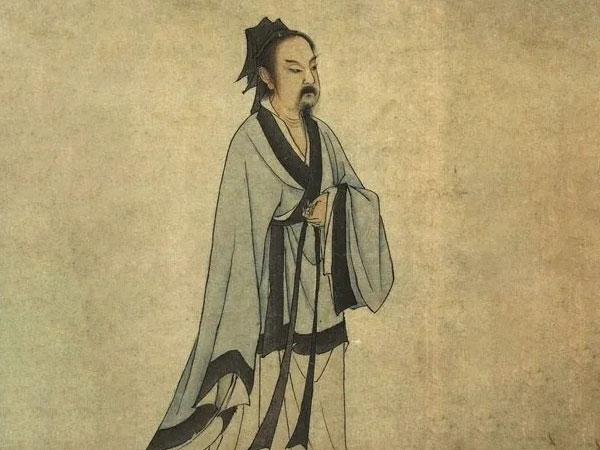
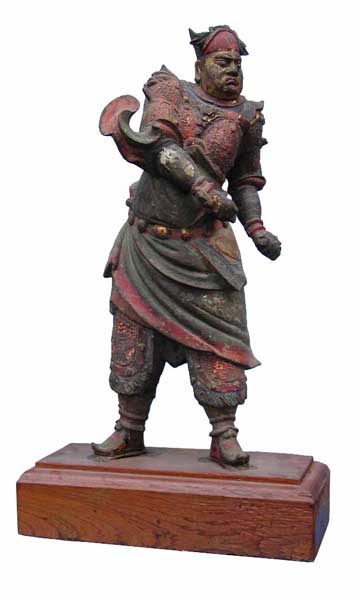
One of the stars of the Big Dipper
2026-04-15 11:51:31
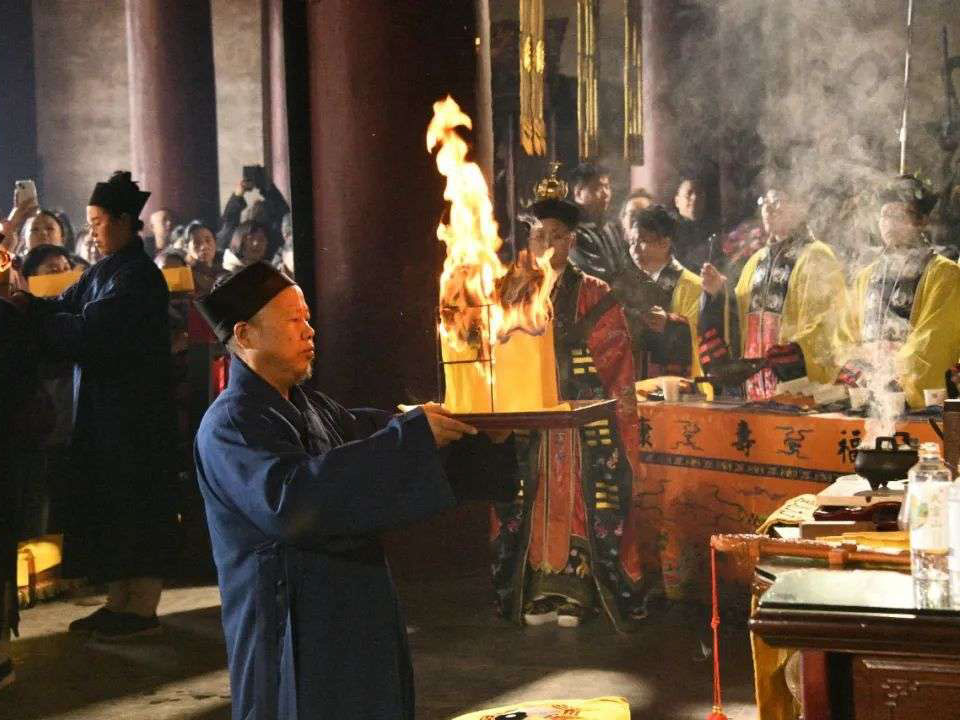
(1) The meaning of the ritual of fasting and Taoist ceremonies
2022-08-20 23:32:13
The original meaning of "zhai" was to be neat, harmonious an...
Yin GUI
2022-08-20 23:32:13
Chapter 27
2022-08-20 23:32:13
Chapter 72
2022-08-20 23:32:13
The couplet of the ancestral hall of the Wudang Mountain Temple
2022-08-20 23:32:13
The Record of Ascending to the Summit of Wudang
2022-08-20 23:32:13