


Chapter 33
2022-08-20 23:32:13
He who knows others is wise; he who knows himself is enlightened. He who overcomes others is strong; he who overcomes himself is mighty. Those who are content are rich; those who are forceful have aspirations; those who do not lose their place live long; and those who die but do not perish live long. To understand and know others is called wisdom, but to know and understand oneself is true intelligence. To be able to defeat others is powerful, but to be able to restrain one's own weaknesses is true strength. Those who know contentment are the rich. Those who persist in their actions and never give up their efforts are those with aspirations. Those who do not deviate from their duties can remain prosperous for a long time. Only those whose "Way" remains even after death can be said to have truly lived a long life. [Note] 1. Strong: Resolute and decisive. 2. Force: Persevere and be consistent. 3. Die but not perish: Even after death, the "Way" remains. [Quotation] This chapter discusses the issues of personal cultivation and self-design, advocating a series of viewpoints that people should enrich their spiritual lives. In Laozi's view, "knowing others" and "defeating others" are of great significance, but "knowing oneself" and "defeating oneself" are even more important. This chapter is written in a similar way to Chapters Nine, Ten, fifteen and Twenty, with a focus on exploring the philosophy of life. In this chapter, Laozi uses entirely direct and straightforward language, which is different from the previous chapters. Chapter Ten is presented in the form of questions, while Chapter Twenty is expressed in the form of irony. He believes that if a person can reflect on himself, hold firm to his life beliefs and put them into practice, he can maintain vigorous vitality and a full spirit. [Commentary] There is a saying in China that "It is valuable for a person to have self-awareness." The earliest speaker of this sentence was Laozi. "Self-awareness leads to enlightenment" means being able to clearly understand and treat oneself. This is the wisest and most precious thing. In this chapter, Laozi raises the issue of spiritual cultivation. Ren Jiyu said that this chapter "promotes a series of negative, conservative and reflective viewpoints on spiritual cultivation", "and also promotes the method of spiritual victory, saying that dying without dying is longevity. All these are idealistic ideas." (Ren Jiyu's "New Translation of Laozi") Some scholars disagree with this view. For instance, Zhang Songru believes that Laozi's viewpoint, "Why is it idealism? Is' dying but not dying 'the' theory of ghosts'?" He believes that this is a matter of personal opinion and everyone has their own intentions. He believes that an individual's spiritual cultivation can endow a person with qualities such as wisdom, clarity, strength, power, wealth, aspiration, longevity and longevity, all of which have positive significance. Laozi vigorously advocated "dying without perishing", which was his consistent ideological proposition and embodied the main idea of "non-action". The phrase "die but not perish" does not advocate the theory of ghosts or the immortality of the soul. Instead, it means that although the human body has vanished, the human spirit is immortal and will last for all time. This, of course, can be regarded as longevity. Liang Qichao, a renowned scholar who also studied the Tao Te Ching in the late Qing Dynasty and early Republic of China, once said that a person's physical lifespan is only a few decades and they cannot live forever. However, their spirit can be immortal because although their physical body has vanished, their doctrines, thoughts, and spirit will have a long-term influence on people of the present and future generations. In this sense, It is entirely possible for a person to "die without dying". Liang Qichao's view should be said to have been mainly influenced not by Buddhism but by Laozi's thoughts.
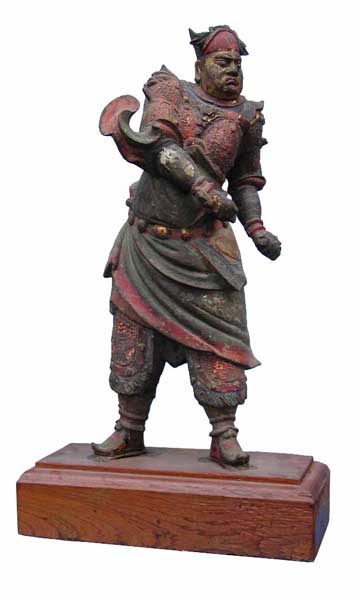
One of the stars of the Big Dipper
2026-04-15 11:51:31
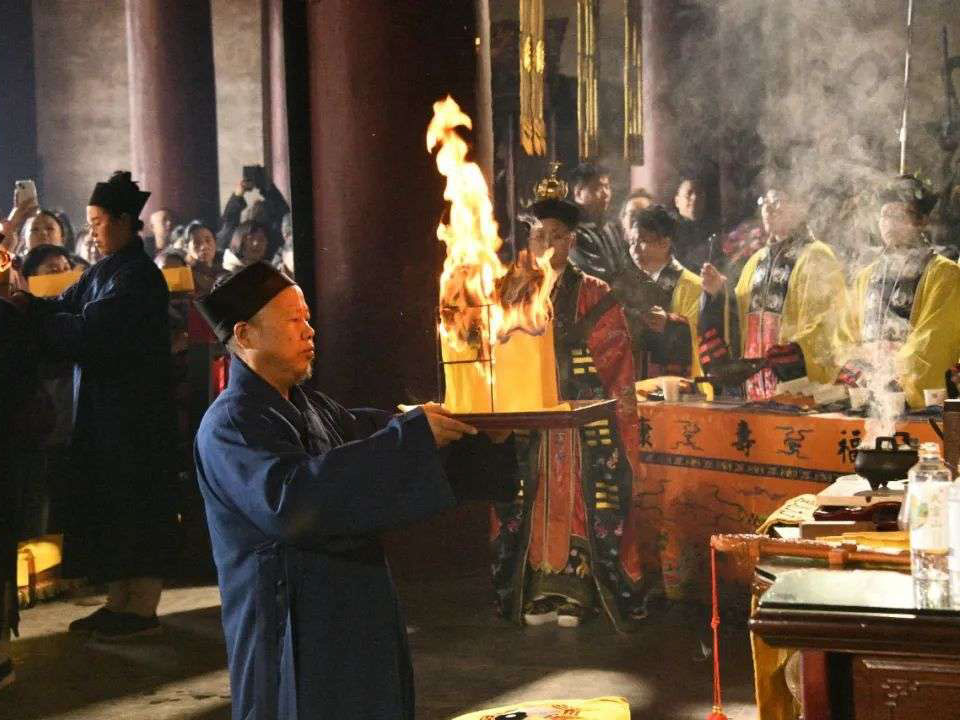
(1) The meaning of the ritual of fasting and Taoist ceremonies
2022-08-20 23:32:13
The original meaning of "zhai" was to be neat, harmonious an...
Yin GUI
2022-08-20 23:32:13
Chapter 27
2022-08-20 23:32:13
Chapter 72
2022-08-20 23:32:13
The couplet of the ancestral hall of the Wudang Mountain Temple
2022-08-20 23:32:13
A Tour of Taihe Mountain (Excerpt)
2022-08-20 23:32:13