


Chapter 32
2022-08-20 23:32:13
The Dao is always nameless and simple. Though small, no one in the world can be my subject. If the King Hou can guard him, all things will pay homage to him. When heaven and earth come together, sweet dew descends. The people do not obey the orders but follow their own accord. When a name is established, one will also know when to stop. Knowing when to stop can prevent danger. For instance, the Tao is to the world what rivers and valleys are to rivers and seas. The Dao is always nameless and simple. Though it is small and invisible, no one in the world can make it obey them. If the marquesses and Kings can govern the world in accordance with the principles of the "Way", the common people will naturally submit to it. When the Yin and Yang energies in the universe are in harmony, sweet dew will fall. People do not need to order it; it will naturally and evenly distribute. To govern the world, it is necessary to establish a management system, formulate various systems, determine various titles and positions, and appoint officials at all levels to handle affairs. Since the official status has been established, there must be some constraints and moderation. Knowing how to restrain and know when to stop, there will be no danger. The Dao exists throughout the world, just like rivers and seas. All streams and rivers flow into it, making all things naturally submit to it. [Note] 1. Nameless and simple: These refer to the characteristics of the "Tao". 2. Small: Used to describe that the "Dao" is hidden and invisible. 3. Mo Neng Chen: Chen, to make him submit. Here it means that no one can submit to it. 4. Self-guest: Guest, to obey. One should submit oneself to the "Way". 5. Self-leveling: Naturally uniform. 6. The creation of names: All things come into being, and thus various names are produced. A name, also known as a title or title, refers to the grade of an official position. 7. It can be without danger: Without danger, there is no danger. 8. Just like rivers and valleys to rivers and seas: In terms of flowing; It is said that the main text should be "The Way in the world is like rivers and seas and valleys." [quote] this chapter talked about the "unknown", "famous", "knowledge", "unknown", "famous" to "no" is not the first chapter name, to "have" name of the concept of "nothing" and "you". "Nameless" refers to the complete state of not showing off oneself, not being self-righteous, not criticizing oneself, and not being arrogant, which is why it is called "simple". Therefore, this chapter expresses Laozi's political thought of "non-action", believing that if the marquesses and Kings can govern the world in accordance with the laws of the "Dao" and follow nature, then the people will automatically submit to them. Laozi used "simplicity" to describe the primitive and nameless state of the "Dao". This primitive and simple "Dao", when implemented downward, enables all things to thrive, and thus various names came into being. When establishing systems, defining titles and setting up official positions, one should not go too far but know when to stop. In this way, there will be no disturbance or trouble. Laozi believed that "name" is an important source of disputes in human society. Ren Jiyu believes that "Laozi's philosophy, whether in terms of worldview or dialectics, possesses this simple and intuitive characteristic. Laozi's books also use intuition to explain the universal connections of natural phenomena." Laozi said about the origin of the world, "If it cannot be named, it is called the Dao; if it is given a strong name, it is called 'great'. He also called the Dao 'Simple' (usually nameless, although simple is small, no one in the world can submit to it)." Sometimes the Dao is called "nameless" (Chapter One, "Nameless, the beginning of the world"). Chapter 32: "The Dao is always nameless." Chapter 37, "..." "Calm it down with nameless simplicity." Chapter 41, "The Dao is Hidden and Nameless." From these examples, it can be proved that the Dao in Laozi's books is truly a mixture of "nothingness" or "simplicity". To regard Laozi's Dao as the objective reality of pure spirit as an absolute concept is inconsistent with Laozi's original intention. (Quoted from "Collected Discussions on Laozi's Philosophy", p. 20) We know that the "Dao" mentioned in the "Tao Te Ching" refers to the substance of the material world and the causes and laws of its changes. The "Tao" is eternal, just like the nameless simplicity, it is extremely subtle. And it is also applicable to the objective laws of the new and old transformation movement. Zhang Songru said that Laozi's so-called "Dao" is merely something expressed in the form of thinking and does not directly apply to the objective reality of things and phenomena. However, from another perspective, the "Dao" is the most common "nameless and simple", and it also applies to the objective law of the transformation between the old and the new. Throughout the entire process of "great, fleeting, distant, and reverse", its existence is a dialectical category with relationships such as essence and phenomenon, form and content, possibility and reality, as well as movement and stillness, cause and effect, etc.
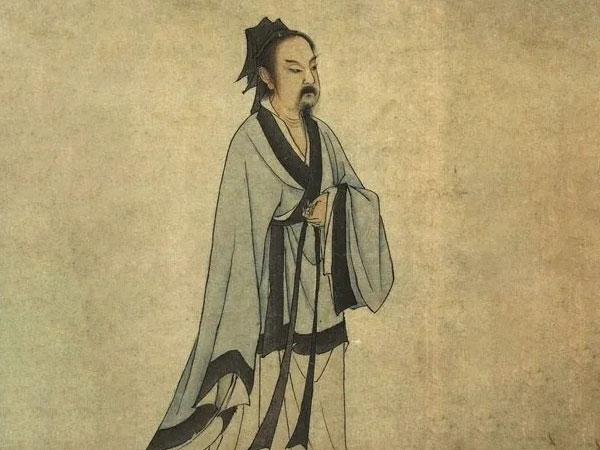
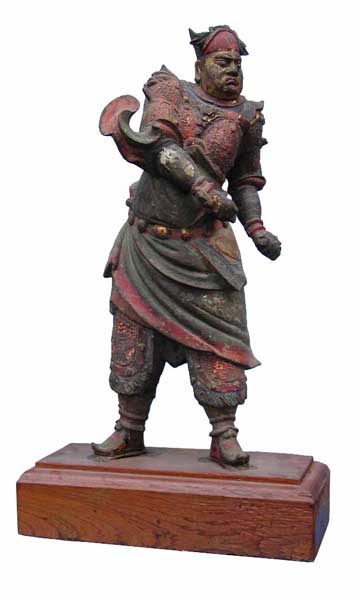
One of the stars of the Big Dipper
2026-04-15 11:51:31
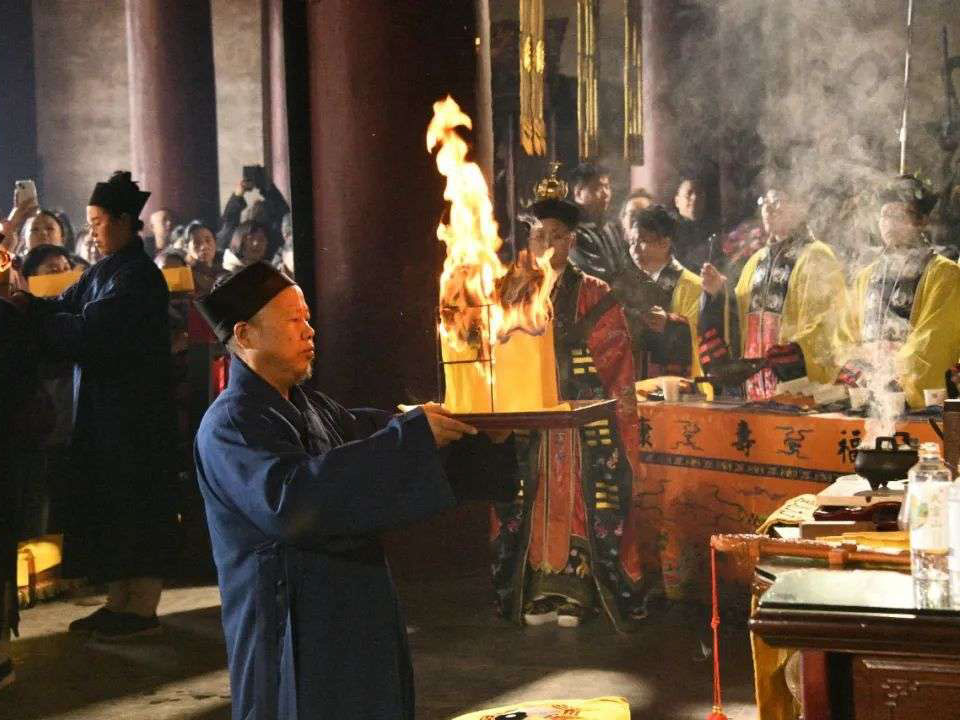
(1) The meaning of the ritual of fasting and Taoist ceremonies
2022-08-20 23:32:13
The original meaning of "zhai" was to be neat, harmonious an...
Yin GUI
2022-08-20 23:32:13
Chapter 27
2022-08-20 23:32:13
Chapter 72
2022-08-20 23:32:13
The couplet of the ancestral hall of the Wudang Mountain Temple
2022-08-20 23:32:13
The Record of Ascending to the Summit of Wudang
2022-08-20 23:32:13