


Chapter 29
2022-08-20 23:32:13
I see that he has no choice but to take over the world. The divine treasures of the world ④ cannot be created or held. ⑤ Those who act will fail; those who hold on will lose. Therefore, the sage does not act, and thus has no failure and no loss. The ⑦ thing ⑧ either acts or follows ⑨; Or look or blow ⑩; Strong or weak ⑾; Or 隳. Therefore, the sage departs from extravagance, extravagance and arrogance. He wants to govern the world but has to resort to coercion. I think he won't be able to achieve his goal. The people of the world are sacred. We cannot rule the world by force against their will and nature. Otherwise, if we rule the world by force, we will surely fail. If one forcefully holds onto the world, one is bound to lose it. Therefore, the sage does not act rashly, and thus will not fail. If you don't hold on, you won't be abandoned. People have different natures. Some move forward while others follow behind, some whisper softly while others shout loudly. Some are strong and resolute, while others win and lose. Some live in peace, while others are in peril. Therefore, the sage should eliminate those extreme, extravagant and excessive measures and regulations. [Note] 1. Take: to be, to govern. 2. For: It means to be proactive and to act with force. 3. Unattainable: Unable to reach or obtain. 4. Divine Treasures of the World: "The world" refers to all the people in the world. Divine artifact, a sacred object. 5. "Zhi" : to grasp or control. 6. Non-action: Conform to nature without coercion. 7. Husband: One book reads "Therefore". 8. "Thing" : It refers to people and all things. 9. Follow: To follow or submit. 10. Look: Exhale softly and gently. Blow: Exhale rapidly. 11. Win: To win against weakness, to be weak. 12. Or carry or 隳 : carry, stable. Youdaoplaceholder0, dangerous. 13. Tai: Extreme, too great. [Quotation] On a daily basis, it can be regarded as Laozi's warning to the governance of "non-action" regarding the governance of "action", that is, "action" is bound to lead to failure. "Action" means doing things against objective laws based on one's own subjective will or claiming the world as one's own. In fact, what Laozi meant by "non-action" does not mean doing nothing or being powerless in the face of objective reality. Here he said that if one resorts to force to achieve something or rules the people by violence, it will be self-destruction. All people and things in the world have their own natures, and the differences and particularities among them objectively exist. One should not impose one's own will on others and take certain coercive measures. An ideal ruler often follows the natural course, does not force or demand too much, guides the situation to its advantage, and adheres to objective laws. [Commentary] In the "Tao Te Ching", Laozi repeatedly mentioned that rulers should practice "non-action" governance. He vigorously promoted the political thought of "non-action", advocating that everything should conform to nature and respond to the nature of things. He hoped that those rulers who had grasped the "Way" would govern the country and pacify the people, and that they should not go to extremes, have unrealistic expectations, or be overly ambitious in doing anything.
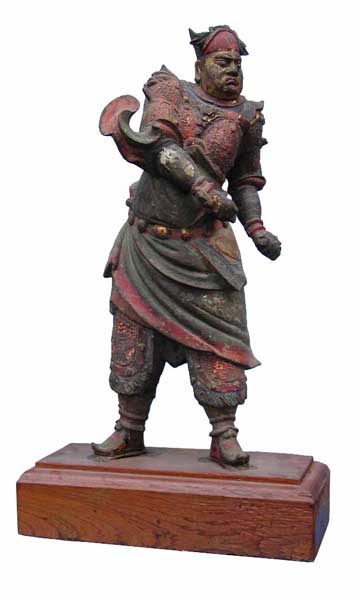
One of the stars of the Big Dipper
2026-04-15 11:51:31
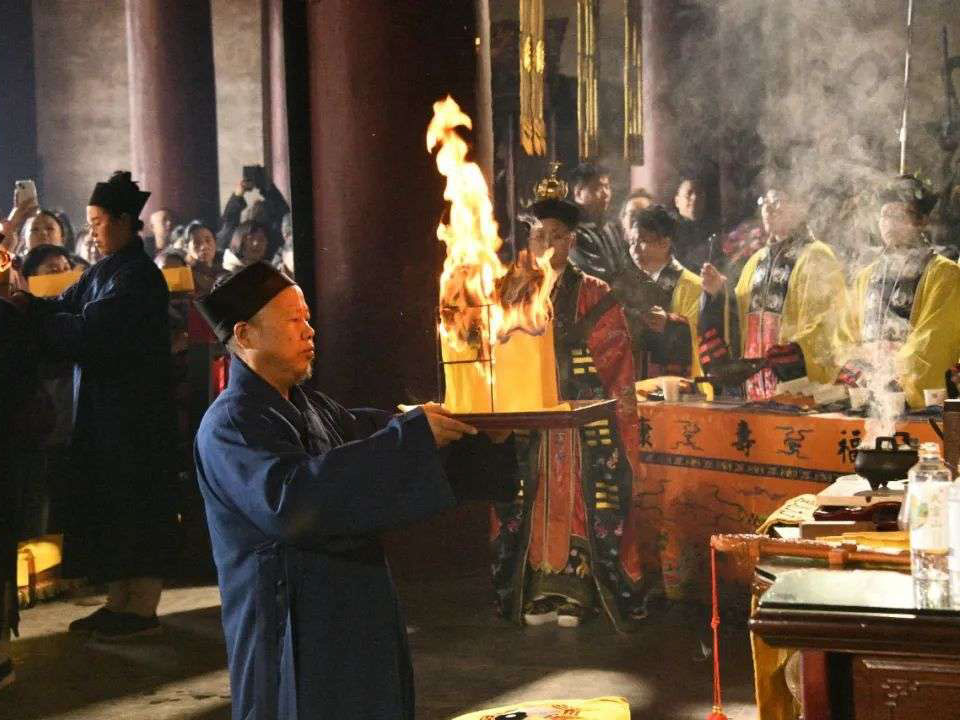
(1) The meaning of the ritual of fasting and Taoist ceremonies
2022-08-20 23:32:13
The original meaning of "zhai" was to be neat, harmonious an...
Yin GUI
2022-08-20 23:32:13
Chapter 27
2022-08-20 23:32:13
Chapter 72
2022-08-20 23:32:13
The couplet of the ancestral hall of the Wudang Mountain Temple
2022-08-20 23:32:13
Chapter 19
2022-08-20 23:32:13