


Chapter Thirty
2022-08-20 23:32:13
Those who govern by the way do not strengthen the world with military might, and their deeds will still be good. Where a teacher is, thorns will grow. After a large army, there must be an inauspicious year. Good deeds only bear fruit; one dares not strive for strength. When you achieve something, do not be proud; when you achieve something, do not be aggressive; when you achieve something, do not be arrogant; when you achieve something, do not be forced; when you achieve something, do not be forceful. When things grow strong, they grow old. This is called not saying that one has already passed away. Those who assist the monarch in accordance with the principles of the Dao do not show off their military strength over the world. The act of waging an endless war is bound to be punished. Wherever the army goes, thorns are rampant. After a major battle, there will surely be a year of famine. A person who is good at military strategy only needs to achieve the purpose of military operation and does not show off his strength and aggressiveness by having a large number of troops. When you achieve your goal, don't be self-restrained; when you achieve your goal, don't show off or be proud; when you achieve your goal, don't be self-righteous; when you achieve your goal, do it out of necessity; when you achieve your goal, don't pretend to be strong. When things were once powerful, they will eventually decline. This indicates that they do not conform to the "Way". What does not conform to the "Way" will die soon. [Note] 1. The matter will surely be repaid: The act of using troops will surely be repaid. Huan: To repay or repay. 2. Inauspicious years: Years of famine or disaster. 3. Good deeds bear fruit: "Fruit" means success. It refers to achieving the goal of winning. 4. Dare not: The original text of the silk manuscript reads, "Do not seek strength." 5. To be strong: To show off one's strength and be competitive. 6. Robust: Strong and tough. 7. Not in accordance with the "Way" : Not conforming to it. 8. Long ago: Die early, end soon. Among scholars who have always interpreted the Tao Te Ching, there is a school of thought that holds that the Tao Te Ching is a military treatise. Whether it is a military treatise or not will be further discussed in the analysis of this chapter, but it is beyond doubt that Laozi had anti-war thoughts. During the Spring and Autumn and Warring States Periods, society was in turmoil and unrest, with wars of all sizes breaking out one after another, causing damage to the state and disasters to the lives of the common people. Laozi's opposition to war is in line with the interests and aspirations of the people. In this chapter, Laozi believed that war is the most ignorant and cruel act of mankind. "Where there is a teacher, thorns will grow" and "After a great army, there will surely be a bad year" reveal the serious consequences that war brings to people. Laozi's advocacy of anti-war ideas has had positive significance both at that time and in later generations. [Commentary] In both this chapter and the next chapter of the Tao Te Ching, Laozi discusses the issue of military strategy. However, it must be restated that the Tao Te Ching is mainly a philosophical work rather than a military treatise. It discusses military affairs from a philosophical perspective rather than a military science one. When discussing many philosophical issues, military affairs are also touched upon, because although philosophy and military affairs do not belong to the same discipline, there are many intrinsic similarities between them. He focused on the serious consequences that war and chaos brought to people, which was from the perspective of opposing war. Because war is the cruelest and most ignorant act of mankind. In this chapter, the sayings "Where there is a teacher, thorns will grow" and "After a great army, there will surely be a bad year" refer to the disasters that war brings to people. Wang Zhen of the Tang Dynasty, in his "Commentary on the Essentials of Warfare" in the "True Classic of Morality", states that among the "five thousand words" and eighty-one chapters, "not a single chapter is not devoted to warfare." Wang Fuzhi of the late Ming Dynasty also believed that the Tao Te Ching could be described as "a teacher who speaks of war." Zhang Taiyan, a modern scholar, said that the book "Tao Te Ching" summarizes the essence of ancient military treatises. He pointed out, "Lao Dan was a pillar historian, well-versed in stories, and based on the essence of the 'Jin Ban' and the 'Six Secret Teachings', he wrote five thousand words, which served as the method for later conspiracies." Contemporary scholar Zhang Songru holds that the eighty-one chapters directly discuss military affairs, namely this chapter, the next chapter and the sixty-nine chapters, totaling only three chapters. There are no more than ten chapters of philosophical discussions that use military affairs as metaphors. Therefore, the Tao Te Ching is not a military treatise. For instance, from the perspective of military science, it can in no way be compared with the Art of War by Sun Tzu. During the Spring and Autumn and Warring States periods, war was an important part of social life, and philosophers and thinkers did not turn a blind eye to these practical social issues. From the course of these wars, they observed certain philosophical issues and elevated them to a philosophical level for analysis and research, seeking the laws of the development and change of general things, including wars, such as "When things grow strong, they grow old", which undoubtedly has universal enlightening value.
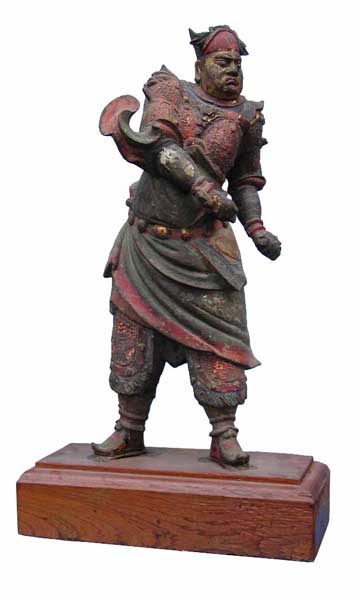
One of the stars of the Big Dipper
2026-04-15 11:51:31
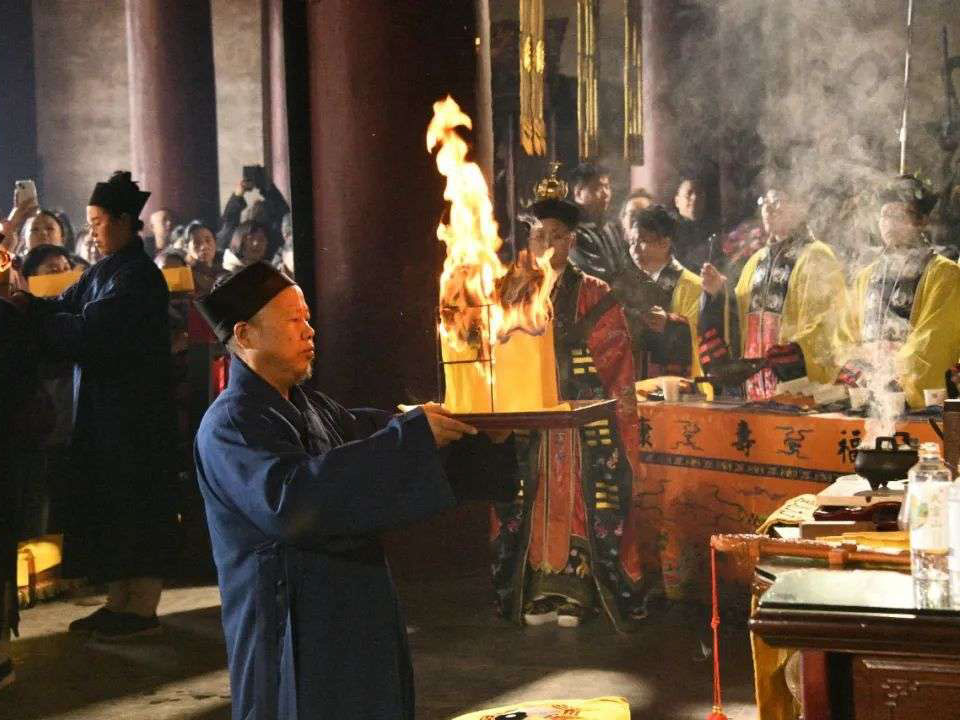
(1) The meaning of the ritual of fasting and Taoist ceremonies
2022-08-20 23:32:13
The original meaning of "zhai" was to be neat, harmonious an...
Yin GUI
2022-08-20 23:32:13
Chapter 27
2022-08-20 23:32:13
Chapter 72
2022-08-20 23:32:13
The couplet of the ancestral hall of the Wudang Mountain Temple
2022-08-20 23:32:13
Chapter 40
2022-08-20 23:32:13