


Chapter 28
2022-08-20 23:32:13
To know the male and guard the female is to be the stream of the world. For all the streams in the world, their constant virtue never leaves, and they return to their infancy. To know the white and keep the black is the way of the world; to be the way of the world, to maintain constant virtue without being too extreme, and to return to the boundless. Knowing one's honor ⑧ and observing one's disgrace ⑨, one becomes the grain of the world ⑩. For the grain of the world, constant virtue is sufficient, and it returns to simplicity. When simple and loose, they become tools. When sages use them, they become officials 13. Therefore, the grand system does not cut ⒁. Knowing well what it means to be powerful, yet remaining content with a gentle and feminine position, willing to be the brook of the world. If one is willing to be the brook of the world, the eternal virtue will not be lost, and one will return to the pure state of an infant. Knowing well what brightness is, yet content with the position of darkness, willing to be the model of the world. Willing to be the model of the world, eternal virtue remains undiminished, restoring to the inexhaustible truth. Well aware of what glory is, yet content with a humble position, willing to be the valley of the world. Only by being willing to be the river and valley of the world can the eternal virtue be fully fulfilled and one return to the simple and innocent state of nature. Simple and original things, after being made into objects, if the virtuous people follow the truth and simplicity, they will become the leaders of all officials. Therefore, a perfect politics is inseparable. [Note] 1. Xiong: A metaphor for vigor, impetuosity, and power. 2. Female: It is a metaphor for being gentle, weak, and humble. 3. Stream: Gully stream. 4. Baby: Symbolizing innocence and childishness. 5. Style: Model, pattern. 6. "Te" : Fault, error. 7. Wuji: It means the ultimate truth. 8. Honor: Honor, favor. 9. Insult: To insult or humiliate. 10. Valley: Deep valley, canyon, symbolizing a broad mind. 11. Pu: Simple and plain. It refers to the simple and primitive state. 12. "Qi" : An object or vessel. Refers to all things. 13. Official: The head of all officials, a leader or a manager. 14. "Da Zhi Bu ge" : "Zhi" refers to the production of utensils, which is extended to mean politics. Cut, cut, crack. This sentence means: A complete politics is not fragmented. [Quotation] This chapter focuses on the theory of "return". Although this issue has been mentioned many times in the previous chapters, this chapter specifically addresses it as a key point, leaving a more profound impression on people. Laozi put forward such a principle: "Know the male and abide by the female." Use this principle to engage in political activities and participate in social life. This principle could be regarded as a choice of life attitude in the era when Laozi lived. At that time, it was the end of the Spring and Autumn Period, with political unrest, social chaos, and fierce competition and turmoil. Faced with such a social situation, Laozi proposed the principle of "adhering to the female" in dealing with the world. He believes that as long as people do this, they can return to simplicity and nature and achieve great governance throughout the country. It should also be noted here that it is not only about "keeping the female", but also about "knowing the male". In the opposition between male and female, one should have a thorough understanding of the male side and then be on the female side. The several terms used in this chapter represent some of Laozi's fundamental concepts. [Commentary] "Simplicity", "infant", "female", etc. can be said to be important concepts in Laozi's philosophical thought. In Chapter Fifteen, there is the phrase "Dun Xi Qi Ru Pu". Chapter Nineteen: "Embracing Simplicity and Embracing Plainness" The term "return to simplicity" in this chapter, as well as in Chapters 37 and 57, all mention the concept of "simplicity". The character "Pu" mentioned in these places can generally be interpreted as simple, pure, natural, original, and upright, etc. It is Laozi's most general expression of his social ideals and personal qualities. In Chapter Ten, there is the question, "Can one be as gentle as a baby when concentrating one's energy?" Chapter Twenty reads, "Dun Dun, like an infant yet to be born." In this chapter, there is the phrase "returning to the infant", and the concept of "infant" is also mentioned in the following chapters. The term "baby" is actually a vivid explanation of the concept of "simplicity". Only babies are not troubled by the worldly gains, honors and humiliations, as if they do not know how to laugh or cry, being selfless and desiccative, simple and innocent. Laozi clearly opposed the use of Confucian norms such as benevolence, righteousness, propriety, wisdom and faith to restrain and shape people, and opposed the distortion of human nature through these teachings. This involves the concept of "returning to nature" that Laozi mentioned, that is, not to bind people according to the rules and regulations established by sages, but to allow people to return to a natural and simple state, which is what is called "returning to simplicity and truth". In this chapter, Laozi also advocated using the principles of weakness and retreat to preserve oneself and conduct oneself in the world, and demanded that "sages" should also take these as the principles for governing the country and pacifying the people. The idea of respecting the female and the female, and being like a valley or a stream, naturally cannot be understood as retreat or escape. Instead, it contains a dominant nature. It not only adheres to the female but also knows the male. This truly warns people to occupy the most appropriate and proper position when facing the chaotic and contentious scenes of society. Chen Guying said, "Shou Mo" implies the meanings of remaining calm, staying behind, and being gentle. It also contains the meanings of being introverted, condensed, and concealed.
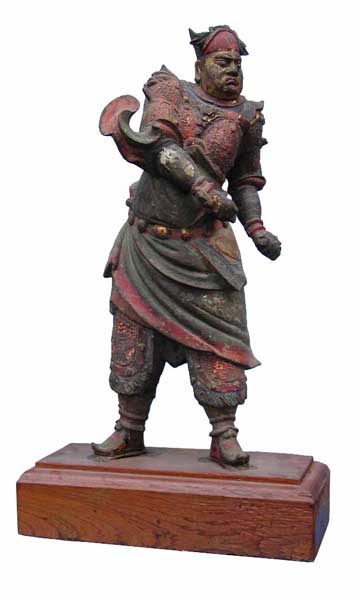
One of the stars of the Big Dipper
2026-04-15 11:51:31
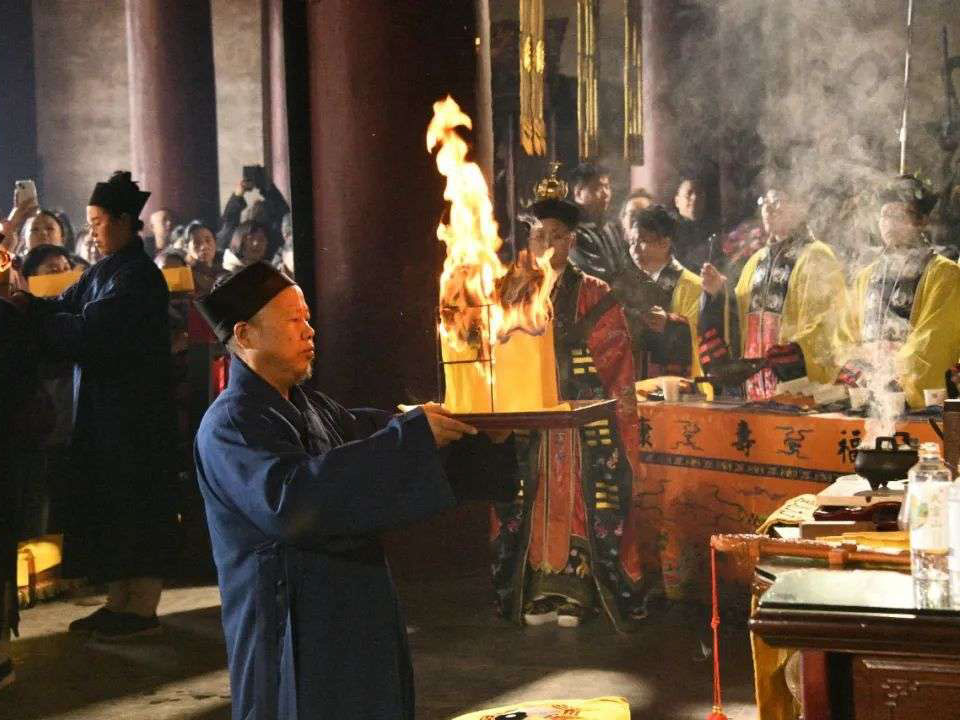
(1) The meaning of the ritual of fasting and Taoist ceremonies
2022-08-20 23:32:13
The original meaning of "zhai" was to be neat, harmonious an...
Yin GUI
2022-08-20 23:32:13
Chapter 27
2022-08-20 23:32:13
Chapter 72
2022-08-20 23:32:13
The couplet of the ancestral hall of the Wudang Mountain Temple
2022-08-20 23:32:13
Chen Xingchang
2022-08-20 23:32:13