


Chapter 19
2022-08-20 23:32:13
Abandoning the sage and wisdom, the people will benefit a hundredfold. When benevolence and righteousness are abandoned, the people regain filial piety and kindness. If you abandon cunning and profit, there will be no thieves. These three elements ② consider the text ③ insufficient, and thus there is a subordinate ④. See simplicity and embrace plainness ⑤, have few selfish desires; No worries about unique skills ⑥. If people abandon their cunning and ingenuity, they will gain a hundredfold benefit. By discarding benevolence and righteousness, the people can restore their nature of filial piety and kindness. When cunning and profiteering are abandoned, thieves will cease to exist. Wisdom, benevolence and righteousness, and cunning and profit are all mere embellishments. They are insufficient as rules for governing social ills. Therefore, it is necessary to give people's thoughts and understanding a place to belong, maintain their pure and simple nature, reduce selfish desires and distractions, and abandon the superficiality of wisdom, propriety and law, so as to avoid worries and troubles. [Note] 1. Abandoning the sage and wisdom: discarding intelligence and ingenuity. Here, "Sheng" does not refer to "sage", that is, the highest realm of self-cultivation, but rather means being self-righteous and smart. 2. These three: refer to sage wisdom, benevolence and righteousness, and cunning and profit. 3. Text: Provisions, rules. 4. Affiliation: Belonging to, appropriate to follow. 5. See simplicity and embrace simplicity: It means to maintain the original natural color. "Su" refers to silk that has not been dyed. "Simplicity" is unadorned wood; "Simple" and "plain" are synonyms. 6. No worries about absolute learning: It refers to the study that abandons benevolence, righteousness, sainthood and wisdom. [Quotation] The previous chapter described the various manifestations of social morbidity after the abandonment of the Great Way. This chapter, in response to social morbidity, proposes solutions for governance. In the previous chapter, Laozi said, "When wisdom emerges, there is great falsehood," and thus advocated discarding such cleverness and ingenuity. He believes that "sainthood" and "wisdom" give rise to the cunning of the legal system. When governing the country by the cunning of the legal system, it becomes a "proactive" governance that disturbs the people. By discarding such disturbing policies, the people can gain tangible benefits. In this chapter, many texts end with "having few desires and desires" and start the next chapter with "having no worries about ultimate skills". This book advocates placing this sentence in the viewpoint of this chapter. "The ultimate learning is free from worries" can be placed in parallel with the previous sentence "Seeing simplicity and embracing simplicity, having few selfish desires". [Commentary] Yang Xingshun, a scholar from the former Soviet Union, believed that "as a sincere defender of the people's interests, Laozi opposed all cultures of the ancient Chinese ruling class." He believed that this culture was a spiritual weapon to enslave the people, through which the sages of "lower virtue" established all kinds of hypocritical moral concepts, and only the people of "higher morality" could enjoy the material wealth of this culture. All this not only gives rise to a hypocritical culture but also corrupts the simple people and stirs up their desire for "strange things". This culture is the "leader of chaos". From these confessions, it is obvious that Laozi denounced the culture of the ruling class. In his view, this culture was in contradiction with regular social phenomena, that is, with the "Way of Heaven". This culture must be abandoned. It is of no benefit to the people. From this, it can be seen that Laozi opposed the culture of the ruling class, denied its significance to the people, and proposed a utopian idea - to isolate the people from this culture. Although Laozi's political propositions are not advisable, his viewpoint of "seeing simplicity and embracing plainness, having few selfish desires and desires" to restore human nature is not without meaning. Furthermore, there are three different understandings of the phrase "no worries about absolute learning" in the academic circle. One view holds that "no worries in absolute learning" means that if one gives up learning, there will be no worries. This interpretation holds that Laozi intended to destroy all cultures, and of course, there is no need to study them. This meaning holds that Laozi was the founder of the policy of keeping the people ignorant and an advocate of the idea and policy of keeping the people ignorant. Another opinion holds that "absolute learning" refers to discarding those studies that emphasize sage wisdom, benevolence, righteousness, and cunning, keeping them outside of oneself, and avoiding the temptation of power and desire to achieve a state free from worries and troubles. Another opinion holds that the "absolute" mentioned by Laozi is actually the "absolute" of unique skills, referring to profound and unique knowledge. Laozi believed that only by attaining unique knowledge that is different from the mundane can one obtain the freedom of being free from the impulse of personal desires. This opinion holds that Laozi was precisely such a person with unique learning skills, which indicates his attitude towards learning.
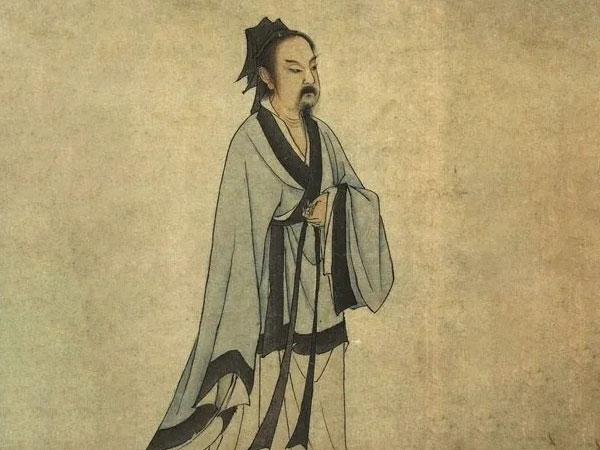
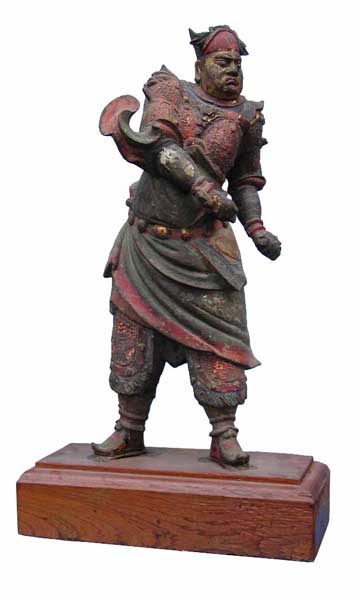
One of the stars of the Big Dipper
2026-04-15 11:51:31
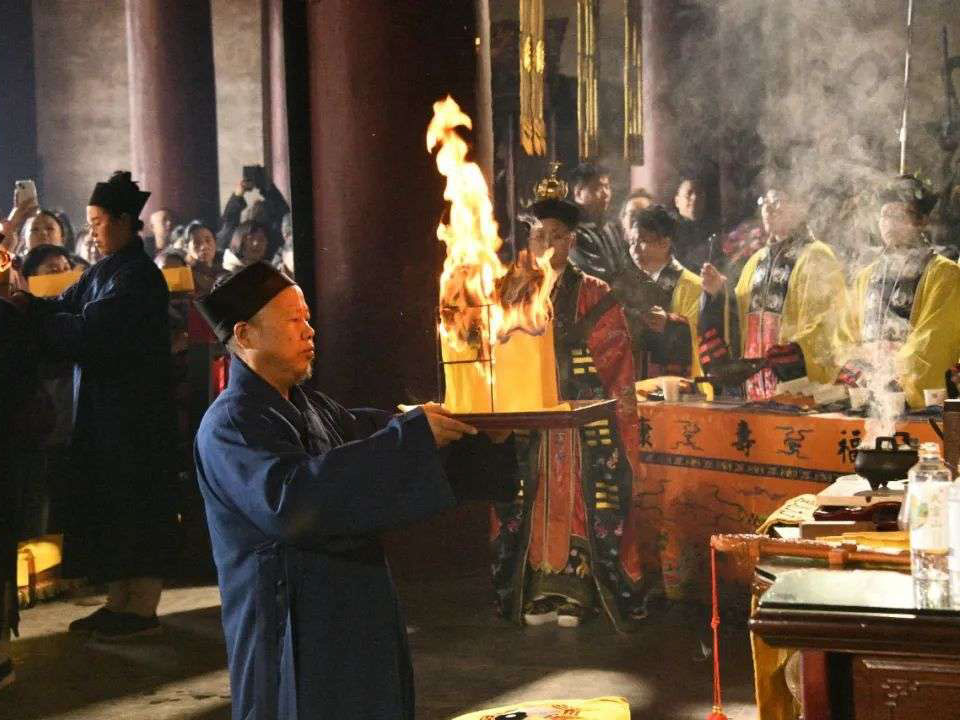
(1) The meaning of the ritual of fasting and Taoist ceremonies
2022-08-20 23:32:13
The original meaning of "zhai" was to be neat, harmonious an...
Yin GUI
2022-08-20 23:32:13
Chapter 27
2022-08-20 23:32:13
Chapter 72
2022-08-20 23:32:13
The couplet of the ancestral hall of the Wudang Mountain Temple
2022-08-20 23:32:13
Zhang Fuzhen
2022-08-20 23:32:13