


Chapter Seventeen
2022-08-20 23:32:13
[Original text] Supreme ①, not knowing of its existence ②; Secondly, be close to them and praise them. Secondly, be afraid of it; Secondly, insult them. If there is not enough faith, there will be no faith. Youxi ③, Qiguiyan ④. When success is achieved, the people all say, "I will naturally follow." The best ruler is unknown to the people. Secondly, the ruler is close to and praised by the people. A ruler once again, the people fear him; The inferior ruler was despised by the people. If a ruler lacks integrity, the people will not trust him. How leisurely the best ruler is! He seldom gives orders. When things are accomplished, the common people say, "We have always been like this." [Note] 1. Taishang: Supreme, best, referring to the best ruler. 2. Unaware of its existence: The people are unaware of the existence of a ruler. 3. Youxi: A laid-back and carefree appearance. 4. Expensive words: It refers to not giving orders easily. 5. Nature: I have always been like this. In this chapter, Laozi put forward his political ideological propositions. He classified rulers into four types based on different circumstances. Among them, the best ruler is one whose existence is unknown to the people; the worst ruler is one who is despised by the people; and the ruler in the middle situation is one who is close to and praised by the people or feared by them. Laozi's ideal political situation is that the ruler possesses the qualities of honesty and trustworthiness. He is carefree and seldom issues orders. The government is merely a tool subordinate to the people. Political power must not be imposed on the people in the slightest. That is, the people and the government live in peace and each leads a leisurely and comfortable life. Of course, this is merely Laozi's subjective wish, a utopian political fantasy. [Commentary] Laozi depicted for the first time in the entire book the political blueprint of his ideal state. The division of the four levels in the first sentence does not refer to the chronological order from ancient times to the present, but rather to the governance conditions of good or bad governance. In Laozi's view, the ideal "sage" is to "be able to do nothing and teach without words", to live in the "supreme" era, to embody the "profound virtue" of a ruler, and to be capable of "giving birth and raising people". In "The Age of Emperors", it is recorded that during the reign of Emperor Yao, "The world was in perfect harmony and the people had no worries. Five old men struck the soil on the road. The onlookers exclaimed: What a great virtue of Emperor Yao!" The old man said, "Rise with the sun and rest when it sets." Dig Wells to drink and plow fields to eat. What does the imperial power have to do to me? This vivid picture can be said to be the best illustration of Laozi's saying, "All the people say I am natural." In this chapter, Laozi contrasts this ideal political situation with the "rule of virtue" advocated by Confucianism and the "rule of law" advocated by Legalism, treating them as inferior. Implementing "rule by virtue" makes the common people feel that the ruler can be trusted and praised. This is indeed good, but it is still inferior to "rule by non-action". A ruler who practices the "rule of law" suppresses the people with severe punishments and harsh laws, and implements brutal policies that disturb the people. This is a manifestation of the ruler's lack of integrity. The people merely avoid him and fear him. Laozi strongly opposed this "rule of law" policy, and as for "rule of virtue", Laozi believed that this was already a sign of trouble. The most beautiful politics is when the ruler is "eloquent" and never issues orders easily. The people and politics coexist peacefully, to the extent that the people have no idea who the ruler is. Of course, such a kind of American governance did not exist at that time; it was merely Laozi's "utopian" fantasy.
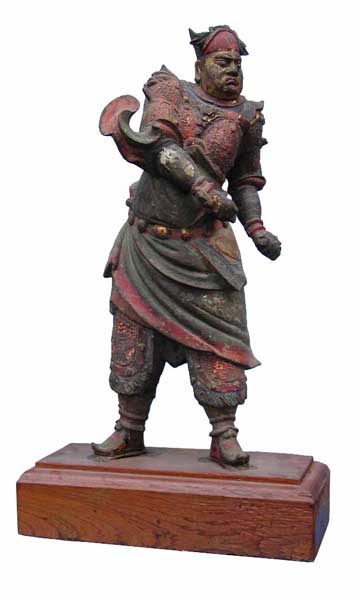
One of the stars of the Big Dipper
2026-04-15 11:51:31
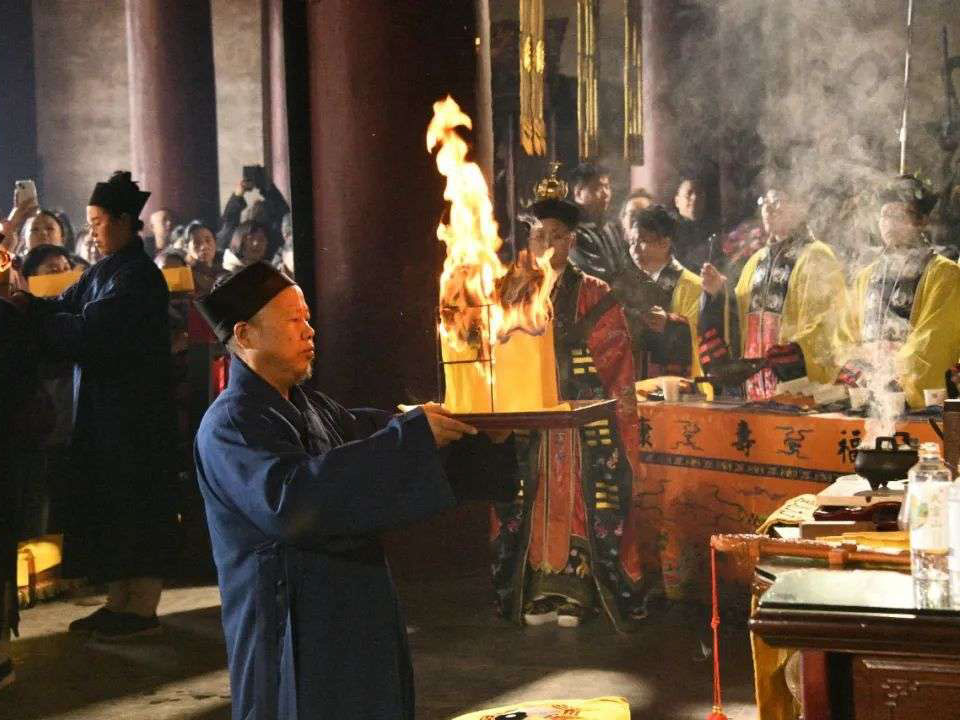
(1) The meaning of the ritual of fasting and Taoist ceremonies
2022-08-20 23:32:13
The original meaning of "zhai" was to be neat, harmonious an...
Yin GUI
2022-08-20 23:32:13
Chapter 27
2022-08-20 23:32:13
Chapter 72
2022-08-20 23:32:13
The couplet of the ancestral hall of the Wudang Mountain Temple
2022-08-20 23:32:13
A Tour of Taihe Mountain (Excerpt)
2022-08-20 23:32:13