


Chapter Sixteen
2022-08-20 23:32:13
Reach the extreme of emptiness and maintain a firm state of stillness. All things work together, and I observe them. All things are numerous and diverse; each returns to its original root. Returning to the root is called stillness, and stillness is called returning to order. To return orders is called "chang ⑧", and to know chang is called "Ming ⑨". Not knowing the norm, one rashly commits evil deeds. Knowing the constant tolerance ⑩, tolerance is public, public is complete, complete is heaven, heaven is the Way, the Way is eternal, and the body is never in danger. Strive to bring the emptiness of the soul to its peak and keep life peaceful and unchanging. All things thrive together, and thus I examine the principle of their repetition. All things are bustling and diverse, each returning to its original roots. Returning to its root is called tranquility, and tranquility is called returning to life. Returning to life is called nature. Understanding the laws of nature is called intelligence. Rash behavior that does not understand the laws of nature often leads to trouble and misfortune. Those who understand the laws of nature are all-inclusive. Being all-inclusive leads to being calm and fair. Being fair leads to being comprehensive. Only by being comprehensive can one conform to the "Way" of nature. Only by conforming to the Way of nature can one last long and never encounter danger throughout one's life. [Note] ① Reaching the extreme of emptiness and maintaining a firm state of stillness: Both "emptiness" and "stillness" describe a person's state of mind being clear and peaceful, but due to external disturbances and temptations, a person's selfish desires start to act. Therefore, the mind is blocked and restless, so it is necessary to pay attention to "attaining emptiness" and "maintaining tranquility" in order to restore the clarity of the mind. "Ji" means extreme or the peak. ② Work: Grow, develop, or be active. ③ Repetition: To repeat in a cycle. ④ Yunyun: Flourishing, diverse, and numerous. ⑤ Return to the root: The root refers to the Dao. Returning to the root means reverting to the Dao. ⑥ Jing said: One book reads "It is called". ⑦ Restoration: To return to one's true nature and to give birth to a new life. ⑧ Constant: It refers to the eternal law of the movement and change of all things, that is, the unchanging rules. ⑨ Ming: To understand, to know. ⑩ Rong: Tolerance, inclusiveness. ⑾ Quan: Thorough, all-encompassing. Heaven: Refers to the natural sky or is a general term for the natural world. In this chapter, Laozi particularly emphasizes the practice of attaining emptiness and maintaining tranquility. He advocated that people should confront the movement and change of all things in the universe with a state of emptiness, stillness and serenity. In his view, the development and change of all things follow their own laws. From growth to death, and then growth to death again, they continue in an endless cycle, repeating itself endlessly, all adhering to this law of movement. Laozi hopes that people can understand and recognize this law and apply it to social life. Here, he put forward the concepts of "returning to the root" and "returning to the order", advocating a return to the origin of all existence. This is a state of complete emptiness and stillness, which is the nature of all existence. [Commentary] In the past, when people studied Laozi, they always summarized his attitude towards life with the phrases "quiet and non-action" and "simple and contented with few desires". However, on the whole, Laozi placed more emphasis on tranquility and non-action, mainly as a political term in terms of governing the country and the world, rather than entirely referring to the issue of self-cultivation. This chapter is not solely about life, but mainly about understanding the world, and of course, it also includes understanding life. However, whether it is to understand the philosophy of life or the objective world, the fundamental attitude is "attaining emptiness", "tranquility", "returning to the root" and "returning to one's destiny". Let's start with "leading to emptiness". Nothingness is the essence of the Tao, but its application is endless. "Reaching the ultimate state of emptiness" means that people should resist the temptation of material desires and return to their nature of emptiness and tranquility. Only in this way can they understand the "Tao", rather than forgetting it for the sake of power and profit. To achieve "emptiness", one must "maintain stillness", for "emptiness" is the essence, while "stillness" lies in application. Sima Qian said, "Li Er transformed himself through non-action and receded himself in tranquility." This is a very concise summary. (From "Records of the Grand Historian: Preface to Taishi Gong") "Stillness" and "movement" are a pair of contradictions. In this contradiction, Laozi emphasizes "stillness" rather than "movement", nor does he deny the role of "movement". Let's talk about "returning to the root". The root is the part from which plants grow, with meanings such as fundamental, source, and foundation. It is the starting point of all things. In Laozi's view, opposition is a process and relative, while unity is the ultimate destination and absolute. This is the philosophical meaning of returning to the root. However, Laozi's philosophy has a cyclical tint. Ren Jiyu said, "Laozi advocated being humble and observing the development and changes of all things calmly. He believed that the changes of all things are cyclical and repetitive. They keep changing and then return to their original starting point (returning to the root), which is equivalent to remaining unchanged. Therefore, it is called stillness." Since stillness is the overarching principle of all changes, it is constant (unchanging). To follow this principle of stillness, one should not act rashly. It is safer to be conservative than to make changes. Applying this principle to all aspects of life and politics, he believes that being passive and inactive can prevent danger. (Ren Jiyu, New Translation of Laozi
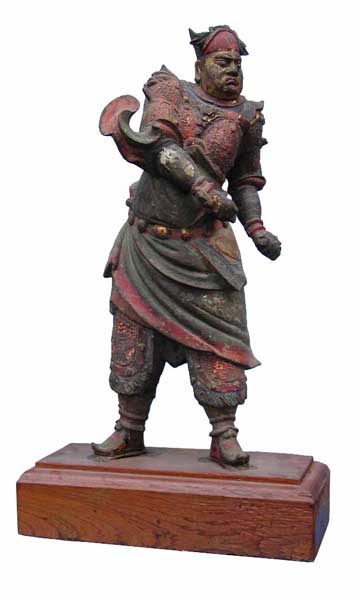
One of the stars of the Big Dipper
2026-04-15 11:51:31
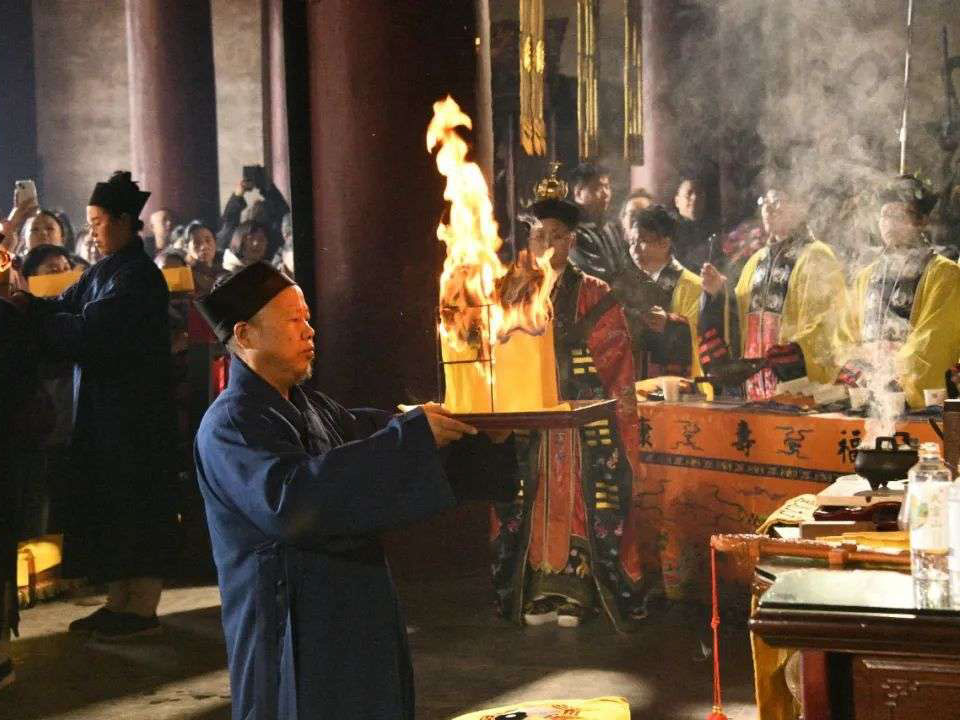
(1) The meaning of the ritual of fasting and Taoist ceremonies
2022-08-20 23:32:13
The original meaning of "zhai" was to be neat, harmonious an...
Yin GUI
2022-08-20 23:32:13
Chapter 27
2022-08-20 23:32:13
Chapter 72
2022-08-20 23:32:13
The couplet of the ancestral hall of the Wudang Mountain Temple
2022-08-20 23:32:13
The official couplet of the spirit temple in the ancient Wudang Mountain Temple
2022-08-20 23:32:13