


Chapter Twelve
2022-08-20 23:32:13
Five colors ① blind the eyes ②; Five tones ③ can cause deafness ④; Five flavors ⑤ make the mouth feel pleasant ⑥; Galloping ⑦ Hunting ⑧, driving the heart wild ⑨; Rare goods cause trouble. Therefore, the sage regards the belly as the belly and not the eyes as the eyes ⑾, thus discarding that and taking this. The rich and varied colors dazzle the eyes. The noisy tones can cause hearing loss. Abundant food makes one's tongue lose its taste. Indulging in hunting makes one's mood wild and insane. Rare items can cause people to behave improperly. Therefore, the sage only seeks to have enough to eat and does not chase after sensual pleasures, thus discarding the temptation of material desires and maintaining a stable and contented lifestyle. [Note] ① Five colors: refer to cyan, yellow, red, white and black. This refers to a variety of colors. ② Blind eyes: A metaphor for being dazzled and confused. ③ The five tones: refer to Gong, Shang, Jue, Zhi and Yu. Here it refers to a wide variety of musical sounds. ④ Deafness: It is a metaphor for poor hearing and inability to distinguish the five tones. ⑤ Five Flavors: They refer to sour, bitter, sweet, pungent and salty. Here, they mean a wide variety of delicious flavors. ⑥ Good taste in the mouth: It means that the sense of taste has failed and one has developed a mouth disease. In ancient times, "shuang" was a specific term for oral diseases. ⑦ Galloping: Running freely and unrestrainedly, it is a metaphor for indulging in debauchery and dissipation. ⑧ Hunting: Hunting for animals. tian, pronounced as "tian", means hunting. ⑨ Wild heart: The heart is unrestrained and beyond control. ⑩ Causing harm: Damaging one's conduct. "Obstructing, causing harm." ⑾ For the stomach, not for the eyes: Seeking only food, clothing and peace, rather than indulging in sensual pleasures. "Abdomen" here represents a simple and peaceful way of life; "Mu" represents a kind of pretentious and insatiable lifestyle. "Discard the temptation of material desires and maintain a stable and contented life." The life that "refers to" as the eyes; This "refers to" the life of the belly ". [Quote] For this chapter, it is generally believed that Laozi wrote it in response to the greed and indulgence of the slave-owning nobility. It was both an exposure and an exhortation, as well as a stern warning. However, when it comes to the specific explanation of this chapter, there are two completely different opinions. One opinion holds that Laozi, starting from opposing the decadent life of the ruling class, reached a general conclusion that he opposed all sounds and colors and denied the development of culture. Those who hold this view believe that Laozi's statement of "for the stomach, not for the eyes" opposes material life and spiritual civilization, and is a manifestation of his idea of keeping the people ignorant, that is, as long as people have enough to eat and wear, it is fine. This is a thorough cultural negation. Another opinion holds that the "five colors", "five sounds", "five flavors", the joy of hunting, and rare goods mentioned by Laozi are not all part of spiritual civilization. Therefore, there is no issue of opposing material life to spiritual civilization. These reflect the decadent culture of the slave-owning nobility that is blinding, deafening, and maddening. The value of this culture is no more than the pleasure of hunting and rare goods. Both of these opinions have their own merits, with differences in understanding and distinctions in scholars' values. However, the debate here does remind us that while developing material civilization today, we should also attach importance to the development of spiritual civilization and oppose the spiritual corruption caused by the run of material desires. [Commentary] The era when Laozi lived was at a time when the old and new systems were in transition and society was in turmoil. The lives of the slave-owning nobility were becoming increasingly decadent and corrupt. He witnessed the living conditions of the upper class, and thus he believed that the normal life of society should be for the "stomach" rather than the "eyes", to focus on the inside rather than the outside, and only to seek comfort and fullness rather than indulging in sensual pleasures. Here, the decadent lifestyle of the slave-owning nobility that Laozi opposed was not that of ordinary working people, because the "five colors", "five flavors", "five sounds", hunting games, and precious items were not something that ordinary laborers could possess, but were part of the life of the nobility. Therefore, we believe that Laozi's viewpoints do not aim to oppose spiritual civilization to material civilization, nor do they deny the development of culture. Unlike some scholars who claim that these viewpoints of Laozi are his narrow and vulgar anti-historical views on the reality and historical development of human society. He hopes that people can have enough food and clothing, and establish an inner peaceful and tranquil lifestyle rather than an outer mundane one. The more a person throws himself into the vortex of externalization, the more he will linger and forget to leave, develop a sense of self-alienation, and his soul will become increasingly empty. Therefore, Laozi reminded people to resist the temptation of external material desires, maintain inner peace and tranquility, and ensure their inherent nature. Nowadays, modern civilization is highly developed. Many people only seek the satisfaction of sensual and material desires, and their values and moral views are seriously distorted. In many occasions, it is common to see cases of people's hearts going crazy. After reading this chapter, one can't help but feel deeply moved. The spiritual civilization of human society should develop in tandem with the material civilization. It is not the case that when the level of material civilization improves, the spiritual civilization will naturally follow. This view is wrong.
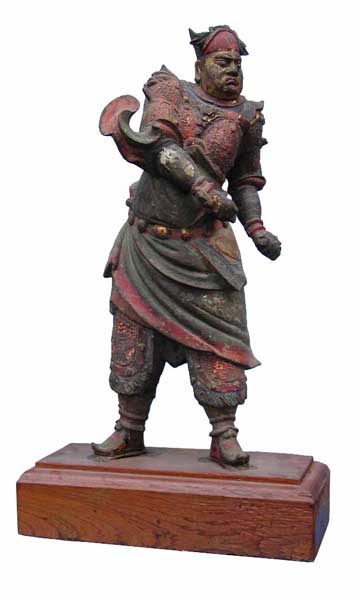
One of the stars of the Big Dipper
2026-04-15 11:51:31
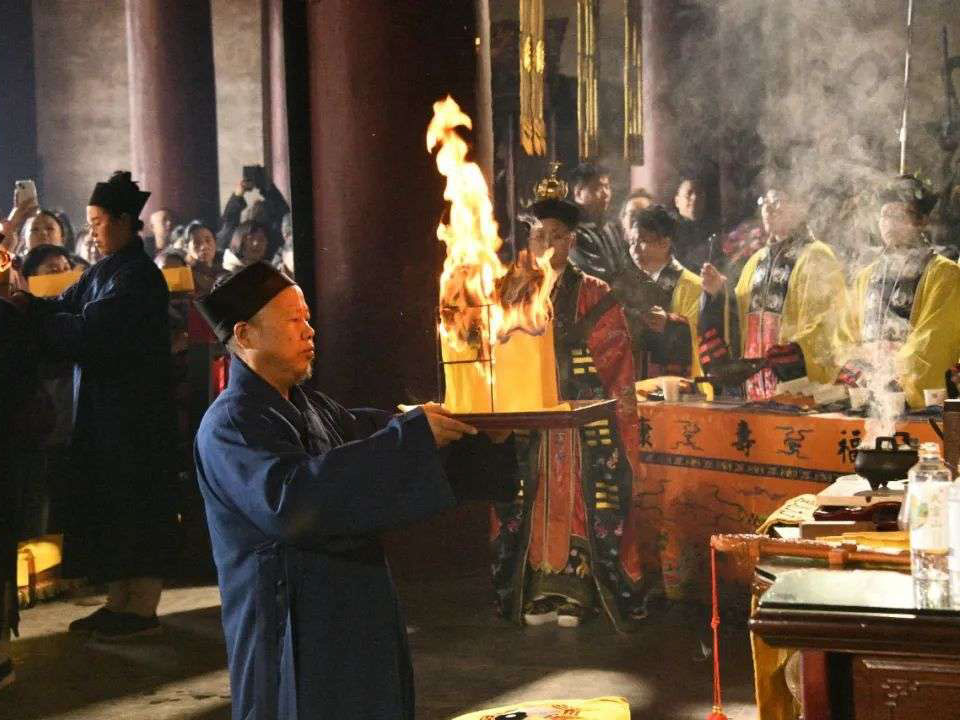
(1) The meaning of the ritual of fasting and Taoist ceremonies
2022-08-20 23:32:13
The original meaning of "zhai" was to be neat, harmonious an...
Yin GUI
2022-08-20 23:32:13
Chapter 27
2022-08-20 23:32:13
Chapter 72
2022-08-20 23:32:13
The couplet of the ancestral hall of the Wudang Mountain Temple
2022-08-20 23:32:13
The official couplet of the spirit temple in the ancient Wudang Mountain Temple
2022-08-20 23:32:13