


Chapter Eleven
2022-08-20 23:32:13
There are thirty spokes ① in one hub ②. When it is not there, it is used for a vehicle ③. When something is absent, it serves the purpose of a vessel. Chisel 户牖 to make room ⑤, when it doesn't exist, it has the function of a room. Therefore, having it is for benefit, not for use. Thirty spokes converge into a hole in one hub. It is the hollow space in the hub that makes the car function. Kneading clay to make vessels, it is the hollow space of the vessel that gives it its function. When doors and Windows are drilled to build a house, it is the empty parts within the four walls of the doors and Windows that give the house its function. So, "having" brings convenience to people, while "not having" plays its role. [Note] ① Spokes: The wooden strips in a wheel that connect the axle and the rim. In ancient times, a wheel was composed of thirty spokes. This number is taken from the 30th day of each month. ② Hub: pronounced as "gu", it is a wooden circle at the center of the wheel, with a round hole in it, which is where the axle is inserted. ③ When there is nothing, there is the use of a car: It is only with the hollow space of the car hub that a car can have its function. There is no empty space in the middle of the finger hub. ④ Shanyan Zhi: Shanyan, harmony; Plant, soil. That is, to make utensils for people to eat and drink with clay. ⑤户牖 : doors and Windows. ⑥ To have it as a benefit, not to have it as a use: "having" brings convenience to people, and "not having" also plays a role. In real social life, ordinary people only pay attention to the tangible things and their functions, while ignoring the void things and their functions. In this regard, Laozi discussed in this chapter the interrelationship between "being" and "non-being", that is, between the real things and the empty parts. He gave an example to illustrate that "being" and "non-being" are interdependent and mutually useful. Intangible things can have a significant impact, but they are not easily noticed by ordinary people. He particularly highlighted the role of "nothingness" to people. Laozi gave three examples: The function of a vehicle is to carry people and goods; The function of a vessel is to hold items. The function of a house is to provide a place for people to live in, which is the convenience that cars, dishes and rooms offer. A vehicle is composed of components such as spokes and hubs. These components are "existent", while the empty part in the hub is "non-existent". Without "non-existent", the vehicle cannot move, and of course, it cannot carry people or goods, and its "existent" function cannot be brought into play. If a vessel has no empty part, that is, no "nothingness", it cannot serve the purpose of holding things, and the "presence" on its outer wall also cannot function. The same is true for houses. If there are no empty Spaces between the four walls, doors and Windows for entry and exit, lighting and air circulation, people cannot live there. It is evident that the empty Spaces in the house play a role. The "being" and "non-being" discussed in this chapter are in terms of the phenomenal realm, which is different from the "being" and "non-being" mentioned in the first chapter. The latter is in terms of the transcendent phenomenal realm. Readers should pay attention to making the distinction. [Commentary] At the beginning of the Tao Te Ching, Laozi used most of the chapters to discover abstract principles by understanding concrete things such as heaven and earth, straw dogs, bellows, valleys, water, soil, containers, sharp objects, wheels, and houses. His theories often progress from the concrete to the abstract, from perceptual understanding to rational understanding, rather than always being deliberately mysterious. Mr. Feng Youlan once said, "The 'Dao' mentioned by Laozi is the unity of 'being' and 'non-being'. Therefore, although it takes' non-being 'as the main focus, it does not look down upon' being '. It indeed attaches great importance to 'being', but it does not put it first." The second chapter of Laozi says, "Non-existence gives rise to each other." The eleventh chapter states, "Thirty radii form one hub. When it is non-existent, it has the function of a chariot." When something is absent, it can be used as a vessel. Chisel 户牖 to make a room. When it doesn't exist, it has the function of a room. Therefore, what exists is for benefit, and what does not exist is for use. This passage ingeniously illustrates the dialectical relationship between "being" and "non-being". The middle of a bowl or a tea cup is empty, but it is precisely that empty part that serves the function of the bowl or tea cup. The house was empty, but it was precisely that empty part that served as a bowl or a tea cup. If it were real, how could people move in? Laozi concluded that "having is for benefit, not having is for use", taking "not having" as the main opposite. Laozi believed that bowls, tea cups, houses and the like are the dialectical unity of "being" and "non-being", which is correct. But it is wrong to think that "nothingness" is the main opposite. After all, it is only with bowls, tea cups, houses and the like that the empty Spaces can come into play. If there were no tea cups, bowls, houses, etc. originally, there would naturally be no hollow Spaces, and all functions would be lost. (Page 117 of "Collected Discussions on Laozi's Philosophy"
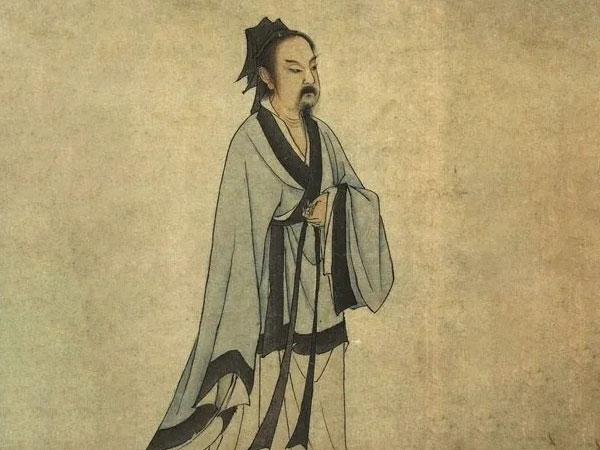
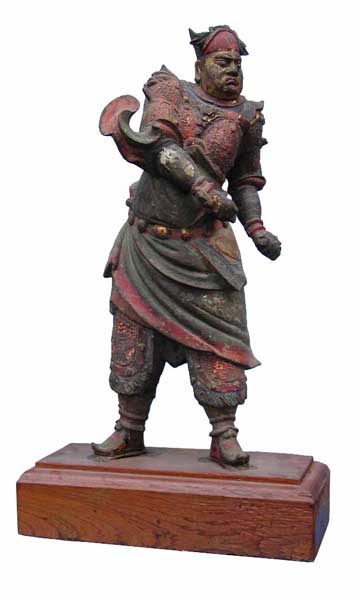
One of the stars of the Big Dipper
2026-04-15 11:51:31
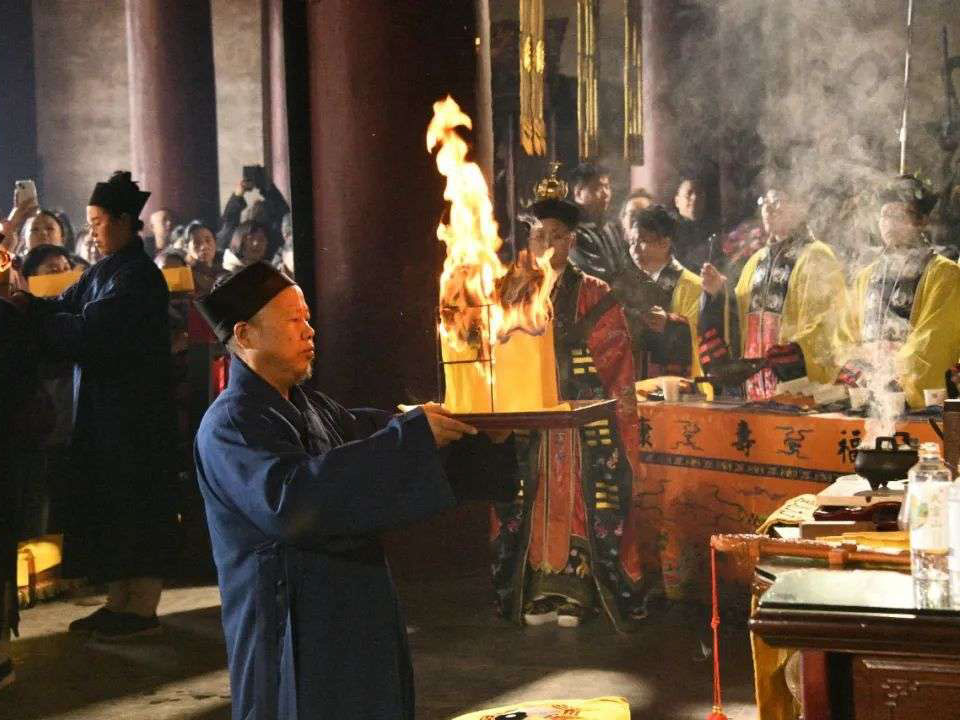
(1) The meaning of the ritual of fasting and Taoist ceremonies
2022-08-20 23:32:13
The original meaning of "zhai" was to be neat, harmonious an...
Yin GUI
2022-08-20 23:32:13
Chapter 27
2022-08-20 23:32:13
Chapter 72
2022-08-20 23:32:13
The couplet of the ancestral hall of the Wudang Mountain Temple
2022-08-20 23:32:13
The official couplet of the spirit temple in the ancient Wudang Mountain Temple
2022-08-20 23:32:13