


Chapter Ten
2022-08-20 23:32:13
With a single heart and soul, can one remain unseparated? Can one be as gentle as a baby when concentrating one's energy? Can the process of purifying the profound Mirror ④ be flawless? Can one love the people and govern the country without doing anything? When the Heavenly Gate opens and closes, can it be used? How can one be ignorant when one understands the Four perfections? To be born and raised, to be born without having, to act without relying, to grow without being slaughtered, this is called the profound virtue. Can the spirit and the body be united without separation? Can one accumulate essence and energy to become gentle and docile, just like the desireless state of an infant? Can there be no blemish if one clears away distractions and deeply observes the mind? Can loving the people and governing the country follow the law of natural non-action? Can the senses be at peace when they come into contact with the opposing changes of the outside world? With a clear understanding of the Four Realms, how could one avoid scheming? To allow all things to grow and multiply, to give birth to and nourish all things without claiming them as one's own, and to be the leader of all things without dominating them, this is called "Mystic Virtue". [Note] ① Zai Ying Po Bao Yi: "Zai" is used as an auxiliary phrase, equivalent to "husband". Yingpo, that is, the soul and spirit; Embrace one, that is, oneness. First, it refers to the Dao. Holding one mind means the unity of the soul and spirit, and the unity of the two is the unity of the Dao. It is also interpreted as the unity of the body and the spirit. ② Specialized energy: Specialized, meaning to gather and unite. Specialized gas refers to the collected gas. ③ Can it be like a baby? Can it be like a baby? ④ Cleanse the mysterious mirror: "Di" means to sweep away or remove. Xuan, profound and mysterious. Mirror, mirror. The term "Xuanjian" refers to the depth of one's heart being as clear as a mirror, profound and mysterious. ⑤ Can governing the country by loving the people be achieved through non-action? That is, governing by non-action. ⑥ Opening and closing of the Heavenly Gate: There are various interpretations of the Heavenly Gate. One theory holds that it refers to the human senses such as eyes, ears, mouth and nose. One theory holds that it refers to the root cause of rise and fall, order and chaos. One theory refers to the laws of nature; One theory is that it refers to the entry and exit of a person's mind, that is, the coordination of the mind and the senses, etc. Here it is based on the "sensory theory". Opening and closing, that is, movement and stillness, change and motion. ⑦ Be able to be female: "female" means peaceful. ⑧ Zhi: General wisdom, referring to the mind and scheming. ⑨ Livestock: Raising and breeding. ⑩ Xuan De: A mysterious and profound virtue. [Quotation] This chapter focuses on the practice of self-cultivation. Here are six questions written, seemingly summarizing several points on the application of the "Tao" in self-cultivation and governance, and putting forward general requirements for ordinary people and rulers. The second half of each sentence in this chapter seems to be a question, but in fact, the question itself is the best answer. Laozi demanded that people, whether in body or spirit, whether in subjective effort or objective reality, cannot be completely consistent. However, in real life, people should integrate their spirit and body without deviation, that is, to achieve harmony between physical life and spiritual life. In this way, one must achieve an extremely calm state of mind, clear away distractions, eliminate false views, understand the laws of nature, and deepen one's moral cultivation, so as to "love the people and govern the country". [Commentary] This chapter, following the previous ones, elaborates in depth on issues related to self-cultivation. The first six sentences raise six situations and six questions: "Can there be no separation?" "Can one do nothing?" " "Can it be like a baby?" " "Can it be flawless?" " "Can it be female?" " "Can one be ignorant?" " These six questions actually refer to various aspects related to self-cultivation, good character, learning, and governance. There are some differences of opinion in the academic circle regarding the interpretation of this chapter. First, regarding the judgment of the statement "To be born and to raise it, to be born but not to have it, to act but not to rely on it, to grow but not to kill it, this is called the profound virtue", some people believe that it is similar to the statement in Chapter 51, such as "The Dao gives birth to it, and virtue nurtures it", and thus is a wrong summary. Some people also believe that, in terms of the Dao, Chapter 51 and this chapter in terms of the sage, the sentences are the same but the objects are different. In the book "Tao Te Ching", it is common for the text to be the same or similar, and for the text to be repeated before and after. There is no need to consider it as a misspelling. Furthermore, regarding the "one" in "carrying the spirit and embracing one", some scholars believe that this "one" means "one body", that is, the spirit and the body are united as one and cannot be separated. Some people believe that "one" is "the Way", and "embracing one" means being unified with the Way. Some people also believe that "one" can be interpreted as "single-minded". This sentence translates that one should settle down in one's regular place, be single-minded and cautious when alone, and never be tempted by material desires for a moment. This book is based on the former perspective.
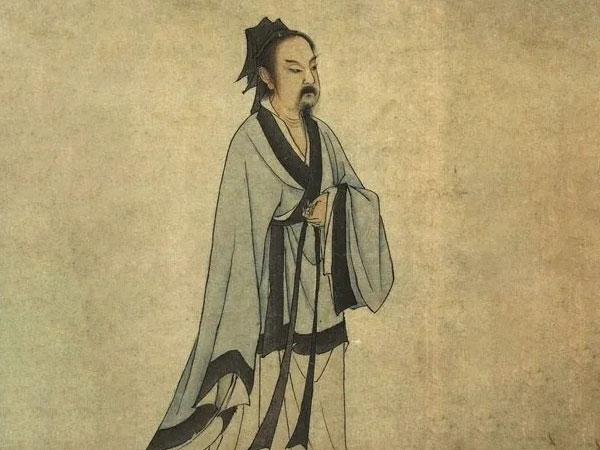
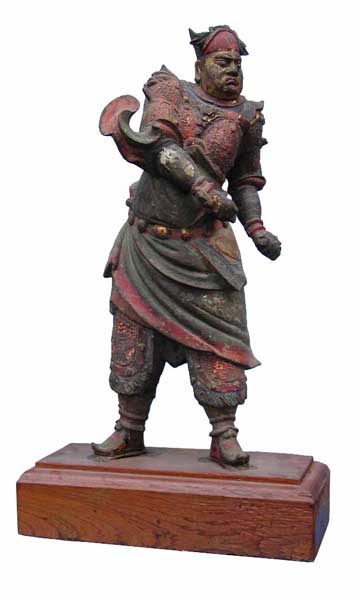
One of the stars of the Big Dipper
2026-04-15 11:51:31
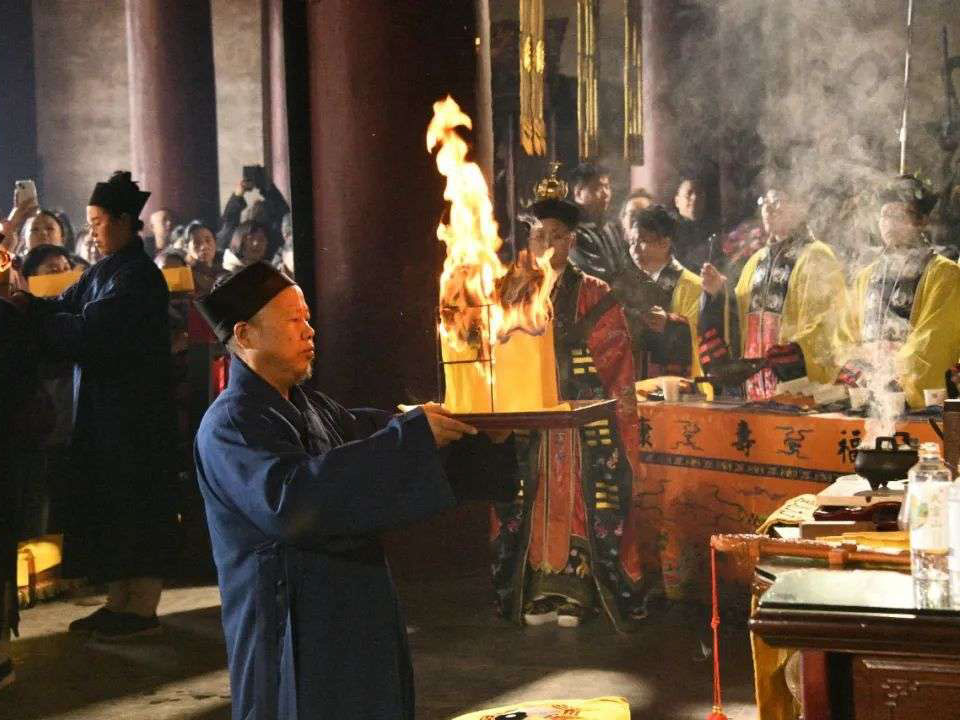
(1) The meaning of the ritual of fasting and Taoist ceremonies
2022-08-20 23:32:13
The original meaning of "zhai" was to be neat, harmonious an...
Yin GUI
2022-08-20 23:32:13
Chapter 27
2022-08-20 23:32:13
Chapter 72
2022-08-20 23:32:13
The couplet of the ancestral hall of the Wudang Mountain Temple
2022-08-20 23:32:13
Wudang Taoist Baohe Association
2022-08-20 23:32:13