


Chapter Eight
2022-08-20 23:32:13
The highest good is like water. Water benefits all things without contention and stays in places that others detest. Therefore, it is close to the Way. "Dwelling, a good place;" Heart, Shanyuan ④ And, Shanren ⑤; Yan, a good faith; Governance, good governance ⑥ Shi, Shan neng; Move, good times ⑦. It is precisely because one does not contend that there is no fault. The best man is like water. Water is good at nourishing all things without competing with them, remaining in places that no one likes, and thus is closest to the "Tao". The most virtuous person is best at choosing a place to live, keeping a calm and unfathomable mind, being sincere, friendly and selfless to others, keeping one's word in speech, governing with simplicity, managing the country well, making the best use of one's strengths in handling affairs, and seizing the right moment in action. The most virtuous person, precisely because of the virtue of not contending, has no faults and thus no grudges. [Note] ① The highest good is like water: "Upper" means the most. The highest good is the greatest good. Here, Laozi uses the image of water to illustrate that the "sage" is the embodiment of the Dao, because the words and deeds of the sage are similar to water, and the virtue of water is close to the Dao. ② To be in a place that everyone detests: that is, to live in a place that no one wants to go. ③ Ji Yu Dao: Ji, close to. That is to approach the Dao. ④ Yuan: Calm and profound. ⑤ And, benevolence: "And" refers to the connection and interaction with others. "Shanren" refers to a person of good breeding. ⑥ Governance, good governance: To be good at governing the country and thus achieve good governance results. ⑦ Act at the right time: Be good at seizing favorable opportunities in one's behavior and actions. ⑧ You: Resentment, fault, or sin. [Quotation] Following the previous chapter's extension of the way of heaven and earth to the way of man, this chapter uses water in nature as a metaphor for and to teach people. Laozi first used water as a metaphor for the personality of those with noble virtues, believing that their character is like water: first, it is gentle; second, it remains in a humble position; third, it nourishes all things without contention. The most perfect personality should also possess such a mindset and behavior: not only to do what benefits others without contention, but also to be willing to go to the humble places that others are reluctant to go and to do what others are unwilling to do. He can endure humiliation and bear heavy burdens, work hard without complaint, and do his best to contribute his strength to help others without competing with them for credit, fame or profit. This is Laozi's famous thought of "benefiting all things without contention". [Commentary] Laozi highly praised water among all things in nature, believing that the virtue of water is close to the Dao. The ideal "sage" is the embodiment of the Dao, for his words and deeds are similar to water. Why is it said that the virtue of water is close to the Dao? Wang Fuzhi explained: "Among the five elements, water is the weakest." Those who are good at living on the path focus on the minor details rather than the major ones. "Be at the forefront of the crowd, but always lead the way in virtue." Water is characterized by its non-contention and non-selfishness. Water nourishes all things without taking anything from them, and is willing to remain in the lowest and wettest places. In the following seven parallel sentences, there are all descriptions of the virtue of Guan Shui, and they also introduce the qualities that a good person should possess. Laozi listed seven "goodness" characters in parallel, all of which were inspired by water. The final conclusion is that the essence of dealing with people and matters is "not to contend". That is to say, it is better to be in a place where others detest than to compete with them for benefits, so others have no complaints. The "You Zuo" chapter of Xunzi records a conversation in which Confucius answered his son Zigong's question about water: "Confucius observed the eastward flowing water." Zigong asked Confucius, "What is the reason that a gentleman always observes a great stream when he sees it?" Confucius said, "Water, which leans towards all living beings without doing anything, is like virtue." The stream flows beneath the pond, and the skirt must follow its principle, as if it were the right meaning. Its Tao Tao seems unyielding, as if it were the Tao. If one decides to act, it should be as loud as a sound, and one should not fear the lofty valley, as courageous as a warrior. The main quantity must be balanced, similar to the method, abundant without seeking to be generalized, similar to the correct. The distance is just a little, and it seems like a close watch. With both entry and exit, it becomes fresh and clean, as if it were a good transformation. No matter how many twists and turns he has, he will surely turn east, just like his aspiration. Therefore, when a gentleman sees a great river, he must observe it. Here, Confucius uses water to describe the image of a gentleman with noble character in his ideal, which involves moral categories such as virtue, righteousness, the Way, courage, law, uprightness, observation, aspiration, and the virtue of transformation. The viewpoints here are obviously different from those of Taoism, but there are also some similarities. You can refer to this quotation and read it in conjunction with Chapter 8 of the Tao Te Ching.
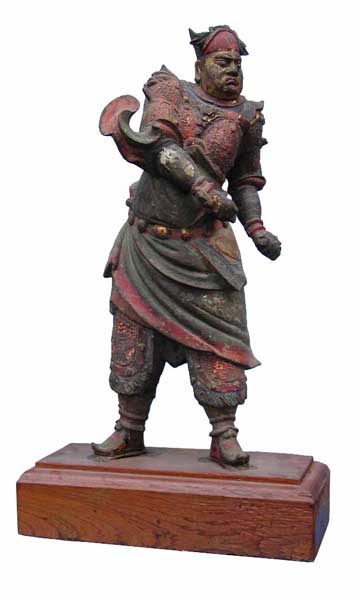
One of the stars of the Big Dipper
2026-04-15 11:51:31
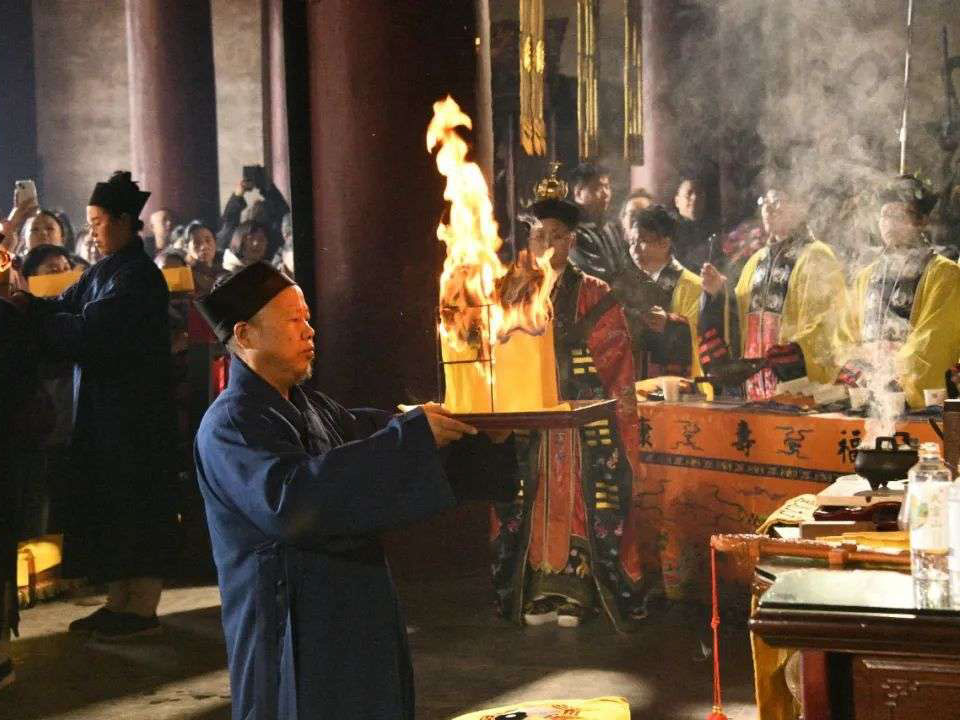
(1) The meaning of the ritual of fasting and Taoist ceremonies
2022-08-20 23:32:13
The original meaning of "zhai" was to be neat, harmonious an...
Yin GUI
2022-08-20 23:32:13
Chapter 27
2022-08-20 23:32:13
Chapter 72
2022-08-20 23:32:13
The couplet of the ancestral hall of the Wudang Mountain Temple
2022-08-20 23:32:13
The official couplet of the spirit temple in the ancient Wudang Mountain Temple
2022-08-20 23:32:13