


Chapter Seven
2022-08-20 23:32:13
"Forever and ever. The reason why heaven and earth can last and endure is that they do not generate themselves, and thus they can live forever. Therefore, is it not because the sage has no selfishness or evil that he takes care of himself before he does so, and he takes care of himself before he does so? Therefore, it can fulfill his private desires. The reason why heaven and earth can exist for a long time is that they do not operate naturally for their own survival, and thus can survive for a long time. Therefore, a sage with the Tao, when encountering matters, humbly steps back and does not contend, and thus can lead among the masses. Putting oneself out of the ordinary can actually preserve one's own survival. Isn't it precisely because he is selfless? So it can help him achieve his true self. [Note] ① Forever and ever; Long and long-lasting: Both refer to a long period of time. ② Because it does not live for itself: for it does not live for itself. So, because. ③ Body: Oneself, oneself. The following three "body" characters are the same. First: To take the lead, to occupy the front position. This means being above others. ④ "Outside oneself" : "Outside" is a noun of position used as a verb, in the causative form. Here, it means to put oneself aside. ⑤ ye: The same as "ye", particle, indicating a tone of doubt. [Quotation] This chapter also infers the human way from the Dao, reflecting Laozi's ideological proposition of retreating to advance. Laozi believed that the universe endures forever because of its "selflessness", and the "sages" of the human world achieve their ideals by retreating and forgetting their own interests. For instance, when Yu the Great was controlling the floods for the people, he passed by his gate three times outside for eight years without entering. The people respected him as the Son of Heaven. Laozi, from the perspective of simple dialectics, explained that benefiting others (" retreating from oneself "and" leaving oneself outside ") and benefiting oneself (" putting oneself first "and" preserving oneself ") are unified. Benefiting others often transforms into benefiting oneself. Laozi intended to persuade people to benefit others in this way. This spirit of modesty and selflessness has its positive significance. [Commentary] This chapter, following the fifth chapter, once again extols the praises of heaven and earth. Heaven and earth are objectively existing natural entities, produced by the "Tao" and surviving in accordance with the laws of the "Tao", thus truly embodying the Tao. Laozi praised heaven and earth, and at the same time extended the way of heaven to the way of man, hoping that the way of man would follow the way of heaven. In Laozi's view, the so-called human way is based on the way of heaven, that is, the specific application of the Way of Heaven in specific issues. This point is a viewpoint that Laozi often expounds in his books. In this chapter, he expresses this view. Next, Laozi used the term "sage" to explain the issue of human nature. The sage is the ideal ruler in the highest position. For him, human nature should be applied not only to governance and governing the world but also to self-cultivation and moral refinement, and he should truly imitate the selflessness and non-action of heaven and earth. For heaven and earth, "because they do not generate themselves, they can live forever." For a sage, "Do not let his selflessness lead to evil?" Therefore, it can fulfill his private desires." This contains dialectical factors. Because it does not generate itself, it can achieve immortality. The fact that one can achieve one's own selfishness by not being selfish indicates that the opposing sides are transforming into each other. In layman's terms, the sages praised by Laozi can humble themselves behind others and stay aloof. They do not interfere in everything but rather see things clearly from the side and then offer a helping hand. This way, they can stand firm. This kind of thinking, some people believe, is the wisdom of dealing with people and matters, which means not competing, not being selfish, and not doing anything. Some people also criticize Laozi's teachings for being overly deceptive, especially the statement "Is it not because he is selfless and evil?" The phrase "Thus being able to fulfill one's own selfish desires" is often cited as evidence, suggesting that the sage, in an attempt to maintain his position of power, employed cunning methods and played a sly trick, and so on. The mutual understanding of benevolence and wisdom is the case in many viewpoints of the Tao Te Ching. All kinds of explanations can be left for the time being. Through comparative study, a practical viewpoint can eventually be found.
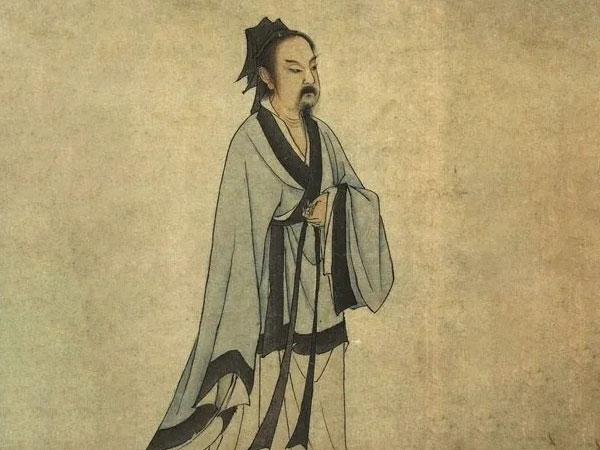
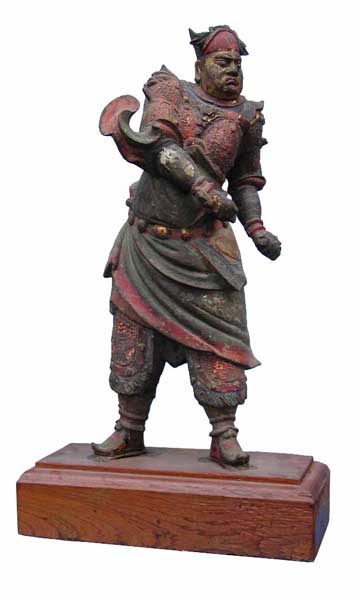
One of the stars of the Big Dipper
2026-04-15 11:51:31
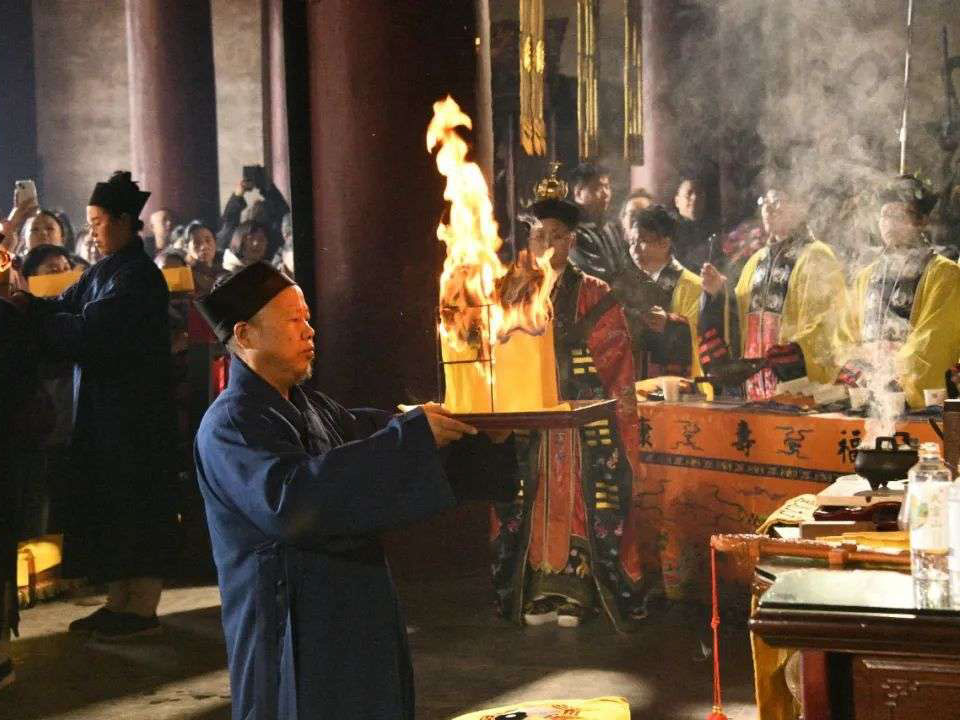
(1) The meaning of the ritual of fasting and Taoist ceremonies
2022-08-20 23:32:13
The original meaning of "zhai" was to be neat, harmonious an...
Yin GUI
2022-08-20 23:32:13
Chapter 27
2022-08-20 23:32:13
Chapter 72
2022-08-20 23:32:13
The couplet of the ancestral hall of the Wudang Mountain Temple
2022-08-20 23:32:13
The official couplet of the spirit temple in the ancient Wudang Mountain Temple
2022-08-20 23:32:13