


Chapter Six
2022-08-20 23:32:13
When the goddess of the valley does not die, it is called the mysterious female. The gate of the mysterious female is called the root of heaven and earth. Oh, mianmian! If it could exist ⑤! Use it without pansies ⑥. The Dao (the god of Grain) that gives birth to all things in heaven and earth is eternal and enduring. This is called the mysterious maternal nature. The birth gate of the mysterious mother's body is the foundation of heaven and earth. What a continuous stretch! It is just like this, constantly enduring and its effect is endless. [Note] ① Grain God: According to Gao Heng in the past, the Grain God is another name for the Dao. Gu is pronounced as "gu". In "Erya: Shiyan", it is stated: "Gu means life." In "Guangya: Interpretation of Gu", it is stated: "Gu means to nourish." The God of the valley is the god of fertility. According to Yan Fu's "Commentary on Laozi's Tao Te Ching", the "Grain God" is not a biased structure but a combined structure. Gu, describing the vastness and immensity of the "Tao", resembles a valley. "God" describes the "Tao" as ever-changing and very magical. ② Xuan pin: Xuan, originally meaning deep black, is an important concept that frequently appears in the book Laozi. It has the meanings of profound, mysterious and subtle and unfathomable. Female: Originally, it refers to female mammals. Here, it is used as a metaphor for the "Tao", which has the ability to create infinitely. The term "Xuanpin" refers to the mysterious and profound maternal nature. Here it refers to the mother body that gave birth to and nurtured all things in the universe. ③ Door: Refers to the door of production. Here, the specific meaning of the reproductive gate of the female reproductive organ is used as a metaphor for the origin of creating heaven and earth and giving birth to all things. ④ Mianmian: A continuous and unbroken appearance. ⑤ Ruocun: If, so, like. According to Su Zhe of the Song Dynasty, "Ruo Cun" means something that actually exists but cannot be seen. ⑥ jin: Commuting. Make a thorough explanation. In this chapter, Laozi continues to explain the characteristics of the "Tao". The methods he employed were still metaphor and metonymy. He used "grain" to symbolize "the Way", indicating that "the Way" is both empty and real. He used "God" as a metaphor for "Dao", explaining that "Dao" gives birth to all things and continues without end. He used the metaphor of "the Gate of the mysterious female" to describe the "Tao" as the source of all things, and so on. He wants to illustrate that the function of the "Tao" is endless. In terms of time, it endures and lasts forever. In terms of space, it is everywhere and endless. It nurtures all things in the universe and continues to thrive. [Commentary] This chapter uses concise language to describe the metaphysical and existing "Dao", that is, it continues to elaborate on the idea in Chapter Four that "Dao" precedes heaven and earth, and uses "grain" to symbolize the illusory form of the "Dao". The term "god" is used as a metaphor for the continuous existence of the "Tao" in giving birth to all things. It is believed that the "Tao" is the force that governs the development and change of all things in an infinite space and is a unified entity with certain material regularity. It is empty and deep, responding to the infinite, never parched, never ceasing to operate. This force that governs the development and change of all things is the law of the unity of opposites. The saying "The God of the Valley never dies" reflects the eternal nature of the "Way", that is, the constant "Way". The "Gate of the Mysterious Female" is the place where all things come into being, and its function is extremely significant. The "Gate of the Mysterious Female" and the "Root of Heaven and Earth" are both used to illustrate that the "Tao" is the origin of all things in heaven and earth. In ancient times, some people also interpreted the essence of this chapter as the art of fetal breathing and health preservation, believing that "it is the gateway to heaven and earth, used to breathe in and out the vital energy of Yin and Yang, life and death." Every dawn, facing noon, spread both hands on the knees, slowly press the joints, exhale the stale air through the mouth and draw in the clear air through the nose, thus expelling the old and taking in the new. Hold your breath for a long time, then exhale slowly, still stretching your left and right hands up and down, forward and backward. When the qi is absorbed, the mind is peaceful and the primordial qi descends to the hairline and flows through the five internal organs. The limbs are nourished by it, like mountains embracing clouds and the earth receiving moisture. The complexion becomes radiant, the ears and eyes become sharp, food tastes good, strength increases significantly, and all diseases disappear." This is an explanation that links Laozi's thoughts with traditional health preservation techniques. (Quoted from "Miscellaneous Instructions on Cultivation" in the "Imperial Treatise on Alchemy") This perspective of thinking can also be regarded as an elaboration of Laozi's philosophy. [Interpretation] Strange Thinking: Comparing the mysterious and inexplicable "Dao" to the reproductive organ of a female animal is a very apt description of the characteristic of the all-powerful "Dao" that gives birth to all things. This crude, concise and savage way of expression frequently appears in Laozi's books. This indicates two aspects of issues: First, from the perspective of the habit of using words and names, it reflects Laozi's weariness of human beings' adherence to knowledge. He was worried that the habits and knowledge of civilization would increasingly weaken human beings' insight into nature and understanding of the "Tao". Second, Laozi was reluctant to define the "Tao" within a certain cognitive category. The "Dao" he focuses on is an overall unified relationship of interconnection, mutual restraint, mutual influence and mutual interaction among the universe and heaven and earth, rather than the definition or division of a certain part or a certain nature. Therefore, his "Dao" has a different way of description and perspective of understanding from others. Coincidentally, the psychology master Freud at the beginning of this century also used such a "vulgar" descriptive method when discussing the relationship between human beings and civilization. He analyzed human housing as a substitute for the mother, saying, "The uterus is the first housing. Nine times out of ten, humans still long for it because it is safe and comfortable." Yes, the most primitive nature of human beings is manifested as an attachment to the mother's body, which is experienced in everyone's heart. However, this nature is tortuously manifested in human spiritual needs as a strong desire to rely on nature and to integrate with it. Our nostalgia for nature and yearning for a pastoral life today are just like a child's eagerness for a gentle mother's womb, hoping to retrieve too much we have lost in the infinite mysteries of nature. The hustle and bustle of too many cities, excessive industrial pollution, population imbalance and tense and complex interpersonal relationships have put people's spirits under heavy pressure. We are committed to environmental protection: planting forests, purifying the air and the water quality of rivers, seas and oceans, and protecting endangered wild animal and plant species. We are saving the natural environment on which we depend for survival. When we study the relationship between human beings and themselves in philosophy and cultural thought, we are also seeking back the dreams that humanity has lost. Therefore, looking back to understand the wise, extensive and profound philosophical implications that Laozi bestowed upon the "Tao" should have a strong enlightening significance for the continuous and coordinated development of today's social civilization. Most people are accustomed to conventional thinking and are reluctant to dismiss things that do not conform to it as "strange". This is actually a manifestation of mental inertia. It should be known that only by breaking the routine can there be a deepening of understanding and a revolution in concepts. When reading the book "Laozi", we especially must not forget this point.
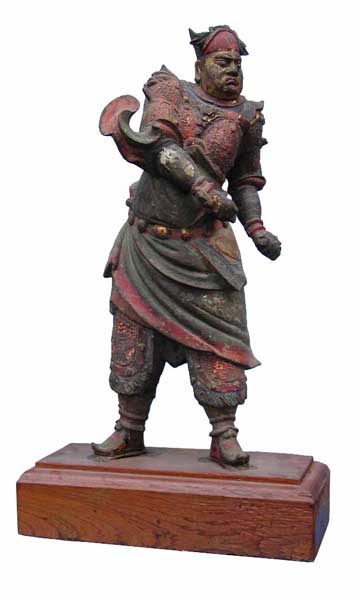
One of the stars of the Big Dipper
2026-04-15 11:51:31
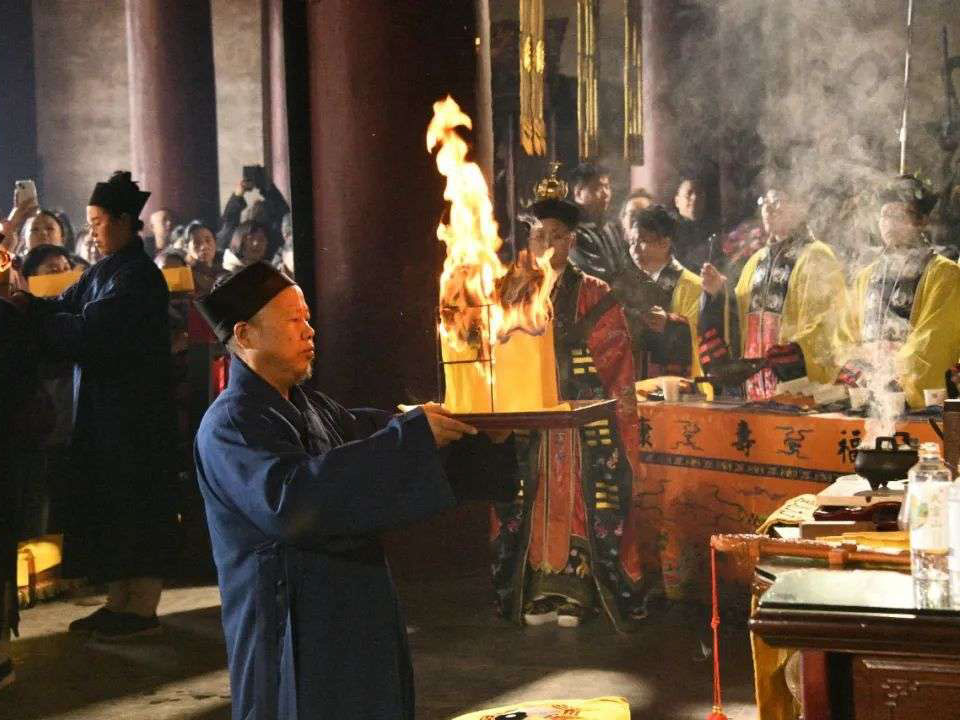
(1) The meaning of the ritual of fasting and Taoist ceremonies
2022-08-20 23:32:13
The original meaning of "zhai" was to be neat, harmonious an...
Yin GUI
2022-08-20 23:32:13
Chapter 27
2022-08-20 23:32:13
Chapter 72
2022-08-20 23:32:13
The couplet of the ancestral hall of the Wudang Mountain Temple
2022-08-20 23:32:13
Wudang Taoist Baohe Association
2022-08-20 23:32:13