


Chapter Five
2022-08-20 23:32:13
The universe is unkind and regards all things as straw dogs. The sage, lacking benevolence, regards the common people as straw dogs. Between heaven and earth, is it still 龠 or ②? Humble yet unyielding ③, dynamic yet expansive ④. "Much knowledge leads to exhaustion; it is better to remain in the middle." Heaven and earth show no mercy. They have no benevolence and treat all things as if they were straw dogs, leaving them to their own fate. Even sages have no sense of benevolence and treat the common people like straw dogs, leaving them to fend for themselves. Isn't the world between heaven and earth like a bellows? It is empty but never dry; the more it stirs, the more wind it generates, never ceasing. A plethora of policies and decrees only makes people more confused and less effective. It is better to maintain a state of tranquility. [Note] ① Ruminant: A dog made of grass. In ancient times, it was exclusively used for sacrificial ceremonies. After the ceremony, it was either thrown away or burned. It is a metaphor for contemptuous and useless things. In this article, it is metaphorically said that the universe and all things, as well as the sages and the common people, all grow and fade away on their own due to carelessness and inattention. As Wu Cheng of the Yuan Dynasty said, "The straw dog, bound with grass in the shape of a dog, is used to pray for rain." When praying, one abandons it without any further consideration. Heaven and earth have no intention of loving things, but let them come into being and form on their own. The sage has no intention of loving his people but allows them to do and rest on their own, thus using a straw dog as a metaphor." ② Youtuo 龠 (tuo yue) : "you" is a metaphorical word, meaning "like" or "as if". The bag and air supply pipe used to air the furnace fire during ancient smelting were the ancient bellows. ③ Qu (gu) : To the fullest, to the end. ④ Yu: It means to heal and to be even more successful. ⑤ Extensive learning and knowledge accumulation: Hearing, observing and learning, knowledge. Laozi believed that when one is well-informed and wise, they may instead impose harsh government orders, thus undermining the way of heaven. Number: "Speed" means to speed up. Poverty: Being trapped and impoverished, reaching the end with no way out. ⑥ Shouzhong: "Zhong" refers to the state of inner emptiness and tranquility. "Shouzhong: To maintain a state of emptiness and tranquility." [Quotation] The content of this chapter mainly includes two aspects of meaning. One is that Laozi once again expressed his atheistic ideological tendency and denied the view of personifying heaven and earth that existed in the intellectual circle at that time. He believes that heaven and earth are natural existences without reason or emotion. Their existence has no effect on all things in nature because all things change and develop in accordance with their own natural laws between heaven and earth, and are not controlled by heaven, gods or humans. Secondly, Laozi also discussed the social and political thought of "non-action", which is a further elaboration on the content of the first four chapters. He believed that as a sage - an ideal ruler, one should follow the laws of nature, adopt a policy of non-action, and allow the common people to live and multiply on their own, without taking any intervention or measures. This chapter also follows up on the previous one to further discuss "Dao Chong". Here, from "the way of heaven" to "the way of man", and from "nature" to "society", the core idea is to expound the benefits of tranquility and non-action. This chapter uses specific metaphors to illustrate how to understand nature and treat it correctly, discussing that the universe belongs to nature and society should follow nature, maintaining a state of tranquility and emptiness. The metaphors are vivid and distinct. [Commentary] In this chapter, from the perspective of opposing "action", Laozi still discusses the principle of "non-action". The fact that heaven and earth are not benevolent indicates that heaven and earth are physical and natural existences and do not possess the rationality and emotions of humans. All things operate in accordance with the natural laws between heaven and earth. It is not as theists imagine that the natural laws of heaven and earth favor or dislike something. In fact, this is merely the projection effect of human emotions. This view demonstrates Laozi's atheistic thought against ghosts, gods and numerology, and it is a progressive idea worthy of attention. Inferential from "non-action", atheism is a logical and inevitable outcome. He believed that heaven and earth are non-actional, and that all things in nature only need to grow and change in accordance with the laws of nature's development, without the need for any master to come above nature to command and arrange. Laozi explained this issue through two events in life. One is the dog made of grass that people use during sacrificial ceremonies. They pray with it but throw it away casually after use. Similarly, the sage has no partiality and follows the pure nature of heaven and earth. Even a wise ruler should not treat the common people unfairly but equally, allowing them to arrange their daily routines according to their own needs. The second is the bellows used. Just pull them to blow out air and they won't run out completely. Between heaven and earth, it is like a bellows, empty but never dry; the more it is stirred, the more wind it generates. The point Laozi intends to convey through these two metaphors is: "Excessive talk leads to exhaustion; it's better to adhere to the middle way." Excessive and harsh policies will only accelerate its downfall. It is better to maintain a state of emptiness and tranquility. The "zhong" mentioned here does not refer to the way of uprightness and moderation, but rather to emptiness and tranquility. Confucianism advocates moderation, the mean and impartiality. The "moderation" mentioned by Laozi also implies "countless". If one uses a lot of coercive words and laws to force the people, it will soon fail. It is better to act in accordance with the laws of nature, remain calm and inactive, and all things will be able to thrive and never cease. There will never be a good outcome if one is proactive. This is the warning that Laozi issued at the end of this chapter. In conclusion, the main theme of this chapter remains the promotion of "empty use", which is connected with the previous two chapters and still promotes "non-action". The methods employed are still from the way of heaven to the way of man, and from nature to society. [Interpretation] The new discovery of "Heaven" shows no mercy, does not make comments, and allows things to come and go on their own. This is the general principle of "governance by non-action" proposed by Laozi on the basis of his understanding of the objective materialist nature of nature. "Heaven" is one of the earliest categories to appear in the history of Chinese philosophy. The ancients were accustomed to regarding heaven as the master of the world and often endowed heaven with personal and religious meanings. Most of the philosophers of the Pre-Qin period also inherited this traditional view of the mandate of heaven. The establishment of the Xia Dynasty, due to the unified autocratic monarchy, was reflected in religion. Above the polytheism, the supreme deity emerged, namely God, also known as "Heaven". From then on, "Heaven" was endowed with supreme divinity and became a god. This personified and dominant concept of deities was further strengthened and enriched during the Shang and Zhou dynasties. During the Spring and Autumn Period, the traditional theology of destiny had not completely disintegrated and remained the dominant ideology at that time. Confucius' understanding of "heaven" was contradictory. In terms of the dominant aspect of his thought, he still adhered to the concept of celestial deities since the Yin and Zhou Dynasties, affirming that heaven has will and affirming the mandate of heaven, advocating that "life and death are predestined, and wealth and honor are in heaven." Mozi, on the other hand, put forward the concepts of "Heavenly will" and "Heavenly will", advocating that Heaven has will, believing that Heaven rewards the good and punishes the evil, and possesses the spirit of "universal love". Mencius further extended the principles of human nature to the way of heaven, saying, "Sincerity is the way of heaven." Sincerity is the way of being human. Even to this day, people still often say things like "The will of Heaven cannot tolerate it", which shows how widely and profoundly the traditional view of destiny has influenced our way of thinking. Laozi was a courageous critic, possessing wisdom and boldness that many philosophers and scholars of his time and later did not have. It was he who first put forward the truth that heaven does not show mercy and, with philosophical reasoning, transferred the principles of nature to the human world. In Laozi's view, heaven does not carry any human moral or ethical sentiments; it has its own objective way of operation. Though heaven is not merciful, it shows no partiality and does not deliberately inflict violence on all things. And its growth of all living things has brought vigorous vitality to the world, enabling human beings to multiply and thrive, and allowing social civilization to thrive. Therefore, the "sage" does not show mercy to the people either. Instead, he should govern society by imitating the way nature operates. If the rulers make too many comments and there is too much human intervention, all kinds of conflicts will intensify. Not to mention that personal opinions are often one-sided or fallacious. Laozi, on the issue of "heaven", was different from both Confucius' "mandate of Heaven" and Mozi's "will of Heaven", believing that "Dao" is the foundation of all things in the universe. The "Heaven" is produced by the "Tao". It has no will, no likes or dislikes, and is not a supernatural spiritual force. This is undoubtedly a natural heaven. Laozi's achievement lies in his denial of the personified gods and his restoration and proposal of the natural heaven.
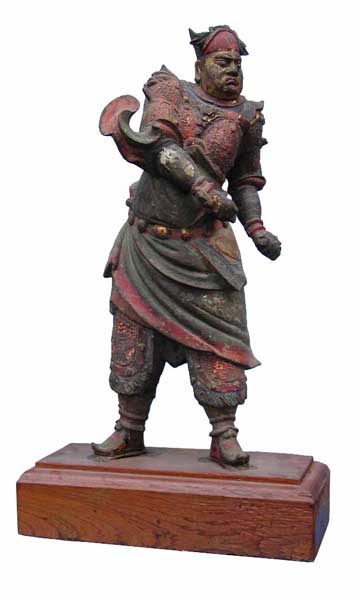
One of the stars of the Big Dipper
2026-04-15 11:51:31
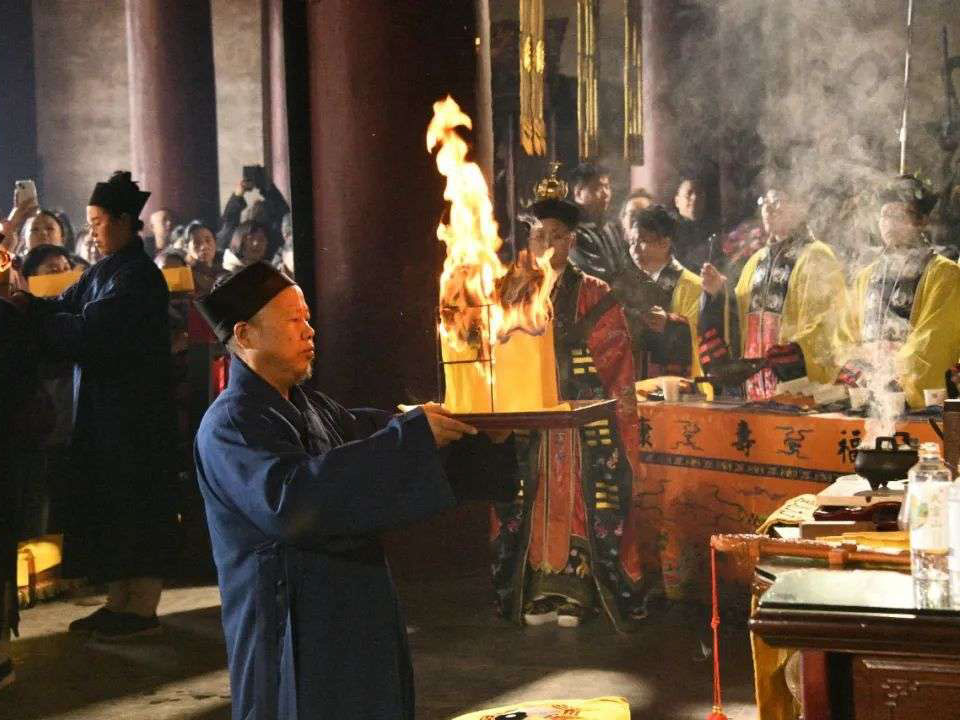
(1) The meaning of the ritual of fasting and Taoist ceremonies
2022-08-20 23:32:13
The original meaning of "zhai" was to be neat, harmonious an...
Yin GUI
2022-08-20 23:32:13
Chapter 27
2022-08-20 23:32:13
Chapter 72
2022-08-20 23:32:13
The couplet of the ancestral hall of the Wudang Mountain Temple
2022-08-20 23:32:13
Wudang Taoist Baohe Association
2022-08-20 23:32:13