


Chapter Four
2022-08-20 23:32:13
Dao Chong ①, but when applied, there is no excess ②. Yuanhe ③! Like the origin of all things ④. File the impurities ⑤, resolve the disputes ⑥, harmonize the light ⑦, and neutralize the dust ⑧. Zhanhe ⑨! It seems or exists ⑩. I do not know whose son is like the ancestor of the emperor. The Great "Dao" is empty and formless, yet its function is boundless. How profound! It seems like the ancestor of all things. Wear down its sharpness, eliminate its disturbance, harmonize its radiance, and blend with the dust. It vanishes and disappears, yet seems to actually exist. I don't know whose descendant it is. It seems to be the ancestor of the Heavenly Emperor. [Note] ① chong: It refers to the emptiness of an object, symbolizing emptiness. ② "Youfuying" : "You" means" to have "and" to have ". Ying: full, extended to mean the end. ③ Yuan: Deep and far-reaching. He (a) : An interjection indicating a pause. ④ Zong: Ancestors, foremen. ⑤ cuo: "Cuo" means to wear away or fold. Dui (rui) : sharp, sharp, and sharp. "File its sharpness: To wear down its sharpness." ⑥ Resolve disputes: Dissolve its conflicts. ⑦ Harmonize its light: Blend and conceal its radiance. ⑧ Mingle with the mundane: To blend oneself with the mundane. The above four "its" characters all refer to the attributes of the Dao itself. ⑨ zhan: Sinking, extended to mean vague. Duan Yucai said in "Shuowen Jiezi Zhu" that in ancient books, the "Chen" in "floating and sinking" was mostly written as "zhan". The ancient pronunciations of "zhan" and "Chen" were the same. Here it is used to describe the situation where the "Dao" is hidden in the darkness, leaving no trace. ⑩ Seem or exist: Appear to exist. Together with the phrase "Zhanhe" mentioned above, it describes the "Dao" as being neither present nor absent. Refer to the sentences in Chapter 14, such as "The form without form, the image without object, is called the vague and indistinct", to understand its meaning. ⑾ Xiang: Similar to. [Quotation] In this chapter, Laozi is still discussing the connotation of the "Tao". He believes that the "Tao" is an intangible entity, formless and shapeless. People can neither see it nor touch it, and can only rely on consciousness to perceive it. Although the "Tao" is an intangible entity, it is not without substance but rather contains the creative elements of the material world. This factor is extremely rich and has a long history, existing before the emergence of the Heavenly Emperor. Therefore, it is the "Tao", not the Heavenly Emperor, that created the universe, all things in nature. In this way, Laozi once again explained the attributes of the "Tao" from a material perspective. Following the content of the first chapter, "Formless", Laozi praised that although the "Tao" is intangible and formless, it is not completely empty. From a "horizontal" perspective, the "Tao" is infinitely vast and inexhaustible. Let's talk about it from a "vertical" perspective again; The Dao is infinitely profound and its origin cannot be traced. It seems to be the ancestor of all things in nature, or the ancestor of the Heavenly Emperor (God). From now on, it is not God (the Heavenly Emperor) who created things, but the "Tao" gave birth to God (the Heavenly Emperor), and then gave birth to all things. The role of the "Tao" is that it is the supreme master of the universe. [Commentary] In this chapter, Laozi gives a concrete description of the "Tao" through description and metaphor. Originally, Laozi believed that the "Tao" could not be described. In fact, "The Tao that can be expressed is not the Eternal Tao" is a description of the "Tao". Here, the image of the "Tao" is further described. Laozi said that the Dao is formless and empty, but the functions it can exert are immeasurable, endless and will never dry up. It is the master of all things, governing everything, and is the force that the universe and the heavens must rely on for their existence, development and change. Here, Laozi asked himself: Where did the "Tao" come from? He did not give a direct answer but said that it existed before the manifestation of the Heavenly Emperor. Since it was before the emergence of the Heavenly Emperor, there is no doubt that the Heavenly Emperor was produced by the "Dao". From this, the researchers concluded that Laozi did indeed put forward the idea of atheism. Some scholars also compare Laozi's "Dao" with the "Logos" of the ancient Greek philosopher Heraclitus, believing that the connotations of these two categories are very similar. Heraclitus' "Logos" is an eternal existence, and all things come into being based on "Logos". But it was not created by any god or anyone; rather, it was the seed that created the world, an object of the "ether". "Logos" exists in nature and human society at all times and in all places, but people cannot sense its presence. However, its existence is real. (For reference, see pages 17-26 of "Ancient Greek and Roman Philosophy") Laozi's "Dao" also possesses these attributes and functions of "Rogers", and their images are very similar. In the first four chapters, Laozi focused on emphasizing that the "Dao" is the origin of the universe and existed prior to the Heavenly Emperor. The viewpoint that all things exist in contradiction and are in a state of change and development. In addition, Laozi also put forward some of his own fundamental viewpoints on social politics and how to conduct oneself in life. All these doctrines are brimming with wisdom. [Interpretation] The indulgence of thought likens the "Tao" to an empty container inside, which is the most direct and vivid metaphor for its mystery, untouchability and infinite function. The revelation of philosophy, only when rooted in images, can enable the richness, generalization, abstraction and extension it contains to be actively and imaginatively exerted. Laozi's unconventional way of describing the Dao provided a guiding and enlightening significance for the free and unrestrained thoughts and behaviors of later Taoist figures. The most thought-provoking example is the extremely exaggerated influence on the profound philosophical development and artistic image imagination in Zhuangzi's works. In the "De Chong Fu" section of Zhuangzi, several extremely ugly enlightened men are described, such as Shu Shan Wu Zhi with a broken leg, Weng Da Ying with a tumor, and Lian Wu Zi with a hunched back and no lips, and so on. Such a person, however, happened to be favored by the king, and men were willing to get along with him, while women even vied to marry him. The reason for this lies in the fact that these people have achieved natural enlightenment, their forms are manifest and their virtues are beautiful. The inner moral beauty surpasses the external ugliness. In the book Zhuangzi, there are numerous chapters that expound principles with such dissolute thinking and strange examples. He said that the evil spirits and Xi Shi were "one in the same way", and that the emperor of the central government lost his life because his "seven orifices" were artificially chisel out of his land. And so on, all reflect this characteristic. This unconventional way of thinking also had a direct inheritance relationship with the free development of Xuanxue in the Wei and Jin Dynasties later on. Under the harsh political pressure, metaphysics, with the true constraints on secular ethics and norms, advocates the liberation of human nature and the submission to nature as its mission. Liu Ling, known as one of the Seven Sages of Fulin, feigned wild drinking and indulged in debauchery. Once, he was so drunk that he took off his clothes and was naked in the room. Some people ridiculed him for this, but Liu Ling replied, "I regard the universe as my house and the house as my clothes and trousers. Then why did you come into my trousers?" This seemingly bizarre behavior and speech truly reflect the understanding of the characters in the talk about the relationship between humans and nature, as well as their comprehension of the characteristics of the Tao. Laozi said, "Man follows heaven, heaven follows the Dao, and the Dao follows nature." Taoist thought advocates the harmonious relationship between human beings and nature, and pursues the highest realm where an individual's lifestyle, thoughts, morality and behavioral norms are in harmony with the Dao, nature and heaven and earth. Liu Ling's astonishing words and deeds were precisely a rejection of the mundane and the rites of propriety, and a practice of integrating his spirit and body into the vast and profound embrace of nature. "Go beyond the teachings of fame and let nature take its course." This is a famous saying of the scholars of the Wei and Jin Dynasties. Their disdain for realistic ethics and their pursuit of natural nature have made them, with their dissolute thoughts and unrestrained personalities, always seem so strange and out of place in the eyes of the mundane world. Ji Kang, who had to play a piece of "Guangling SAN" before his execution, was a dissolute thinker who dared to doubt and criticize. He actually gave a new evaluation to Guan Shu and CAI Shu, who had always been regarded as "inauspicious and rebellious", believing that they were "not lacking in virtue", but merely "not reaching the level of sainthood". Not only that, he was also lawless and looked down upon Zhou Kong instead of Tang Wu. Such as these, he all demonstrated an independent and unrestrained personality spirit. Even after a thousand years, people still cannot help but admire and respect him.
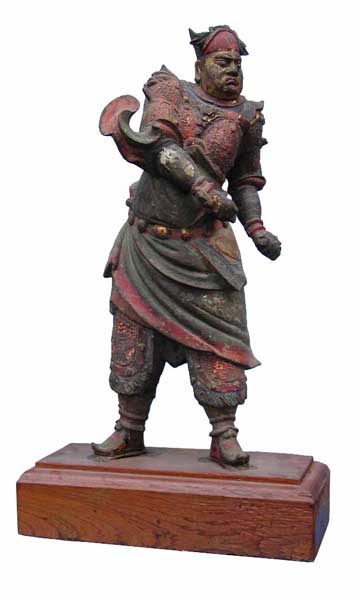
One of the stars of the Big Dipper
2026-04-15 11:51:31
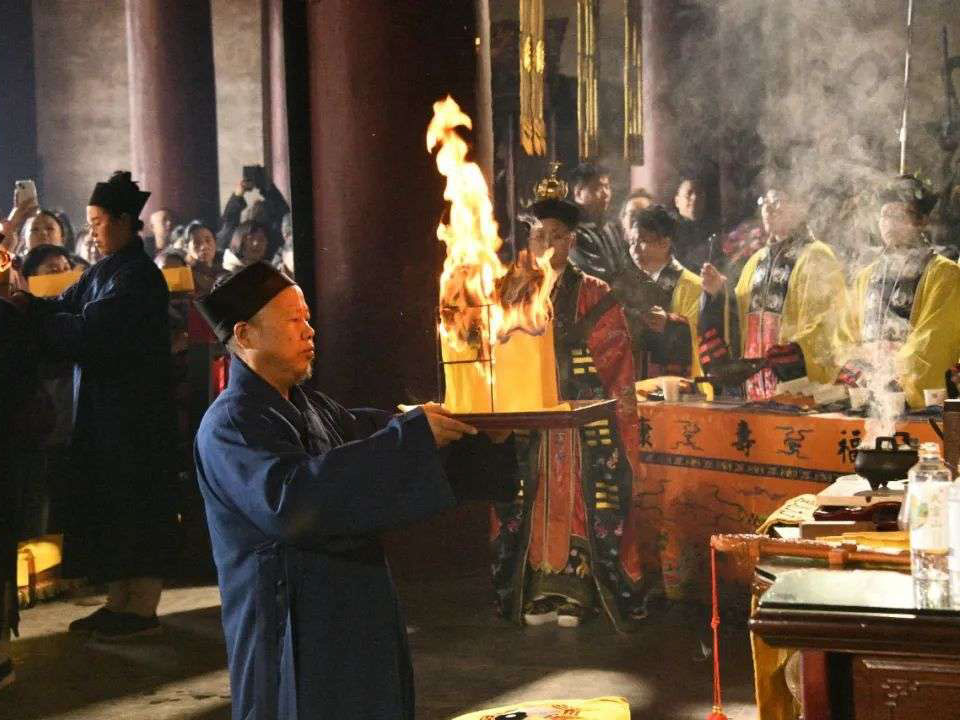
(1) The meaning of the ritual of fasting and Taoist ceremonies
2022-08-20 23:32:13
The original meaning of "zhai" was to be neat, harmonious an...
Yin GUI
2022-08-20 23:32:13
Chapter 27
2022-08-20 23:32:13
Chapter 72
2022-08-20 23:32:13
The couplet of the ancestral hall of the Wudang Mountain Temple
2022-08-20 23:32:13
The official couplet of the spirit temple in the ancient Wudang Mountain Temple
2022-08-20 23:32:13