


Chapter Three
2022-08-20 23:32:13
If one does not follow the virtuous, the people will not contend. ② Do not value rare goods, so that the people will not steal them ③. When there is no desire, the people will not be in chaos. Therefore, the governance of the sage is to empty the mind ⑤, fill the abdomen, weaken the will ⑥, and strengthen the bones, constantly keeping the people ignorant and desireless. If one realizes that it is only because one dares not ⑦ and does not act ⑧, then there will be no problem that cannot be solved ⑨. [Translation] Do not advocate talented and virtuous people, and guide the common people not to compete with each other. Not cherishing rare possessions leads the common people not to steal. Do not show off things that are enough to arouse greed, and guide the people from being deceived. Therefore, the governance principle of the sage is: to empty the people's minds, fill their stomachs, weaken their competitive intentions, strengthen their muscles and bones, and constantly make the people lack wisdom and desire. This even makes those intelligent people dare not act rashly. If a sage acts in accordance with the principle of "non-action" and follows the natural course of events, then a genius will not be at peace. [Note] ① Shangxian: "Shang", the same as "shang", means to Revere and respect. Xian: A person of virtue and talent. ② Expensive: To attach importance to, precious. Goods: Property. ③ Theft: To steal property. ④ See (xian) : In the same way as "present", to appear or reveal. This means to show off or flaunt. ⑤ Empty one's heart: Emptiness, emptiness. Heart: Ancient people believed that the heart governs thinking. Here it refers to thoughts and the mind. Empty their hearts so that they have no thoughts or desires. ⑥ Weaken their will: Make them lose their will. Weaken their intention to compete. ⑦ Dare: Be enterprising. ⑧ Fuwei: The same as "Wuwei". ⑨ Zhi: To govern, here it means to govern and bring peace to the world. At the end of the Spring and Autumn Period when Laozi lived, the world was in chaos. States fought and annexed each other. The big states dominated while the small ones protected themselves. To maintain their rule, the rulers recruited talented people to govern the country and ensure its stability. In the social life of that time, virtuous talents were highly regarded everywhere. Many schools of thought and scholars put forward the proposition of "valuing the virtuous", which was originally the guiding principle of the country. However, under the banner of Shangxian, some ambitious people vied for power and position. The act of seizing money has also brought about a bad influence among the people. For a time, public sentiment was in turmoil, bandits were rampant, and society was in a state of great upheaval and change. In response to the highly regarded proposition of "valuing the virtuous" in society, Laozi put forward the view of not valuing the virtuous in Chapter Three, and at the same time criticized the desire for material benefits caused by "valuing the virtuous". In this chapter, Laozi advocated "not valuing the virtuous" and "keeping the people ignorant and desireless". He envisioned bringing people back to a state of "non-action" without contradictions. However, both the material and spiritual civilizations of human society must be constantly developing and improving. Therefore, Laozi's idea is impossible to realize and is negative. Laozi saw that the ancient social reality was turbulent and full of prominent contradictions, which was due to the existence of differences. Laozi wanted to reduce differences to alleviate or avoid social contradictions, and this also had his progressive aspect. [Commentary] In the previous chapter, Laozi put forward the concept of "non-action", believing that one should follow the laws of nature and achieve "non-action". In this chapter, Laozi further expounded his social and political thoughts. The "non-action" mentioned by Laozi does not mean not doing anything, but rather not acting rashly or improperly. He believed that the "sage" who embodies the "Way" should govern the people without respecting the virtuous and talented, so as to prevent the people from vying for power, fame, and fortune. As mentioned earlier, in the Pre-Qin period, the doctrine of selecting and employing virtuous people had become a powerful public opinion, and it was an inevitable trend for the vassal states to compete for the position of talented individuals. Against this backdrop, Laozi's bold proposition of "not respecting the virtuous" and his opposition to the various schools of thought seemed out of place. However, in Laozi's view, there is no implication of belittling or denying talent. Rather, it means that rulers should not bestow overly superior positions, power and fame upon virtuous talents, so as not to make "virtuous talents" a temptation and cause people to compete for power and profit one after another. In this chapter, Laozi reveals the starting point of his philosophy of life. He neither talks about human nature being good nor evil, but rather states that human nature is originally pure and simple, just like a blank sheet of paper. If a society shows a trend of respecting the virtuous, people will surely not turn a blind eye to it. It will surely stir up people's possessiveness and pursuit, thus leading to chaos throughout the world. If people are not made to see what they can be greedy for, then they can maintain their pure nature of being "ignorant and desireless". Not making people greedy does not mean depriving them of their right to survive, but rather to "fill their stomachs" and "strengthen their bones" as much as possible, so that the common people can have enough to eat and wear and be physically strong enough to support themselves. Furthermore, it is necessary to "empty the mind" and "weaken the will", so that the people have no intention of stealing wealth and power and no will to compete. By doing so, it conforms to the laws of nature and achieves governance through non-action. This chapter echoes the previous one, from a social perspective, enabling everyone to return to their pure, ignorant and desireless natural nature. In this way, when human affairs are governed by the laws of nature, the world can naturally be governed. Laozi's thought and doctrine of "non-action" had its progressive aspects and reasonable elements under the historical conditions of that time. He believes that the development of history follows certain natural laws. This law is not arranged or manipulated by God, nor is it governed by human subjective will. Instead, it is objective and natural. This view played a certain destructive role in the notion of revering heaven and ancestors and certain religious superstitions that existed in the intellectual circle at that time. [Interpretation] The principle of non-action governance refers to the great governance of appointing virtuous talents, enriching the country and strengthening the military, and then unifying the states. This was originally a major feature of the development of the Spring and Autumn and Warring States periods from the hereditary system of nobility and stipends based on blood ties to the feudal centralized system of the state. The emphasis on, utilization and even research of talents became a hot issue in the Pre-Qin society that lasted for five and a half centuries. The Pre-Qin period was the age of the Philosophers, the scholars and the golden age of intellectuals. As all countries attached great importance to the utilization of talents, the social status of intellectuals was greatly enhanced. They either engaged in political maneuvering and lobbied the feudal lords, or wrote books and expounded their own viewpoints freely. The diverse political landscape and the turbulent and changing social reality provided them with the broadest historical stage for the exertion of their intelligence and talents. However, it cannot be denied that the various drawbacks brought about by the great social transformation, especially the heavy taxes and corvee labor, the economic decline and hard livelihood caused by frequent wars, as well as the hypocrisy, greed and cruelty of the rulers, all gave the sons reflection. They hope to explore the reasons from a theoretical perspective. Thus, there emerged the exploration of the social essence - human nature - to seek the cornerstone for building an ideal society. The Mohist and Legalist schools made the assumption of "evil" in human nature and, based on this, put forward the proposition of "valuing the virtuous and the talented". It is advocated to promote social improvement through positive and combative means. They elevated the innovative spirit of humanity and played a positive and favorable role in the development of the Pre-Qin society. On the contrary, Laozi believed that human nature is kind and pure. All kinds of ugly human behaviors should be abnormal phenomena that distort human nature due to unreasonable and imperfect social systems. Thus, Laozi insisted on eliminating the false and retaining the true, preserving the good and beautiful aspects of human nature that conform to the way of nature. He rejected all things that aroused people's greed, especially the prevailing trend of promoting the virtuous and capable at that time, which he regarded as the most likely source of evil. His political ideas, when viewed today, seem incomprehensible. The people in his ideal society are physically strong, mentally simple, have no desire for luxurious material enjoyment, nor are they troubled by all kinds of dizzying cultures or knowledge. He is a cyclist of history. In his view, allowing people to maintain a simple and innocent spiritual life in a free and relaxed social environment, in harmony with the way of nature, is obviously more in line with human nature than a social system that is advanced in material civilization but full of crises, conflicts, murders and conspiracies. The "non-action" he emphasized means going with the flow of nature. Its effectiveness in governing society is obviously much more reasonable and powerful than using laws, regulations, systems, morality and knowledge to restrain people's social behaviors. This is the fundamental meaning of "doing nothing yet achieving everything". And this social ideal of Laozi is closely related to his theory of the "Tao". Out of a profound understanding of the laws of nature, Laozi regarded the movement adapted to the "Dao" as the highest principle that human political systems, social life and moral standards should all follow. This is specifically reflected in his political thought as the "governance of non-action" and "teaching without words" he advocated. The so-called "governance by non-action" does not mean doing nothing, but rather emphasizes that human social behavior should conform to nature and be applicable to the movement of the "Tao". Joseph Needham interpreted this way of behaving as "suppressing actions that go against nature." Specifically speaking, it is required that the rulers provide the common people with a relaxed living and production environment, refrain from forced intervention, and conform to nature. In such a carefree and contented living environment, the common people are free from the suffering of harsh policies and the worry of heavy taxes. Naturally, they will feel the benefits of such policies, thus achieving the educational effect of "teaching without words". The governance of non-action is neither a utopia divorced from reality nor a castle in the air set up in an illusory fantasy. It has the feasibility and rationality to be implemented in reality. The most obvious historical example is the Huang-Lao governance of non-action in the early Han Dynasty. Due to the brutal rule of the Qin Dynasty and the struggle between Han and Chu, in the early Western Han Dynasty, social production was severely disrupted, the economy declined, and the population decreased significantly. The Records of the Grand Historian: The Book of Pingzhun records that at that time, "since the emperor could not own a horse, generals and ministers either rode in ox carts, and the common people had no storage covers." Under such a dilapidated social and economic situation, starting from Emperor Gaozu Liu Bang, the policy of non-action of Huang-Lao was implemented, and the policy of "resting with the people" was adopted. By the time of Emperor Wen, the policies of "light taxation and low taxes" and "reducing prohibitions by setting laws" were further implemented, which gradually restored and developed production. In Laozi's view, a wise ruler and leader should understand the way of nature, follow human nature, allow subordinates and the common people to perform their best, perform their duties, find their proper places, and live in peace. They must avoid using too many regulations and systems to impose coercive constraints, otherwise it will backfire. That is to say, the best policy should be a "quiet and non-actional" one, not one movement on one side and one policy on the other, leaving the people at a loss. To ensure the stability and good governance of a country or society, it is like dealing with well water. The more vigorously it is stirred, the more residues and fallen leaves will surface, and the more turbid the water will become. The best approach is not to add any bleaching powder or the like, but to stop applying external force and let it calm down gradually by itself. In this way, the well water will naturally become clear. "Governance through non-action is the greatest governance." This is the beneficial enlightenment that Laozi's theory of non-action has given to later generations.
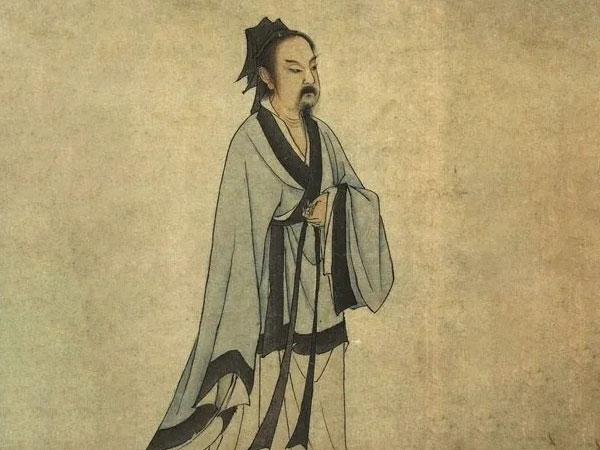
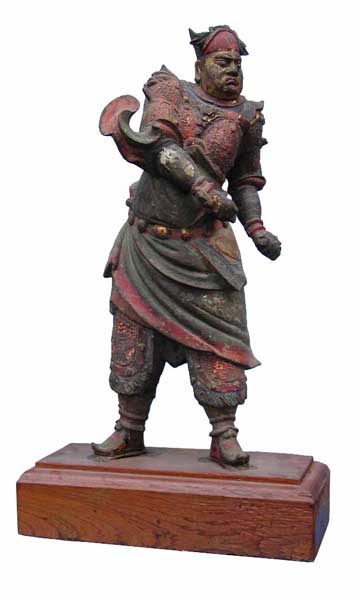
One of the stars of the Big Dipper
2026-04-15 11:51:31
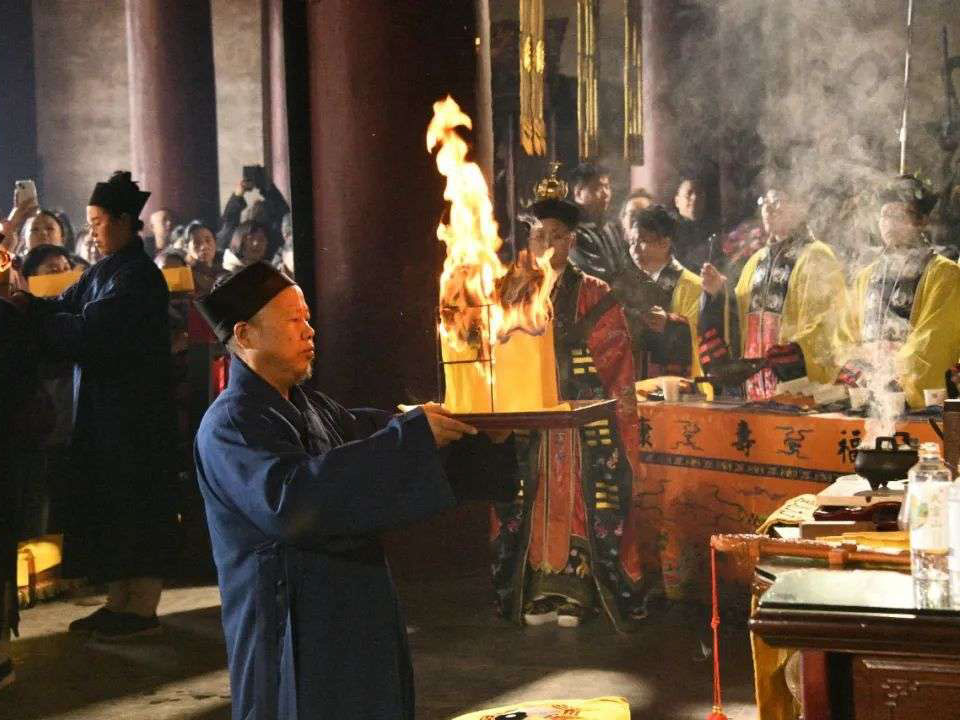
(1) The meaning of the ritual of fasting and Taoist ceremonies
2022-08-20 23:32:13
The original meaning of "zhai" was to be neat, harmonious an...
Yin GUI
2022-08-20 23:32:13
Chapter 27
2022-08-20 23:32:13
Chapter 72
2022-08-20 23:32:13
The couplet of the ancestral hall of the Wudang Mountain Temple
2022-08-20 23:32:13
Chapter Ten
2022-08-20 23:32:13