


Chapter Two
2022-08-20 23:32:13
All know that what is beautiful is beautiful; evil is already there. If everyone knows what is good, then it is not good. There is the mutual generation of being and non-being ③, the mutual reinforcement of difficulty and ease, the mutual restraint of length and shortness ④, the mutual abundance of high and low ⑤, the mutual harmony of sounds ⑥, and the mutual following of sequence, which is constant. Therefore, the sage engages in non-action and teaches without words. All things are created without beginning, act without aspiration, and succeed without dwelling on them. Only by not dwelling can one not leave. All people in the world know that beauty is beautiful because of the existence of ugliness. Everyone knows that the reason why good is good is that evil exists. So being and non-being transform into each other, difficult and easy form each other, long and short reveal each other, high and low enrich each other, sound and tone harmonize with each other, front and back follow each other - this is eternal. Therefore, the sage treats the world with the perspective of non-action and implements education in a silent way: allowing all things to arise naturally without initiating them, doing something without adding one's own tendencies, and achieving success without taking credit for oneself. It is precisely because one does not take credit that there is no such thing as loss. [Note] ① Evil: Evil, ugly. "Yi" means "yi". ② Si: This. ③ Xiang: Mutual. ④ Xing: Similar to "xing", here it refers to the meaning that emerges through comparison and contrast. ⑤ Ying: To enrich, supplement, and depend on. ⑥ Sound: When Zheng Xuan of the Han Dynasty annotated the "Music Record" in the "Book of Rites", he said that the sound produced by a ensemble is called "sound", and the sound produced by a single sound is called "sound". ⑦ Sages engage in non-action: Sages were the highest-level exemplary figures highly regarded by people in ancient times. To be a resident means to take responsibility and be accountable. Non-action, going with the flow of nature, without interference or restraint, allowing people to do whatever they want. ⑧ Work: To arise, to occur, to create. ⑨ Fu Zhi: Fu, no. Zhi refers to an individual's aspiration, will, and inclination. [Quotation] The content of this chapter is divided into two levels. The first layer vividly and prominently embodies Laozi's simple dialectical thought. Through daily social and natural phenomena, he expounded that all things in the world exist in a relationship of interdependence, interconnection and interaction, expounded the law of the unity of opposites, and confirmed the eternal and universal law of the unity of opposites. Based on the first layer of meaning, the second layer is developed: In the objective world of contradiction and opposition, how should people deal with it? The old man put forward the viewpoint of "non-action". The "non-action" mentioned here does not mean doing nothing or acting at will, but rather guiding people's social life with the principles of dialectics and helping them find the laws that conform to nature and follow the objective development of things. He took sages as examples to teach people to do something, but not to act rashly. Some people in the academic circle believe that the first chapter is the general outline of the entire book. Some people also believe that the first two chapters serve as the introduction to the entire book, where the main purpose of the entire book is contained. [Commentary] No matter how intense the academic debate is over the attributes of the "Dao", scholars unanimously agree that Laozi's dialectical thought is a prominent feature of his philosophy. Laozi recognized that all things in the universe are in a state of change and motion. From their emergence to their demise, they all have a beginning and an end and are constantly changing. There is nothing in the universe that remains eternal and unchanging. In this chapter, Laozi pointed out that all things have their own opposites and all take the opposing aspects as the premise of their existence. Without "being", there would be no "nothingness"; without "long", there would be no "short". And vice versa. This is what is called "opposite yet complementary" in Chinese classical philosophy. The terms "generate", "complement", "form", "enrich", "harmonize", and "follow" used in this chapter refer to existence through comparison and generation through reliance. They are merely different verbs employed for different opposing concepts. The term "non-action" first appears in the third sentence. Non-action does not mean doing nothing, but rather acting in accordance with the law of "non-action" in nature. Laozi attached great importance to the opposition and transformation of contradictions. This view of his is precisely the concrete application of the thought of naive dialectics. He fantasized that there were so-called "sages" who could resolve conflicts in a non-action manner in accordance with objective laws, promoting the transformation of nature and the development of society. Here, Laozi did not exaggerate human passivity but advocated for the exertion of human creativity, like the "sages", achieving an active goal through non-action means. Obviously, in Laozi's philosophy, there is an active and enterprising element of exerting subjective initiative, contributing one's own strength, and achieving the cause of the masses. [Interpretation] The Shining of Naive Dialectics Naive dialectics is the most valuable part of Laozi's philosophy. In the history of Chinese philosophy, no one has ever revealed the law of the unity of opposites of things as profoundly and systematically as he has. Laozi believed that the development and change of things all arise in a state of contradiction and opposition. The two opposing sides are interdependent, interconnected, and can transform in opposite directions. And this change, he regarded as the fundamental nature, "The opposite is the movement of the Dao" (Chapter 40). Laozi's dialectics is based on a comprehensive generalization of nature and society, with the aim of finding a model of a reasonable political system for social life. The series of opposites he proposed can be seen everywhere in human social life, such as good and evil, beauty and ugliness, right and wrong, strength and weakness, success and failure, misfortune and fortune, etc., all of which contain rich dialectical principles. For instance, if people do not have the recognition and pursuit of beautiful things, they will not spurn ugly phenomena. While you are still basking in the joy of happiness or success, perhaps a disaster or misfortune is approaching quietly. A philosopher once said: What people talk about the most is often what they understand the least. People's focus on some things and surface phenomena often leads them to overlook the deep-seated and most essential aspects of the whole. In his poem "On the West Forest Wall", the great poet Su Dongpo of the Song Dynasty wrote: "I cannot recognize the true face of Mount Lu because I am within it." This philosophical verse. It expresses the understanding of various relationships such as the whole and the part, the macro and the micro, the phenomenon and the essence of things. This enlightening philosophy of life shares similarities with Laozi's dialectics. If we stand at the height of history, we will find that the progress of human civilization has been advancing amid the contradictions and struggles between truth and falsehood, beauty and ugliness, progress and backwardness. The rich connotations of dialectics are contained throughout the entire history of human civilization. Laozi's simple dialectics has had an extremely profound influence on Chinese culture. In traditional literature and art, there are many categories that embody dialectical thinking, which have obvious origins and connections with it. For instance, the terms "being" and "non-being" come from the philosophy of Laozi and Zhuangzi. The saying "being and non-being give birth to each other" reflects the dialectical relationship of the unity of opposites among things, and in fact, it also reflects the dialectical relationship of artistic creation. Later writers and artists gradually extended from the philosophy of Laozi and Zhuangzi the idea that it is the most beautiful realm to enter the deep realm of "silent" and "colorless" art through "audible" and "colored" art. Related to this, the concepts of "emptiness" and "reality" emerged accordingly, and the theory of "the interplay of emptiness and reality" also became a unique theory in ancient Chinese art aesthetics. The pair of categories "odd" and "upright" involve the creative and expression methods of the unity of neatness and variation in artistic creation, which were frequently used by ancient Chinese writers and artists. "Zheng" refers to normality, regularity, orthodoxy, neatness and balance, while "qi" refers to abnormality, strangeness, innovation, unevenness and variation. Both are one of the concrete manifestations of the law of "diversity and unity" in artistic creation. In the eyes of creators, it means that there is symmetry, balance, and neatness between things or formal factors, as well as unevenness, contradiction, and variation. They are opposite and complementary to each other, with the midpoint revealing the strange and the strange within the normal. The strange and the normal give rise to each other, thus creating a harmonious and novel artistic beauty. If we trace back to the source, "qi" and "zheng" as opposing philosophical categories, Zheng first appears in Chapter 58 of the Tao Te Ching: "Zheng then qi." The application of this pair of categories to literary theory began with Liu Xie's "Wen Xin Diao Long". It is undeniable that in the history of the development of dialectics in Chinese philosophy, Laozi's teachings and their influence deserve to be elaborated upon in detail.
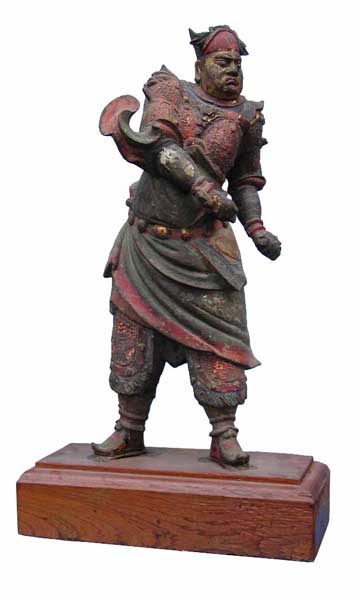
One of the stars of the Big Dipper
2026-04-15 11:51:31
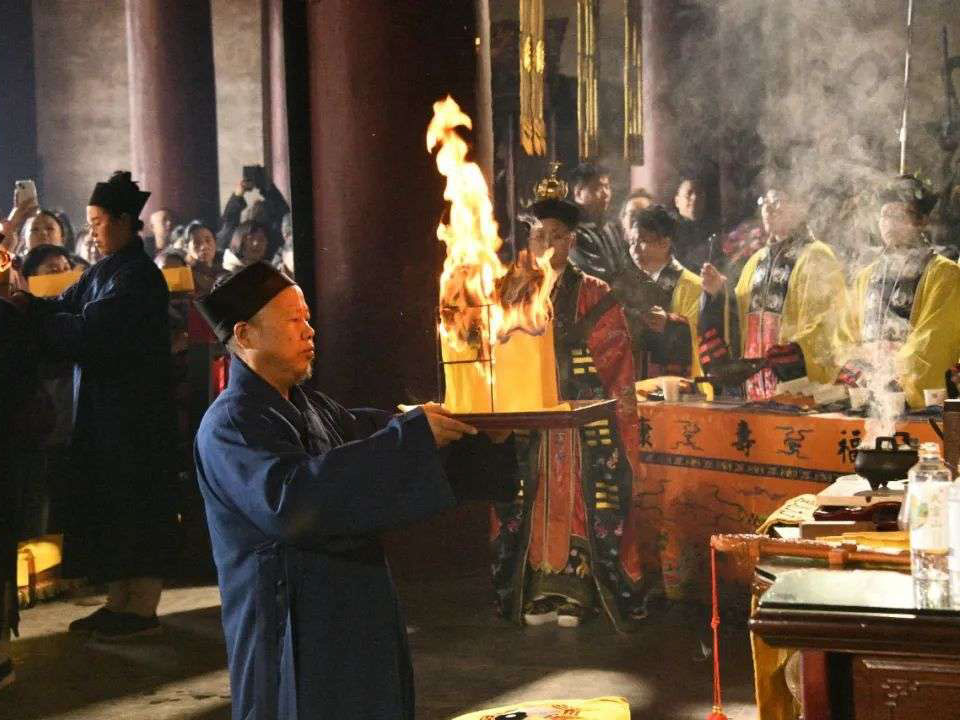
(1) The meaning of the ritual of fasting and Taoist ceremonies
2022-08-20 23:32:13
The original meaning of "zhai" was to be neat, harmonious an...
Yin GUI
2022-08-20 23:32:13
Chapter 27
2022-08-20 23:32:13
Chapter 72
2022-08-20 23:32:13
The couplet of the ancestral hall of the Wudang Mountain Temple
2022-08-20 23:32:13
A Tour of Taihe Mountain (Excerpt)
2022-08-20 23:32:13